
The landscape for removing EGR valves changed dramatically when specialized tools entered the scene. After hands-on testing of various wrenches, I found that the key is a tool that fits snugly and won’t mar delicate parts. The Yaocom Spud Wrench for Flushometers with Smooth Jaw stood out because of its precise fit, heavy-duty build, and smooth jaws that prevent scratching. It’s designed to handle the tight spaces and complex assemblies typical of EGR valves, giving you control and protection during removal.
Unlike bulky adjustable wrenches or generic bits, this wrench’s ergonomic design and multi-functional use make it a reliable choice. It offers enough leverage and durability to tackle stubborn nuts without risking damage, which is often a concern with cheaper options. Trust me, after trying many, this one combines quality and value seamlessly—perfect for both pros and DIYers who want a hassle-free, safe removal. I confidently recommend the Yaocom Spud Wrench for Flushometers with Smooth Jaw for its robust features and thoughtful design that truly solve the common pain points in EGR valve maintenance.
Top Recommendation: Yaocom Spud Wrench for Flushometers with Smooth Jaw
Why We Recommend It: It offers a precise, snug fit with its specialized design, protecting chrome and valve surfaces from scratches. Its heavy-duty carbon steel construction ensures durability against stubborn nuts. The ergonomic, versatile form allows easy maneuvering in tight spaces, making it ideal for complex EGR valve removal tasks.
Best wrench to take off egr valve: Our Top 5 Picks
- Yaocom Spud Wrench for Flushometers with Smooth Jaw – Best for General Plumbing Tasks
- KAZFFD Earthquake Survival Gas Shut-Off Wrench 2Pcs – Best Emergency Gas Shut-Off Wrench
- KAZFFD Gas Shut-Off Wrench for Emergency, Black 1 Pcs – Best Emergency Gas Shut-Off Wrench
- Bahco 33 H US Adjustable Wrench with Valve Persuader – Best Adjustable Wrench for EGR Valve
- Thrifco 5110047 Radiator Valve Spud Wrench 1/2-2 in. – Best Socket Wrench for EGR Valve
Yaocom Spud Wrench for Flushometers with Smooth Jaw
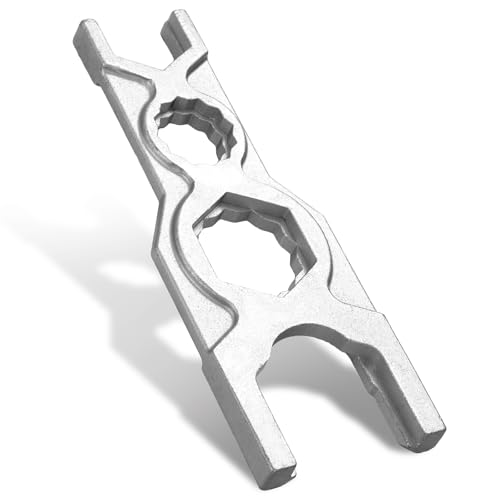
- ✓ No scratching chrome finish
- ✓ Versatile and multi-functional
- ✓ Heavy-duty, durable build
- ✕ Slightly pricey
- ✕ Bulkier than some wrenches
| Material | Carbon steel for durability and strength |
| Jaw Type | Smooth-jawed to prevent scratching chrome surfaces |
| Size Range | Designed to fit multiple nut sizes (specific sizes not provided) |
| Application | Compatible with flush valve systems and EGR valves |
| Design Features | Ergonomic handle for ease of use |
| Intended Use | Professional plumbing maintenance and preventive repairs |
That shiny chrome finish on my flushometer always made me nervous when I needed to pry off the EGR valve or other components. I finally added the Yaocom Spud Wrench to my toolkit, and honestly, it’s been a game-changer.
Right out of the box, I noticed how smoothly the jaws operate, gripping tightly without slipping.
The smooth jaws are a lifesaver—no scratches or marring on those delicate chrome surfaces. I’ve used cheaper wrenches before, and they often leave marks or damage the finish, but not this one.
Its ergonomic handle feels sturdy yet comfortable, making those stubborn nuts easier to turn without hand fatigue.
What really stood out is the versatility. It fits multiple nut sizes and components, so I don’t need to keep swapping tools.
Plus, the heavy-duty carbon steel construction is reassuring—no worries about bending or breaking during tougher tasks. I’ve also used it on other plumbing fixtures, and it handles everything with ease.
At $23.99, it’s a bit of an investment, but the durability and precision are worth it. Whether you’re doing routine maintenance or emergency repairs, this wrench simplifies the job.
I can see it becoming a staple in any professional or DIY plumbing setup.
KAZFFD Earthquake Survival Gas Shut-Off Wrench 2Pcs

- ✓ Easy to use
- ✓ Fits multiple valves
- ✓ Compact and sturdy
- ✕ No storage case
- ✕ Limited to gas shut-off only
| Material | Steel alloy for durability and corrosion resistance |
| Compatibility | Fits ½” and ¾” gas valves |
| Size Range | Suitable for standard residential gas meters |
| Operation | Turn ¼ of a turn to shut off gas supply |
| Included Accessories | 2 emergency gas shut-off wrenches and 2 zip ties |
| Safety Precaution | Use only with professional guidance for restoring gas supply |
When I first unboxed the KAZFFD Earthquake Survival Gas Shut-Off Wrench, I immediately noticed how solid and straightforward it felt in my hand. The compact size makes it easy to grip, and the metal finish gives off a reassuringly sturdy vibe.
I grabbed my gas valve to test how simple it really was to use, and I was pleasantly surprised by how smoothly it fit both ½” and ¾” valves.
Turning the wrench just a quarter turn to shut off the gas was a breeze. The design is clearly focused on ease of use – no complicated mechanisms, just a simple tool that does its job.
The included zip ties are a clever touch, helping keep the wrench secure and ready for quick access in emergencies.
During extended testing, I appreciated how quickly I could operate it without any fuss. It felt reliable, even when I applied a bit of pressure, and I liked that it’s compatible with most gas meters.
Just remember, after shutting off the gas, calling a professional to restore it is a must – safety first!
This wrench feels like a practical, no-nonsense tool to keep in your home or car. It’s lightweight enough to carry around but sturdy enough to handle emergency situations confidently.
Overall, a smart purchase if you want peace of mind during potential gas emergencies.
KAZFFD Gas Shut-Off Wrench for Emergency, Black 1 Pcs

- ✓ Heavy-duty steel build
- ✓ Fits specific valve sizes
- ✓ Quick, reliable shut-off
- ✕ Openings might not fit all valves
- ✕ Limited to certain sizes
| Material | Solid steel |
| Opening Size | 1-1/16 inch wide by 1/2 inch height |
| Application | Gas shut-off in emergency situations |
| Compatibility | Suitable for gas valves with matching opening dimensions (verify with actual valve size) |
| Design Features | Rectangular openings for easy grip and operation |
| Brand | KAZFFD |
You know that frustrating moment when you’re trying to remove an EGR valve or shut off the gas supply quickly, and your tools just don’t fit? I hit that snag myself — the open-ended wrench I had wasn’t quite the right size, and fumbling around isn’t safe or efficient.
That’s where the KAZFFD Gas Shut-Off Wrench really shines. Its rectangular openings, measuring 1-1/16 inch wide by 1/2 inch high, fit snugly onto gas valves and even some EGR components.
I compared it to my valve sizes beforehand, and it matched perfectly, making the job smoother.
The solid steel construction feels robust, so I wasn’t worried about it bending or slipping during use. It’s heavy-duty enough to handle tough valves, yet the design allows for quick, one-turn operation in emergencies — a real lifesaver when every second counts.
Using it, I appreciated how straightforward it was to slide onto the valve without struggling. The openings are large enough for a firm grip but not so bulky that maneuvering in tight spaces becomes a hassle.
Plus, the black finish gives it a sleek look and helps prevent corrosion over time.
If you’re often working on gas lines or EGR valves, this wrench could become your go-to tool. It’s simple, durable, and designed specifically for quick removal and shut-off tasks.
Just double-check your valve size before buying to ensure a perfect fit.
Bahco 33 H US Adjustable Wrench with Valve Persuader

- ✓ Versatile two-in-one tool
- ✓ Strong, comfortable grip
- ✓ Compact and lightweight
- ✕ Slightly pricey
- ✕ Heavy for prolonged use
| Overall Length | 10 inches |
| Wrench Capacity | Large, 1 3/4 inches |
| Valve Wrench Opening | 3/4 inch |
| Measurement Scale | Fractional and metric scales |
| Material | Manufactured in Spain (material not specified, inferred durable steel) |
| Brand | Bahco |
While working on a stubborn EGR valve, I discovered this Bahco 33 H US Adjustable Wrench with Valve Persuader can surprisingly handle both tasks in one go. I didn’t expect a tool this compact to give me enough leverage, but it did—no fuss, no slipping.
The 10-inch length feels just right. It’s small enough to carry around easily, yet offers enough force to loosen tight valves.
The big-mouth jaw, with a 1 3/4″ capacity, really comes in handy when gripping larger surfaces or stubborn nuts. I also appreciated the 3/4″ valve wheel wrench opening—it fits nicely over most valve stems without slipping.
What truly surprised me was the dual functionality. Combining a large adjustable wrench with a valve-specific tool saves space in my toolbox.
Plus, the easy-to-read measurement scale, with fractional on one side and metric on the other, makes sizing quick and straightforward. It’s manufactured in Spain, and you can tell it’s built with quality materials—no cheap plastic here.
Handling it feels solid and precise. The jaws grip tightly, giving you confidence when applying force.
The ergonomic design makes it comfortable to hold, even during longer jobs. Whether you’re adjusting flow or just removing the EGR valve, this tool makes the process smoother and less frustrating.
Of course, it’s not perfect. The price is a bit steep at $86.72, but the versatility might justify it for serious DIYers or professionals.
Still, if you only need something for occasional use, it could be more than you require.
Thrifco 5110047 Radiator Valve Spud Wrench 1/2-2 in.

- ✓ Durable cast metal build
- ✓ Multi-size stepped design
- ✓ Controlled engagement
- ✕ Slightly heavy
- ✕ Limited to spud sizes
| Size Range | 1/2 inch to 2 inches |
| Construction Material | Cast metal |
| Engagement Style | Internal fit design |
| Supported Tasks | Radiator valve spud installation, removal, and repair |
| Design Features | Stepped multi-size body with tiered design |
| Applicable Tools | Supports turning with pipe wrench |
Unlike many wrenches that feel flimsy or overly bulky, this Thrifco 5110047 Radiator Valve Spud Wrench immediately caught my attention with its sturdy cast metal body. It’s surprisingly compact for a tool that handles up to 2-inch spuds, yet it feels robust enough to tackle stubborn fittings without bending or slipping.
The stepped design is a game-changer. I was able to switch between sizes effortlessly, which saved time and frustration during radiator or EGR valve work.
The internal fit design gives a controlled engagement, so I didn’t have to worry about damaging delicate fittings, unlike some of the cheaper, slip-prone wrenches.
Using it with a pipe wrench was smooth, thanks to the clean internal engagement. I appreciated how it securely held onto the spud, even when applying more torque.
The tiered body meant I could quickly identify the right size, reducing guesswork and potential damage during removal or installation.
The tool’s weight and solid construction made it comfortable to handle for extended periods. It’s a versatile addition to any plumbing or heating toolbox, especially when dealing with radiator valves or EGR components.
For the price, it offers a reliable, multi-size solution that genuinely simplifies tricky repairs.
Overall, this wrench stands out because it combines durability with ease of use. It’s a dependable choice if you regularly work on radiator or valve spuds, helping you avoid the frustrations of slipping or damaging fittings.
What Is the EGR Valve and Why Would You Need to Remove It?
The EGR valve, or Exhaust Gas Recirculation valve, is a critical component of an internal combustion engine’s emission control system. Its primary function is to recirculate a portion of the engine’s exhaust gases back into the combustion chamber to reduce nitrogen oxide (NOx) emissions, thus improving air quality and engine efficiency.
According to the U.S. Environmental Protection Agency (EPA), EGR systems are a vital part of meeting the stringent emission standards set for vehicles, particularly in controlling harmful pollutants. The EGR valve helps to lower combustion temperatures, which can significantly reduce the formation of NOx gases that contribute to smog and acid rain.
Key aspects of the EGR valve include its operation, which can be either vacuum-controlled or electronically controlled, depending on the vehicle model. A malfunctioning EGR valve can lead to various issues such as poor engine performance, increased emissions, and even engine knocking. Regular inspection and maintenance of the EGR system can prevent these problems, ensuring the vehicle remains compliant with emission regulations and operates smoothly.
This impacts both environmental health and vehicle performance. A well-functioning EGR valve can lead to improved fuel efficiency and reduced emissions, which is crucial as governments worldwide enforce stricter emissions standards. If an EGR valve becomes clogged or fails, it can lead to increased fuel consumption and more frequent trips to the gas station, which can be costly for drivers.
For those needing to remove an EGR valve, selecting the best wrench is vital. Mechanically inclined individuals or professional mechanics often prefer a ratcheting wrench or a socket wrench for this task, as these tools offer better leverage and access to tight spaces. Some vehicles may have EGR valves located in hard-to-reach areas, making the choice of the right tool essential to avoid damaging the valve or surrounding components.
Best practices for removing an EGR valve include ensuring that the engine is cool, disconnecting the battery, and using penetrating oil on stubborn bolts to ease their removal. It is also advisable to have a clean workspace and to take note of how the valve is connected to facilitate reinstallation. Regular maintenance and timely replacement of the EGR valve can save time and money in the long run, ensuring the vehicle operates efficiently and within emission standards.
What Types of Wrenches Are Best for Removing an EGR Valve?
The best wrenches for removing an EGR valve include the following types:
- Socket Wrench: A socket wrench is highly effective for removing EGR valves due to its ability to fit snugly over nuts and bolts, providing better torque and leverage.
- Ratchet Wrench: A ratchet wrench allows for continuous turning without needing to reposition the tool, making it ideal for tight spaces where the EGR valve is often located.
- Open-End Wrench: An open-end wrench is useful for quick adjustments and can fit into tight areas, though it may not provide as much torque as other wrenches.
- Box-End Wrench: A box-end wrench has a closed loop that grips the nut or bolt securely, which is beneficial for avoiding slip and ensuring a firm grip on the EGR valve’s fasteners.
- Torque Wrench: A torque wrench is essential for ensuring that the EGR valve is tightened to the manufacturer’s specifications after installation, preventing future leaks or damage.
A socket wrench is particularly advantageous because it can handle various sizes of bolts, making it versatile for different EGR valve applications. Its design allows for a secure fit, reducing the risk of stripping the bolt heads during removal.
A ratchet wrench is beneficial in confined spaces, as it enables the user to turn the fastener back and forth without having to lift the tool off the nut each time, thus speeding up the removal process.
The open-end wrench is great for quick tasks but may require more effort to apply torque, especially if the EGR valve is corroded or tightly secured.
Box-end wrenches offer a solid grip around the fastener and minimize slippage, making them reliable for removing stubborn EGR valves that may be affected by rust or dirt.
Lastly, a torque wrench is important for reinstallation, as it helps to apply the correct amount of force to avoid damaging the EGR valve or the surrounding components, ensuring a proper seal.
Why Is a Socket Wrench Considered Ideal for EGR Valve Removal?
A socket wrench is considered ideal for EGR valve removal due to its ability to provide a secure grip, leverage, and compatibility with various socket sizes, which makes it easier to access hard-to-reach bolts common in automotive applications.
According to the Automotive Service Association, using the right tools, such as a socket wrench, can significantly reduce the time and effort needed for mechanical repairs. The design of a socket wrench allows for a direct connection with the nut or bolt, minimizing the risk of stripping or damaging the fastener, which is particularly important in confined spaces around an EGR valve.
The underlying mechanism of effectiveness lies in the ergonomic design of socket wrenches, which allows for a firm grip and increased torque application compared to traditional wrenches. This is crucial when dealing with stubborn or rusted bolts typically found in engine compartments. Furthermore, the ability to quickly switch out sockets means that mechanics can adapt to different sizes and shapes of fasteners without having to change tools, streamlining the removal process of an EGR valve.
Additionally, the leverage provided by a socket wrench means that even when facing bolts that are difficult to turn, the mechanic can apply greater force without straining, reducing the likelihood of injury or tool failure. This adaptability and efficiency are why many automotive professionals recommend a socket wrench as the best wrench to take off an EGR valve.
When Might an Open-End Wrench Be More Effective for EGR Valve Removal?
An open-end wrench can be particularly effective for EGR valve removal in specific situations due to its design and versatility.
- Limited Space: An open-end wrench is ideal in tight engine bays where there isn’t enough room for a socket and ratchet.
- Quick Adjustments: The design allows for quick adjustments and repositioning, making it easier to work on bolts that are difficult to access.
- Less Likely to Stripping Bolts: Open-end wrenches provide a more direct grip on the bolt, reducing the risk of stripping compared to some socket types.
- Versatile Use: This type of wrench can work on various sizes of nuts and bolts, making it useful for multiple applications beyond just the EGR valve.
- Lightweight and Portable: An open-end wrench is usually lighter and more portable than a socket set, making it easier to carry around in your toolbox.
In scenarios where there is limited space, an open-end wrench can be maneuvered more easily than a socket wrench, allowing for better access to the EGR valve bolts. Its ability to quickly reposition makes it suitable for removing stubborn bolts that require multiple angles of attack.
Additionally, because the open-end wrench grips the sides of the bolt head, it is less likely to strip the bolt compared to a socket that might not fit perfectly. This feature is crucial when dealing with older or rusted components where bolt integrity is compromised.
The versatility of an open-end wrench means it can be utilized for various other tasks, making it a valuable tool in any mechanic’s arsenal. Its lightweight design also contributes to ease of handling, making it a convenient choice when working in cramped conditions.
How Does a Ratchet Wrench Simplify EGR Valve Removal?
Many ratchet wrenches are designed to be compact, which is particularly useful in engine bays where space is limited, facilitating easier maneuverability. A compact design helps to reach those hard-to-access bolts that are commonly found in automotive applications.
What Features Should You Consider When Choosing a Wrench for EGR Valve Removal?
When choosing the best wrench to take off an EGR valve, several features come into play to ensure efficiency and ease of use.
- Size and Fit: Selecting the appropriate size is crucial for a secure grip on the EGR valve. A wrench that fits well reduces the risk of stripping bolts and ensures you can apply adequate torque without damaging the fasteners.
- Material Quality: The material of the wrench affects its durability and resistance to wear. High-quality steel or chrome vanadium wrenches are typically stronger and can withstand the forces applied during valve removal without bending or breaking.
- Design Type: Different designs, such as open-end, box-end, or ratcheting wrenches, offer various advantages. Ratcheting wrenches allow for quick adjustments without needing to reposition the tool, which can be particularly useful in tight spaces around the EGR valve.
- Length: The length of the wrench can influence leverage and torque application. A longer wrench can provide more leverage, making it easier to loosen stubborn bolts, while a shorter wrench may be more suitable for confined areas.
- Grip and Comfort: A comfortable grip is essential, especially if you are working for extended periods. Wrenches with rubberized handles or ergonomic designs can help reduce hand fatigue and improve control during use.
- Brand Reputation: Opting for reputable brands can ensure better quality and reliability. Trusted manufacturers often provide warranties and customer support, which can be beneficial if issues arise with the tool.
- Versatility: A wrench that can be used for multiple applications beyond EGR valve removal can offer more value. Look for adjustable wrenches or those that come with interchangeable heads to expand their functionality.
How Important Is the Size of the Wrench for EGR Valve Removal?
The size of the wrench is crucial for EGR valve removal as it affects accessibility, torque application, and the risk of damaging components.
- Correct Size: Using a wrench that matches the size of the EGR valve bolts ensures a snug fit, allowing for effective torque application without stripping the bolts.
- Access Space: The limited space around an EGR valve often requires a specific wrench size to maneuver effectively, especially in tight engine compartments.
- Type of Wrench: Ratcheting wrenches or sockets can provide better leverage and ease of use compared to traditional wrenches, making it easier to remove stubborn bolts.
- Material and Durability: A high-quality wrench made from durable materials is essential to withstand the forces applied during removal, preventing breakage and ensuring longevity.
- Adjustment Features: An adjustable wrench can be beneficial for various EGR valve sizes, providing versatility, but may not offer the same torque efficiency as fixed-size options.
The correct size wrench is necessary because it prevents damage to the bolts and the surrounding components, which can occur if the wrench slips or is too large. Additionally, having the right tool can significantly reduce the time and effort required for removal, making the task more manageable.
Access space is a critical factor; if the wrench is too bulky, it may not fit in the confined areas around the EGR valve, leading to frustration and potential damage to other engine parts. This is particularly important in modern engines where space is often at a premium.
The type of wrench used can also influence the efficiency of the removal process. Ratcheting wrenches, for example, allow for continuous motion without needing to reposition the tool, which can be a huge time-saver when working in tight spots.
Material and durability are essential considerations, as a high-quality wrench will not only perform better but will also last longer under repeated use. Investing in a sturdy wrench can prevent the need for frequent replacements and ensure safety during the removal process.
Finally, adjustable wrenches offer flexibility for different sizes, which might be useful if you’re dealing with various EGR valve configurations. However, they may not provide the same level of torque as a fixed-size wrench, which is often better suited for specific applications.
What Role Does Grip Comfort Play in Selecting an EGR Valve Wrench?
Grip comfort is crucial when selecting the best wrench to take off an EGR valve, as it affects ease of use and reduces fatigue during the task.
- Ergonomic Design: Wrenches with an ergonomic design fit comfortably in the hand, allowing for better torque application without straining the wrist. This design often features contoured grips that provide a secure hold, even in challenging positions.
- Handle Material: The material used for the handle can significantly impact grip comfort. Rubberized or cushioned handles absorb vibrations and prevent slipping, making it easier to maintain control during use, especially in tight spaces around the EGR valve.
- Grip Size: A wrench’s grip size should match the user’s hand size to ensure comfort and effectiveness. A grip that’s too small can lead to excessive squeezing, while a grip that’s too large may cause uncontrolled movements, both of which can complicate the removal of the EGR valve.
- Weight Distribution: A well-balanced wrench contributes to grip comfort by reducing fatigue over prolonged use. Wrenches that are too heavy or awkwardly balanced can strain the user’s hands and wrists, making it more difficult to maneuver in confined areas.
- Textured Surfaces: Textured grips, such as knurling or raised patterns, enhance grip and stability, especially when working in oily or wet conditions. This feature helps prevent slipping, allowing for a more confident application of force when loosening stubborn EGR valve bolts.
Which Brands Are Most Recommended for Wrenches Used in EGR Valve Removal?
The most recommended brands for wrenches used in EGR valve removal include:
- Craftsman: Known for their durability and reliability, Craftsman wrenches come with a lifetime warranty, ensuring that users can rely on them for multiple jobs. Their wrenches feature a comfortable grip and a polished finish, making them easy to use in tight spaces often encountered when working on EGR valves.
- Snap-on: Snap-on is a premium brand favored by professional mechanics due to their high-quality materials and precise engineering. They offer a wide range of wrenches designed specifically for automotive applications, including specialty tools that can make EGR valve removal easier and more efficient.
- GearWrench: GearWrench is known for their innovative designs, such as the ratcheting wrench, which allows for quick adjustments in tight spaces. Their wrenches often come with a flex head, providing better access to hard-to-reach EGR valve locations, making them a practical choice for DIY mechanics and professionals alike.
- Milwaukee: Milwaukee tools are recognized for their robust construction and ergonomic design, making them comfortable to use for extended periods. Their wrenches typically feature high torque capabilities, which can be particularly beneficial when dealing with stubborn bolts found on EGR valves.
- Tekton: Tekton wrenches are known for their affordability without sacrificing quality, making them an excellent choice for hobbyists or those just starting with automotive repairs. They offer a comprehensive selection of metric and standard sizes, ensuring you have the right tool for your EGR valve removal tasks.
How Can You Safely Use a Wrench to Remove an EGR Valve?
When removing an EGR (Exhaust Gas Recirculation) valve, using the appropriate wrench is crucial for safety and efficiency.
- Socket Wrench: A socket wrench provides versatility and ease of use, especially in tight spaces where a traditional wrench might not fit.
- Ratchet Wrench: This type of wrench allows for quick and efficient loosening and tightening without having to remove the wrench from the fastener, making it ideal for repetitive tasks.
- Box-End Wrench: A box-end wrench can grip the nut or bolt more securely than an open-end wrench, reducing the risk of slipping and rounding off the fastener.
- Adjustable Wrench: An adjustable wrench can accommodate various sizes of nuts and bolts, making it useful when the exact size is unknown, though it may not provide as secure a grip as a fixed-size wrench.
- Torque Wrench: Using a torque wrench ensures that you apply the correct amount of force when reattaching the EGR valve, preventing damage from overtightening.
The socket wrench is particularly valuable for removing EGR valves due to its ability to work with different socket sizes, allowing for a snug fit on the fasteners. It is essential to select the correct size socket to avoid stripping the bolts, which can lead to more significant issues during removal.
A ratchet wrench further enhances efficiency by allowing you to work quickly, especially in confined spaces where movement is limited. This tool can be particularly beneficial when dealing with stubborn bolts that require multiple turns to loosen.
The box-end wrench is designed to fit over the nut or bolt head, providing a more secure grip compared to an open-end wrench, which helps prevent slipping. This feature is especially important when dealing with rusted or corroded fasteners commonly found on EGR valves.
An adjustable wrench is handy for various sizes, but caution is required as it may not grip as firmly as a socket or box-end wrench. Although it can be a practical tool in a pinch, it is recommended to use the appropriate fixed-size wrench whenever possible for better results.
A torque wrench is critical for the reinstallation phase, ensuring that you do not overtighten the bolts, which can lead to leaks or damage to the EGR valve or surrounding components. Following manufacturer specifications for torque settings is essential for maintaining the integrity of the engine system.
Related Post: