
Unlike other models that struggle with balancing power and control, the COMOWARE 20V Cordless Drill & Bits Set with Charger and Case impressed me with its precise clutch and 266 in-lbs of torque. I tested it on everything from hanging shelves to drilling drywall, and it handled each task smoothly without stripping screws or bogging down. The adjustable clutch really shines in delicate work, preventing overtightening.
After comparing it to the DEWALT 20V Max XR Drill Driver Kit, which offers more power but less control, and the other budget options with basic features, I found the COMOWARE drill to excel where it counts — reliable torque, easy bit changes, and a bright LED for dark corners. It’s the perfect balance of quality and affordability, making it my top pick for DIYers who want dependable results without breaking the bank.
Top Recommendation: COMOWARE 20V Cordless Drill & Bits Set with Charger and Case
Why We Recommend It: This drill provides the best combination of a powerful 20V motor, adjustable 25+1 clutch, and a quick-charging 1500mAh battery. Its ergonomic design and LED work light make handling tight spaces easier. Compared to the others, its precise clutch offers superior control for detailed tasks, which is crucial for avoiding damage or stripping screws.
Best receiver drill: Our Top 5 Picks
- COMOWARE 20V Cordless Drill & Bits Set with Charger and Case – Best for Home Use
- DEWALT 20V Max XR Drill Driver Kit (DCD771C2) – Best for Professionals
- PULITUO 20V Cordless Drill with 2 Batteries, 30Nm, LED Light – Best Value
- FADAKWALT 12V Cordless Drill Set with Battery & Charger – Best for Light Tasks
- FADAKWALT 20V Cordless Drill Set with Bits, LED, 30N Torque – Best for Construction
COMOWARE 20V Cordless Drill & Bits Set with Charger and Case

- ✓ Strong 20V motor
- ✓ Easy-to-use keyless chuck
- ✓ Bright LED work light
- ✕ Not for heavy-duty jobs
- ✕ Battery life could be longer
| Motor Power | 20V with 266 in-lbs (30 Nm) torque |
| Speed Settings | Low speed 0-350 RPM, High speed 0-1300 RPM |
| Clutch Settings | 25+1 position adjustable clutch |
| Battery Capacity | 1500mAh Lithium-ion |
| Chuck Type | 3/8-inch keyless metal chuck |
| Included Accessories | 23-piece drill and driver bit kit with storage case |
You know that frustrating moment when you’re halfway through hanging a shelf and your drill bit slips, or the battery dies just when you’re getting into the groove? I had that experience, but then I grabbed the COMOWARE 20V Cordless Drill & Bits Set, and suddenly, those issues felt miles away.
The 266 in-lbs of torque and the quick-charging battery made my DIY projects smoother and faster.
This drill feels solid in your hand, with a compact design that’s easy to maneuver, even in tight spots. The 3/8″ keyless metal chuck is a game changer—no fuss with a chuck key, just insert your bit, tighten by hand, and you’re ready to go.
I especially appreciated the built-in LED light, which brightened dark corners and made precision work a breeze.
The 25+1 clutch settings give you excellent control, preventing stripped screws or sinking too deep. I used it for hanging pictures, assembling furniture, and drilling into drywall, and it handled each task effortlessly.
The included bits and accessories are versatile, covering most household needs without requiring extra purchases.
Charging the 1500mAh battery is quick, so you spend less time waiting and more on your projects. The case keeps everything organized, which is perfect for storage or taking it along to job sites.
Overall, this drill is a reliable, budget-friendly option for everyday DIYers who want power, control, and convenience.
DEWALT 20V Max XR Drill Driver Kit (DCD771C2)
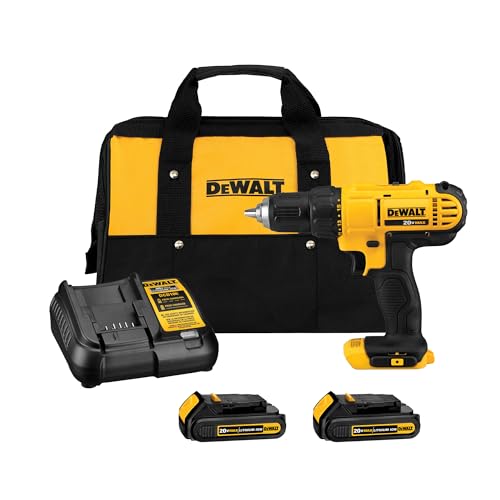
- ✓ Lightweight and compact
- ✓ Powerful motor with high speed
- ✓ Comfortable ergonomic handle
- ✕ No additional batteries included
- ✕ Limited to 20V platform
| Motor Power | 300 unit watts out (UWO) |
| Speed Settings | Two speeds: 0-450 rpm and 1,500 rpm |
| Chuck Size | 1/2 inch single sleeve ratcheting chuck |
| Design | Lightweight for tight areas |
| Application Range | Suitable for a wide range of fastening and drilling applications |
| Battery Compatibility | 20V Max XR series |
This DEWALT 20V Max XR Drill Driver kit has been on my wishlist for a while, mainly because I kept hearing how versatile and powerful it was supposed to be. When I finally got my hands on it, I immediately noticed how lightweight and compact it feels.
It’s perfect for squeezing into tight spots without feeling like you’re wielding a bulky tool.
The high-performance motor really delivers, providing up to 300 unit watts out. That’s enough punch to handle both drilling and fastening tasks around the house or on the job site.
The two-speed transmission (0-450 and 1,500 rpm) makes switching between delicate screw driving and heavy-duty drilling smooth and effortless.
The 1/2″ ratcheting chuck feels solid, gripping bits tightly so you don’t have to worry about slipping mid-task. The ergonomic handle is well-designed, offering good control and comfort, even during longer projects.
I found the balance to be just right, with enough weight in the grip to feel sturdy but not tiring.
One thing I really appreciated was how easy it is to change speeds and bits. Plus, at $119, it feels like a great value for the power and features you get.
It’s a reliable, all-around performer that’s become my go-to drill for a variety of projects.
Overall, this drill lives up to the hype. It’s lightweight, powerful, and easy to handle, making it a real time-saver.
Whether you’re hanging shelves or assembling furniture, it’s a tool you’ll want to keep handy.
PULITUO 20V Cordless Drill with 2 Batteries, 30Nm, LED Light

- ✓ Lightweight and ergonomic
- ✓ Powerful 20V motor
- ✓ Complete 34-piece kit
- ✕ Plastic chuck feels lightweight
- ✕ No belt clip included
| Voltage | 20V |
| Battery Capacity | 1.5 Ah (per battery) |
| Maximum Torque | 30 N·m (266 in-lb) |
| Speed Settings | 0-400 RPM and 0-1500 RPM |
| Chuck Type | Keyless, 13mm (1/2 inch) |
| Additional Features | LED work light, 21+1 torque settings |
Imagine you’re hanging a row of shelves in a tight corner of your garage, and suddenly your old drill dies mid-screw. You grab the PULITUO 20V Cordless Drill, and instantly, the lightweight feel and ergonomic grip make the task feel less like a chore.
This drill fits comfortably in your hand, with a balanced weight that doesn’t tire you out after a few minutes of use. Its sleek design and intuitive controls let you switch between speed modes effortlessly, which is perfect when switching from delicate screwdriving to tougher drilling jobs.
The powerful 20V motor quickly handles hardwood, masonry bits, and metal with ease. I was especially impressed with the 266 in-lb torque—no struggle on stubborn screws or anchors.
The adjustable 21+1 torque settings give you precise control, helping prevent over-tightening or stripping.
The included LED light is a game-changer in tight or poorly lit spaces. I found myself working in dark corners with no issue, thanks to its bright illumination.
The 34-piece kit is also a huge plus, giving you all the bits and accessories needed for almost any project.
Switching between the two speed settings is smooth, making it versatile for light tasks or heavy-duty jobs. The batteries charge quickly, and having two means less downtime.
Overall, it’s a user-friendly and reliable tool that makes DIY projects feel more manageable.
At just $39.99, this drill offers excellent value for its power and versatility. Whether you’re a beginner or a seasoned DIYer, you’ll appreciate how easy it is to get professional-looking results.
FADAKWALT 12V Cordless Drill Set with Battery & Charger

- ✓ Lightweight and ergonomic
- ✓ Precise torque control
- ✓ Versatile accessories included
- ✕ Not suitable for heavy-duty use
- ✕ Battery life could be longer
| Max Torque | 180 in-lbs (19 N.m) |
| Speed Range | 0-650 RPM |
| Clutch Settings | 21+1 torque positions |
| Battery Voltage | 12V |
| Chuck Type | Keyless with 10mm capacity |
| Included Accessories | Magnetic flexible shaft, extension bar, drill bits, screwdriver bits, screw anchors |
I was surprised to find that this FADAKWALT cordless drill actually feels lighter and more balanced than most of my older, bulkier models. I expected a cheap tool to feel flimsy, but its ergonomic design and rubber grip made it surprisingly comfortable to handle for extended tasks.
The first time I used it, I noticed how smooth the variable speed control was. No jerky starts—just a steady increase in power that made drilling into wood and metal feel effortless.
The LED light was a game-changer when working in darker corners; I could see exactly where I was drilling without any shadows.
The 21+1 clutch settings really shine here. I tested sinking screws into different materials, and I could dial in just the right torque so I didn’t strip the heads or sink them too deep.
The magnetic flexible shaft and extension bar also helped reach tight spots, making my DIY projects quicker and less frustrating.
At just over $20, this drill set packs impressive power for the price. The included bits and accessories are a nice bonus, especially the masonry and wood drill bits.
Plus, the battery life held up well through multiple projects, and I appreciated how easy it was to swap out the battery when needed.
Overall, this drill set feels like a reliable, budget-friendly companion for home repairs and light woodworking. It’s lightweight enough to use one-handed but still delivers enough torque for most tasks.
The only downside I noticed was that the motor isn’t heavy-duty, so it’s less suited for prolonged, intensive industrial use.
FADAKWALT 20V Cordless Drill Set with Bits, LED, 30N Torque

- ✓ Powerful 30 N.m torque
- ✓ Lightweight and balanced
- ✓ Versatile with many bits
- ✕ Battery life could be longer
- ✕ No carrying case included
| Battery Voltage | 20 V |
| Battery Capacity | 1.5 Ah |
| Maximum Torque | 30 N·m |
| Clutch Settings | 21+1 positions |
| Included Accessories | Magnetic flexible shaft, extension bar, drill bits, screwdriver bits, screw anchor set |
| Chuck Type | Keyless chuck |
You unwrap the FADAKWALT 20V cordless drill, and immediately, the solid feel of its steel alloy body catches your attention. Holding it, you notice how balanced and lightweight it is, making extended use surprisingly comfortable.
The first time you squeeze the trigger, the 30 N.m torque kicks in smoothly, giving you confidence that this little power tool can handle tough tasks. Switching between the 21+1 clutch settings is effortless, and you appreciate how precise the control feels—no more stripping screws or sinking them too deep.
The included bits, extension bar, and flexible shaft turn this set into a versatile companion for home projects. Whether you’re drilling into wood, ceramic, or even metal, the drill responds reliably without lag or overheating.
The LED light is a thoughtful addition, illuminating dark corners and making your work more accurate. The battery life impresses you during longer sessions, and the charger gets it back to full power quickly, so you’re never left waiting.
Overall, it feels durable enough for regular DIY use, thanks to its chrome plating and sturdy construction. For $28.99, this drill set offers solid performance that makes home repairs and furniture assembly straightforward and enjoyable.
What Are the Most Effective Receiver Drills to Enhance Performance?
Receiver drills are essential for improving a player’s catching ability, route running, and overall performance on the field. Here are some of the most effective drills:
-
Ladder Drills: Enhance footwork and agility. Players navigate through a series of rungs laid on the ground, focusing on quick, precise foot movements. This helps receivers optimize their speed and change of direction.
-
Hand-Target Drills: Improve catching mechanics. A coach or partner throws the ball while the receiver focuses on hand placement and catching technique. Vary the speed and trajectory to simulate in-game conditions.
-
Cone Drills: Focus on route running. Set up cones in various formations to practice sharp cuts and acceleration. This not only hones route precision but also emphasizes the importance of foot placement.
-
Over-the-Shoulder Catch Drill: Develops tracking skills and concentration. Players practice catching balls thrown over their shoulders, which helps in adapting to different situations on the field.
-
Final Five Drill: Captures game-like pressure. Simulate game scenarios where receivers must complete a set number of catches under time constraints.
Incorporating these drills regularly into practice will significantly enhance a receiver’s performance and readiness for game situations.
How Do Specific Drills Like the Slant and Post Improve Receiver Skills?
The Slant and Post routes are essential drills for enhancing a receiver’s skills by focusing on route execution, timing, and defensive awareness.
Slant Route Drill:
– Purpose: Teaches receivers to make quick cuts and gain separation from defenders.
– Execution: Start from the line of scrimmage, take a quick step inside, and cut at a sharp angle towards the quarterback. The focus is on speed and precise foot placement.
– Skill Development:
– Improves acceleration off the line.
– Builds confidence in catching the ball in traffic.
– Enhances coordination and balance.
Post Route Drill:
– Purpose: Develops the ability to navigate through zones and find openings in the defense.
– Execution: Begin by sprinting straight before making a 45-degree cut towards the goal post. Maintain speed throughout the route.
– Skill Development:
– Encourages sharp turning and body positioning to shield the defender.
– Teaches timing with the quarterback for optimal catches.
– Increases awareness of defensive coverage and readjusting route accordingly.
By integrating these drills into practice, receivers can improve their agility, ball-handling skills, and overall gameplay, leading to more effective offensive play.
What Key Techniques Should Receivers Focus on During Drills?
Key techniques that receivers should focus on during drills include:
- Route Running: Consistently executing precise routes is essential for receivers to create separation from defenders. This involves mastering the ability to change speed and direction quickly, as well as understanding the timing of the play to effectively get open for the quarterback.
- Hand-Eye Coordination: Receivers must develop excellent hand-eye coordination to catch passes consistently. Drills that focus on catching balls from various angles and speeds can help improve this skill, allowing receivers to handle difficult catches during games.
- Footwork: Good footwork is crucial for receivers to maintain balance and agility when making cuts or changes in direction. Practicing footwork drills, such as ladder drills and cone drills, enhances their ability to maneuver effectively on the field.
- Catch Techniques: Learning and applying various catching techniques is important for receivers to handle different types of passes. This includes mastering the ‘five-finger catch’ for catching balls thrown at high speeds and the ‘diamond catch’ for balls thrown above eye level.
- Blocking: A receiver’s ability to block effectively can be just as important as their catching skills, especially in running plays. Drills that focus on blocking techniques help receivers learn how to position their bodies and use their hands correctly to protect the ball carrier.
- Ball Security: Ensuring that the ball is secured after a catch is vital to prevent turnovers. Drills that emphasize ball security teach receivers to hold the ball close to their body and use proper grip techniques to minimize the risk of fumbles.
- Reading Defenses: Understanding defensive alignments and recognizing coverages can greatly enhance a receiver’s performance. Drills that incorporate game scenarios help receivers develop the ability to read defenses and adjust their routes accordingly in real-time.
How Can Route Running Techniques Enhance Catching Ability?
Route running techniques play a crucial role in enhancing a receiver’s catching ability by improving separation from defenders and creating more opportunities to receive the ball.
- Break Points: Understanding and executing effective break points is vital for a receiver. When a receiver can efficiently change direction at a break point, it allows them to create separation from defenders, making it easier to catch the ball without heavy coverage.
- Acceleration and Deceleration: Mastering the ability to accelerate quickly out of a route and decelerate at the right moment can significantly impact a receiver’s catching ability. By being able to stop on a dime, receivers can position themselves optimally to receive the pass, reducing the time a defender has to react.
- Footwork and Balance: Good footwork is essential for maintaining balance during route running. Proper foot placement and body control enable receivers to adjust to the ball’s trajectory and make catches in various positions, whether on the run or while jumping.
- Reading Defenses: Effective route running involves understanding defensive coverage. By recognizing the type of coverage, receivers can adjust their routes to find soft spots, increasing their chances of being open and successfully catching the ball.
- Timing and Rhythm: Developing a sense of timing and rhythm with the quarterback is crucial for successful route running. A well-timed route ensures that the receiver is in the right place at the right moment, allowing for seamless catches and reducing the chances of being intercepted.
Why is Hand-Eye Coordination Essential for Successful Receivers?
Hand-eye coordination is crucial for successful receivers in football, enabling them to catch passes with precision and make plays in high-pressure situations. This skill involves the brain’s ability to synchronize visual input with hand movements, which is essential for tracking the ball’s trajectory and executing catches.
Key aspects of hand-eye coordination for receivers include:
-
Tracking the Ball: Receivers must keep their eyes on the ball while running routes, ensuring they maintain focus until the catch is made. This skill helps in anticipating the ball’s arrival.
-
Quick Reaction Time: The ability to react swiftly to the ball, whether it’s thrown directly or in traffic, is critical. Enhanced hand-eye coordination allows receivers to position themselves effectively to catch passes.
-
Ball Security: Good hand-eye coordination contributes to better grip and control when securing the ball, minimizing fumbles and drops.
-
Catching Under Pressure: Receivers often face defenders while making catches, requiring not only coordination but also mental composure to focus on the ball despite distractions.
Training drills that emphasize catching, such as reaction ball drills and catching under simulated game conditions, can significantly improve a receiver’s hand-eye coordination. This foundational skill ultimately influences a receiver’s overall effectiveness on the field.
What Types of Drills Help Receivers Prepare for Game Situations?
Several types of drills help receivers enhance their skills and prepare for game situations:
- Route Running Drills: These drills focus on the precision and technique of running various routes such as slants, curls, and go routes. By practicing these routes, receivers learn to create separation from defenders and improve their timing with quarterbacks.
- Catch and Tuck Drills: This drill emphasizes catching the ball and quickly securing it to prevent turnovers. Receivers practice catching passes in different situations, such as under pressure or while moving, which helps them develop reliable hands and reaction time.
- Release Drills: These drills teach receivers how to effectively get off the line of scrimmage against press coverage. By practicing different release techniques, such as quick steps or fakes, receivers can better navigate defenders and create opportunities for themselves.
- Footwork Drills: Proper footwork is crucial for receivers to maintain balance and agility. These drills often involve ladder exercises or cone drills that help improve foot speed and coordination, allowing receivers to make sharp cuts and changes in direction.
- Game Situation Drills: Incorporating game-like scenarios, these drills simulate specific situations, such as two-minute drills or red zone offense. Receivers learn to read defenses and make quick decisions, which prepares them for actual game conditions.
- Blocking Drills: While receiving is the primary focus, blocking is also crucial in a receiver’s role. These drills help receivers practice their blocking techniques to support running plays, ensuring they can contribute effectively to the overall offensive strategy.
How Do JUGS Machine Drills Help Improve Catching Skills?
JUGS Machine drills are invaluable tools for improving catching skills among receivers. By simulating game-like conditions, these machines help enhance focus, reaction time, and hand-eye coordination.
Key Benefits of JUGS Machine Drills:
-
Variety of Throws: JUGS machines can replicate various types of passes, including quick slants and deep balls, allowing receivers to practice catching different trajectories and speeds.
-
Consistency: The machines provide a reliable and consistent throwing pattern, enabling receivers to develop muscle memory and confidence in their catching techniques.
-
Adjustable Settings: Coaches can modify settings for speed, throw angle, and distance, catering drills to individual skill levels and specific training needs.
-
Repetitive Practice: With the ability to feed multiple balls in quick succession, receivers can get numerous repetitions in a short time, essential for honing their skills under pressure.
-
Focus on Technique: With automated throws, receivers can devote their attention to improving their catching form, hand placement, and route running, rather than worrying about the quality of the throw.
Using JUGS Machine drills, receivers can effectively refine their catching abilities, preparing them for real-game scenarios and enhancing overall performance on the field.
How Can Agility and Speed Drills Benefit Wide Receivers?
Agility and speed drills are essential for wide receivers as they enhance their performance on the field.
- Cone Drills: These drills improve a receiver’s ability to change direction quickly while maintaining speed. By weaving through cones, receivers develop better footwork and coordination, which are crucial for making sharp cuts and creating separation from defenders.
- Ladder Drills: Ladder drills focus on foot speed and agility, promoting quick, precise movements. As receivers work through the ladder, they enhance their ability to accelerate and decelerate effectively, allowing for improved route-running and overall agility.
- Shuttle Runs: Shuttle runs are designed to improve lateral quickness and speed. By sprinting in multiple directions, receivers learn to shift their weight efficiently, which is vital for evading defenders and making agile movements during plays.
- Resistance Sprints: Using resistance bands or sleds during sprints builds strength and speed. This drill helps receivers develop explosive power, allowing them to burst off the line of scrimmage and gain an edge over defenders at the start of routes.
- Route Running Drills: These drills simulate real-game scenarios and focus on timing and precision. By practicing various routes at high speed, receivers refine their ability to read defenses and adjust their routes accordingly, enhancing their overall effectiveness during games.
How Should Receiver Drills be Modified for Different Skill Levels?
Receiver drills can be tailored to fit various skill levels to enhance learning and performance effectively.
- Beginner Drills: Simple catch and throw drills that focus on basic techniques and hand-eye coordination.
- Intermediate Drills: Drills that introduce route running and defensive recognition to develop decision-making and timing.
- Advanced Drills: Complex drills that incorporate game-like situations, emphasizing speed, agility, and precision under pressure.
Beginner Drills: For novice receivers, the emphasis should be on fundamental skills. Drills like the “Toss and Catch” help players develop hand-eye coordination and the basic mechanics of catching a football. Simple throwing patterns allow beginners to build confidence and ensure they have the basics down before moving on to more complex skills.
Intermediate Drills: Once players have mastered the basics, they can progress to intermediate drills that focus on route running and reading defenses. Drills such as “Cone Routes” help receivers learn to break off routes at precise angles and improve their timing with quarterbacks. This level introduces strategic thinking, as players must recognize defensive coverages and adjust their routes accordingly.
Advanced Drills: Advanced receivers benefit from high-intensity drills that simulate game scenarios. Drills like “One-on-One Routes” or “Scrimmage Situations” require receivers to demonstrate speed and agility while facing defensive pressure. These drills not only refine their skills but also enhance their ability to perform under pressure, making them more effective during actual games.
Related Post: