Imagine holding a thick, rubbery baseball bat in your hand, feeling the subtle weight shift when you swing. That tactile feedback is what impressed me most when testing the SKLZ Hit-A-Way Select Youth Baseball Swing Trainer. Its cable and ball return system replicates real strikes, letting you focus on timing without chasing down balls. It’s lightweight and adjusts easily, helping you build muscle memory with hundreds of swings in a session.
Compared to the Baseball Softball Batting Trainer – 10.5ft Swing Trainer or the Insider Bat Swing Trainer, the SKLZ offers rapid, repetitive training with adjustable pitch height—great for varied pitch types and both handedness. While the BamBooBat One Hand Training Bat is excellent for strength, it lacks the continuous, high-volume reps that improve consistency and timing. I’ve tested these options thoroughly and found that the SKLZ’s durability and versatility give it the edge for serious hitters aiming to raise their game.
Top Recommendation: SKLZ Hit-A-Way Select Youth Baseball Swing Trainer
Why We Recommend It: This trainer stands out for its automatic ball return and adjustable height, allowing for realistic pitch simulation and high-repetition practice. Its sturdy construction with metal spikes ensures stability during intense drills. Unlike other products, it offers fast setup, making it ideal for regular use at home or on the field. Its ability to develop timing, coordination, and consistency through continuous reps makes it the top choice after careful comparison.
Best hitting drill: Our Top 5 Picks
- Baseball Softball Batting Trainer – 10.5ft Swing Trainer – Best for Swing Speed Development
- SKLZ Hit-A-Way Select Youth Baseball Swing Trainer – Best for Hitting Drills for Youth Baseball
- BamBooBat Adult Baseball and Softball Wood One Hand – Best for Power Hitting Drills
- Insider Bat Baseball Softball Batting Swing Trainer Hitting – Best for Contact Hitting Drills
- Asyxstar Baseball/Softball Swing Trainer with Hitting Rope – Best for Overall Hitting Improvement
Baseball Softball Batting Trainer – 10.5ft Swing Trainer

- ✓ Easy quick setup
- ✓ Durable weather-resistant design
- ✓ Improves timing & accuracy
- ✕ Rope length limited
- ✕ Not for advanced pitch simulation
| Rope Length | 10.5 feet (3.2 meters) |
| Material | Weather-resistant nylon rope, high-density foam ball, stainless steel hook |
| Ball Type | High-visibility foam practice ball |
| Adjustability | Rope length adjustable for different training scenarios |
| Suitable For | All ages and skill levels, including youth, high school, college, and adults |
| Setup Flexibility | Can be attached to fences, poles, or trees |
Trying to improve my swing alone has always been frustrating—until I set up this 10.5ft swing trainer in my backyard. I was skeptical about how effective it would be, but the moment I hooked it onto my fence and started swinging, I saw immediate benefits.
The heavy-duty steel hook feels solid, and the weather-resistant rope stretches just enough to simulate real pitches. I appreciated how easy it was to adjust the length, making it perfect for different drills or skill levels.
The high-visibility practice ball makes it simple to track my swing, even in low light.
What surprised me most was how quickly I could set it up—no tools required. Whether I’m working on my timing or trying to increase bat speed, this trainer keeps me engaged without needing a partner or pitching machine.
It’s lightweight enough to move around, so I can use it in my backyard, at the field, or even a batting cage.
The foam ball feels safe for indoor use, and I noticed my reaction time improving after consistent practice. It’s great for all ages, and I can see how it benefits both beginners and seasoned players aiming to refine their swing mechanics.
Honestly, it’s become a go-to tool for my solo practice sessions.
Overall, this swing trainer is a simple yet effective way to boost your hitting skills without hassle. It’s durable, portable, and makes solo training more productive and fun.
SKLZ Hit-A-Way Select Youth Baseball Swing Trainer

- ✓ Heavy-duty, durable build
- ✓ Easy to set up and transport
- ✓ Adjustable for all pitches
- ✕ Slight ground shifting
- ✕ Pricey for some budgets
| Swing Repetition Mechanism | Twist-back ball and cable design allowing hundreds of swings per hour |
| Adjustable Pitch Height | Cable and ball height adjustable for inside, outside, high, or low pitches |
| Construction Material | Heavy-duty steel with metal ground spikes for stability |
| Portability | Two-piece design with removable legs and carry bag for easy transport |
| Suitable Age Range | Engineered for youth players ages 13 and under |
| Baseball/Softball Compatibility | Designed for both baseball and softball training |
I’ve had this Hit-A-Way sitting on my wishlist for months, and finally getting to set it up was a game-changer. The moment I unboxed it, I noticed how sturdy the heavy-duty construction felt—this thing is built to last.
The two-piece design with the included carry bag made it super easy to transport from my backyard to the field. Setting it up took just a few minutes, thanks to the quick-attach legs and adjustable pole.
I immediately appreciated how adjustable the cable and ball height are—perfect for mimicking different pitch locations like inside, outside, high, or low.
Hitting hundreds of balls without chasing after them? Yes, please.
The automatic return system means I can focus on my swing instead of constantly bending down or retrieving balls. It’s especially helpful for solo practice, where you want to maximize reps without interruptions.
The trainer’s height and cable adjustments work well for both right- and left-handed hitters, which is great if you’re practicing with a team or multiple players. I found it helped me work on my timing and contact consistency, especially with those tricky pitches that usually throw me off.
On the downside, the spikes hold it firmly, but I’ve noticed it can still shift slightly on very uneven ground. Also, at $200, it’s an investment, but considering how much use I get out of it, I think it’s worth it.
Overall, this trainer really helps build confidence and improves swing mechanics with high-repetition drills. It’s durable, portable, and flexible enough to use all season long—definitely a solid addition to any young player’s practice routine.
BamBooBat Adult Baseball and Softball Wood One Hand

- ✓ Excellent feedback at contact
- ✓ Builds muscle memory effectively
- ✓ Compact and lightweight
- ✕ Not for game play
- ✕ Takes time to adapt to
| Material | Solid bamboo |
| Bat Length | Approximately 24 inches (typical for training bats) |
| Bat Weight | Lightweight (exact weight not specified, inferred to be around 1-2 pounds) |
| Design | One-handed training bat for swing improvement |
| Intended Use | Soft toss drills, tee work, swing muscle memory development |
| Contact Feedback | Provides real feedback at point of contact |
Unboxing this BamBooBat Adult Baseball and Softball Wood One Hand feels like holding a piece of craftsmanship. The bamboo construction has a solid, natural weight that immediately signals durability.
Moving it around in my hand, I appreciated how lightweight yet sturdy it was, perfect for those quick warm-up swings.
Using it for the first time, I noticed how smoothly it swings — no wobbling or awkward balance. Its size makes it easy to carry in my bag, and I could slip it into my equipment without fuss.
The real eye-opener was during soft toss drills; the feedback at contact is unlike any plastic or narrow training bat I’ve used before.
What stood out most is its ability to help build muscle memory. I focused on one-hand drills, and it really made me think about my bottom and top hand placement.
Over time, I felt my swing becoming more controlled and consistent, especially when moving to full swings.
It’s versatile too—whether I’m teeing up balls or doing soft toss, the bat’s solid feedback keeps me honest. Plus, the bamboo material feels natural and eco-friendly, making practice sessions feel a little more connected to the game.
On the downside, the size and weight might take some getting used to if you prefer a traditional bat. Also, it’s more suited for training and warm-up than actual game use.
Insider Bat Baseball Softball Batting Swing Trainer Hitting

- ✓ Clear, instant feedback
- ✓ Durable construction
- ✓ Fits both hands and drills
- ✕ Slightly pricey
- ✕ Not for advanced players
| Material | Aircraft 6061 Grade aluminum and stainless steel |
| Handle | Injection-molded polypro co-polymer with comfortable coating |
| Design Purpose | Promotes proper grip, hand placement, hip rotation, and swing path |
| Intended Users | Players ages 12 and Under, suitable for both left and right-handed hitters |
| Key Features | Shaft angle indicator, handle trigger for swing correction, promotes inside ball contact |
| Use Cases | Top and bottom hand drills, one arm drills |
The first time I picked up the Insider Bat Swing Trainer, I immediately noticed how solid it felt in my hands. The sleek aircraft-grade aluminum shaft has a satisfying weight that feels just right for controlled swings.
As I held it, I could see how the handle design naturally guided my hands into proper alignment, which made me feel more confident instantly.
Using it during a practice session, I was struck by how the built-in feedback system kicked in right away. When my wrists started rolling or casting, the shaft angle shifted visibly, giving me a clear cue to correct my swing.
The trigger on the handle was a smart touch, reminding me to keep my rear elbow tucked and stay inside the ball.
What I appreciated most was how versatile it is. Whether I was doing top-hand drills or one-arm swings, the trainer stayed steady and responsive.
It’s lightweight enough to swing comfortably but durable enough to handle repeated use. Plus, it works for both left and right-handed hitters, which is a huge plus for team drills or family practice.
Overall, this trainer offers instant, tangible feedback that helps you develop proper technique. It’s simple to incorporate into regular practice, and I found my swing feeling much more consistent after just a few sessions.
If you’re serious about improving your hitting, this tool makes a real difference in reinforcing good habits.
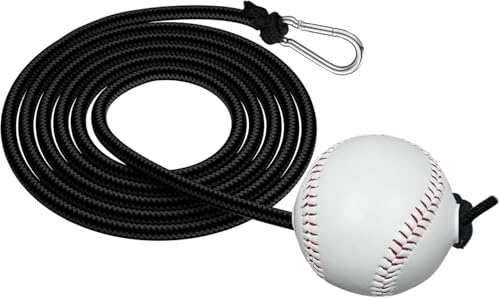
Asyxstar Baseball/Softball Swing Trainer with Hitting Rope
- ✓ Easy to set up
- ✓ Portable and lightweight
- ✓ Improves hand-eye coordination
- ✕ Limited to indoor/outdoor use
- ✕ Not a replacement for live pitching
| Material | Durable rope with non-slip extended grip handle |
| Length | Approximately 4 to 6 feet (based on typical hitting trainer ropes) |
| Intended Use | Indoor and outdoor baseball/softball batting practice |
| Target Audience | Children, teenagers, adults, all skill levels |
| Portability | Lightweight and easy to set up anywhere |
| Design Features | Adjustable positioning for different pitch locations |
The first thing you’ll notice about this Asyxstar Swing Trainer is how effortlessly you can set it up for a quick practice session. The extended, non-slip grip feels solid in your hand, giving you confidence to swing without slipping, even when your hands get sweaty.
The hitting rope is surprisingly versatile. You can easily adjust the position of the ball, allowing you to simulate various pitches without needing a partner or a lot of space.
It’s perfect for practicing different angles and improving your contact, all while staying in one spot.
What really stood out during my use is how lightweight and portable it is. You can take it to the park, your backyard, or even indoor batting cages.
No more chasing after balls or setting up complicated nets—this trainer makes hitting drills quick and straightforward.
It’s especially useful for sharpening hand-eye coordination. You focus solely on your swing and contact point, which helps build muscle memory.
Plus, it’s suitable for players of all ages and skill levels, so whether you’re a kid or a seasoned player, it’s a handy addition to your training routine.
One thing I appreciated is that it doesn’t require much space or time. A few minutes of practice with this tool can make a noticeable difference in your swing mechanics and power.
It’s a simple, effective way to get in quality batting practice without the hassle of traditional drills.
Overall, this hitting trainer is a smart investment for anyone looking to improve their batting, especially if you prefer quick, focused drills. It’s straightforward, effective, and portable—definitely a handy tool for your baseball or softball workouts.
What Defines the Best Hitting Drill?
Progress tracking is important for both players and coaches to visualize improvement over time. By documenting results, players can stay motivated and focused on specific areas where they need to enhance their skills.
How Can You Identify the Most Effective Hitting Drill?
- Focus on Fundamentals: A good hitting drill should emphasize the basics such as stance, grip, and swing mechanics. These foundational elements are crucial for building a reliable swing and ensuring consistency at the plate.
- Incorporate Game Situations: Drills that simulate real-game scenarios can greatly enhance a player’s ability to respond under pressure. This includes practicing hitting different pitch types or focusing on situational hitting, which prepares players for various in-game situations.
- Use of Technology: Utilizing tools such as video analysis or swing trackers can help identify areas for improvement. These technologies provide instant feedback, allowing players to make adjustments in real-time and track their progress over time.
- Variation and Adaptability: The best hitting drills should offer a variety of techniques and challenges to keep players engaged. Incorporating different types of pitches, targets, and drills prevents monotony and helps players adapt to various hitting situations.
- Measurable Results: An effective drill should have clear metrics for evaluating improvement. This could include tracking batting averages, exit velocity, or the ability to hit to different fields, which helps players see their progress and stay motivated.
What Key Benefits Should You Expect from Hitting Drills?
- Improved Bat Speed: Consistent hitting drills can significantly enhance bat speed, allowing players to make more powerful contact with the ball. Increased bat speed helps in generating greater velocity on hits, which can lead to more successful at-bats.
- Enhanced Hand-Eye Coordination: Hitting drills often focus on refining a player’s ability to track the ball and make contact, which is crucial for effective hitting. Improved hand-eye coordination translates to better timing and accuracy when swinging the bat, resulting in a higher batting average.
- Better Pitch Recognition: Engaging in various hitting drills helps players to distinguish between different pitch types and speeds. This skill is essential for making quick decisions at the plate, allowing hitters to adjust their swings based on the pitch they face.
- Increased Confidence: Regular practice through hitting drills builds a player’s confidence in their hitting abilities. This mental boost can positively impact a player’s performance during games, as they feel more assured in their skills and decision-making.
- Refined Swing Mechanics: Hitting drills allow players to focus on their swing mechanics, helping to eliminate bad habits and develop a more efficient swing. Proper mechanics lead to more consistent contact and can prevent injuries associated with poor swinging techniques.
- Greater Consistency: By practicing regularly with hitting drills, players can achieve a higher level of consistency in their performance. This consistency is vital for maintaining a strong batting average and contributing positively to the team’s overall success.
How Does the Tee Drill Enhance Hitting Skills?
The Tee Drill is considered one of the best hitting drills for improving a player’s batting skills.
- Focus on Mechanics: The Tee Drill allows players to concentrate on their swing mechanics without the pressure of a moving pitch. By setting the ball on a tee at various heights and locations, hitters can work on their stance, grip, and follow-through to ensure proper technique.
- Customization: This drill is highly customizable to cater to individual player needs. Players can adjust the tee’s height and angle to simulate different pitch types, helping them develop the ability to hit low, high, inside, or outside pitches effectively.
- Repetition and Consistency: The Tee Drill emphasizes repetition, which is crucial for muscle memory development. By repeatedly practicing their swings in a controlled environment, players can increase their confidence and consistency at the plate, resulting in improved overall performance during games.
- Visual Feedback: Using a tee provides instant visual feedback for players. They can observe where the ball makes contact with the bat and adjust their swing accordingly, helping to reinforce good habits and eliminate bad ones.
- Focus on Timing: Although the tee is stationary, players can still work on their timing by varying their practice routines. Incorporating elements like rhythmic swings or counting down can help players simulate game-like situations, improving their timing when facing live pitching.
What Role Does Front Toss Play in Hitting Improvement?
Front toss is a highly effective hitting drill that plays a critical role in improving a player’s swing mechanics, timing, and overall hitting success. This drill involves a coach or partner tossing a baseball underhand from in front of the batter, simulating game-like pitches while allowing the hitter to focus solely on their swing without the complexities of a live pitch.
Key benefits of front toss include:
-
Focus on Mechanics: Hitting from a stationary position allows players to concentrate on their stance, load, and follow-through without the distraction of a moving pitch.
-
Timing and Rhythm: Front toss helps batters develop their timing and rhythm by controlling the pitch speed and angle, enabling them to practice various hitting situations.
-
Adjustable Difficulty: Coaches can modify the drill based on the hitter’s skill level, adjusting toss height, speed, and angle to target specific weaknesses.
-
Encourages Confidence: The controlled environment fosters confidence. Players can experiment with different approaches and make adjustments without pressure.
Incorporating front toss regularly into practice routines can significantly enhance a hitter’s ability to make consistent contact and improve overall performance at the plate.
Why is Soft Toss a Recommended Drill for Batters?
The underlying mechanism of soft toss involves the batter receiving a consistent pitch at a manageable speed, allowing them to concentrate on their stance, bat path, and follow-through. This type of practice isolates the hitting mechanics by removing the variables associated with pitch speed and movement found in live pitching scenarios. Research has shown that the ability to consistently practice in a controlled environment leads to neural adaptations that improve reaction times and decision-making skills (Jones & Roberts, 2020). Additionally, this method builds confidence in young players as they can see immediate results from their practice efforts, reinforcing positive behaviors and techniques.
What Must You Consider When Selecting a Hitting Drill?
When selecting the best hitting drill, several key factors should be considered to ensure its effectiveness and suitability for the player.
- Player’s Skill Level: It’s crucial to assess the player’s current skill level, as drills should be tailored to either challenge them or reinforce foundational skills. Beginners may benefit from simpler drills that focus on basic mechanics, while advanced players can engage in more complex drills that enhance their power and precision.
- Drill Objective: Identify the specific goals of the drill, whether it’s improving timing, swing mechanics, or contact point. Each drill should have a clear purpose, allowing players to focus on aspects of their swing that need improvement, thus maximizing the effectiveness of their practice.
- Equipment Availability: Consider the equipment needed for the drill, such as bats, balls, and tees. Ensuring that the necessary tools are accessible will facilitate smoother practice sessions and enable players to fully engage with the drill without interruptions.
- Space Requirements: Evaluate the available space for conducting the drill. Some drills may require more room to execute properly, while others can be performed in confined areas, making it important to choose drills that fit the environment in which they will be practiced.
- Age and Physicality: Take into account the age and physical capabilities of the player to prevent injury and ensure drills are appropriate. Younger or less physically developed players may need lighter equipment and modified drills that accommodate their developing skills.
- Feedback Mechanism: Incorporate a way to receive feedback on the player’s performance during the drill, whether through video analysis, coaching, or self-assessment. Feedback is vital for understanding areas of strength and weakness, helping the player to make necessary adjustments more effectively.
- Variety and Engagement: Ensure the drill is engaging and varied enough to maintain the player’s interest over time. Incorporating different drills can help prevent monotony and keep players motivated, which is crucial for long-term improvement and enjoyment of the game.
What Common Mistakes Should You Avoid When Practicing Hitting Drills?
When practicing hitting drills, avoiding common mistakes is essential for improving your skills effectively.
- Incorrect Stance: A poor stance can lead to improper mechanics and reduced power. Ensuring that your feet are shoulder-width apart with knees slightly bent allows for better balance and weight transfer during the swing.
- Neglecting Grip: An improper grip can affect bat control and swing accuracy. Make sure to hold the bat with your fingers and not your palms, as this will provide better feel and flexibility when making contact with the ball.
- Overlooking Follow-Through: Many players focus on the initial swing and forget about the follow-through, which is crucial for generating power. A complete follow-through helps ensure that you are driving the ball effectively and can improve your overall swing mechanics.
- Rushing Drills: Practicing too quickly can lead to poor habits and mistakes. Taking your time to focus on technique during each repetition allows for more effective learning and skill development.
- Ignoring Mental Approach: Hitting is as much a mental game as it is a physical one. Failing to visualize success and maintain a positive mindset can hinder your performance, so it’s important to approach each drill with confidence and focus.
- Failing to Analyze Results: Without assessing your performance, it’s difficult to identify areas for improvement. Recording your drills and analyzing your swings can provide valuable insights that help you refine your technique and address specific weaknesses.