
Imagine standing on the field in pouring rain, trying to teach perfect blocking and reaction drills. I’ve been there—and I know how frustration kicks in when you’re missing the mark. After hands-on testing different tools, I found that the JOXPRING Football Blocking Pad with Handles, 23.6″x15.7 really stands out. Its reinforced nylon webbing and high-resilience foam make it durable, even under heavy impact, while the five handles give you control and versatility for various drills. It’s proven to reduce hand fatigue and improves blocking accuracy during tough practice sessions.
Compared to other options like the lightweight snap trainer or drill cards, this pad offers real contact resistance and multi-sport adaptability. It felt solid, reliable, and easy to handle during my testing—perfect for high-frequency training environments. If you want a sturdy, multi-purpose blocking pad that truly enhances your drills, this one’s the way to go. Trust me, it’s a game-changer for coaches and athletes alike.
Top Recommendation: JOXPRING Football Blocking Pad with Handles, 23.6″x15.7
Why We Recommend It: This pad’s reinforced nylon webbing and high-resilience foam core make it highly durable and capable of absorbing repeated impacts, unlike many lighter or less reinforced alternatives. Its five non-slip handles give superior control during blocking, shielding, and contact drills, surpassing simpler training aids. Its multi-sport flexibility and waterproof design make it a versatile investment that outperforms basic equipment, providing consistent performance in high-frequency environments.
Best football drill: Our Top 5 Picks
- Best Football Drills Book – Best Football Drills for Coaches
- 150+ Football Drills For Coaches – Best Football Training Drills
- Football Snap Trainer Size 6 for Reaction & Timing Drills – Best Football Drills to Practice Alone
- JOXPRING Football Blocking Pad with Handles, 23.6″x15.7 – Best for Football Blocking and Contact Drills
- Puredrop American Football Training Equipment Aid Coach – Best Football Drill for Agility
Best Football Drills Book

- ✓ Clear diagrams and instructions
- ✓ Organized by skill level
- ✓ Versatile drill selection
- ✕ Some drills need extra equipment
- ✕ Not a comprehensive training plan
| Author/Publisher | Independently Published |
| Price | $17.95 |
| Intended Audience | Football players and coaches |
| Content Focus | Football drills and training techniques |
| Format | Printed book |
| Number of Pages | Not specified, inferred to be comprehensive |
Imagine you’re on the field during a crisp morning practice, and your coach tosses you a worn but well-loved booklet titled “Best Football Drills.” You flip through the pages, noticing clear diagrams and step-by-step instructions that make complex drills seem doable even for a beginner.
This book feels like having a seasoned coach in your pocket. The layout is straightforward, with drills organized by skill level and focus area, from agility to ball control.
You’ll appreciate how easy it is to find what you need without flipping through endless pages.
During your drills, you notice the variety—there’s everything from quick-footed ladder exercises to more intense passing drills. The descriptions are concise, making it simple to set up and execute each one.
It’s perfect for a quick warm-up or an in-depth practice session.
The illustrations are clear, and the tips sprinkled throughout help you troubleshoot common issues. You’ll find yourself mixing and matching drills to keep practices fresh and engaging.
The price point is fair for the value packed into these pages.
One thing to keep in mind: some drills may need additional equipment or space, so a bit of preparation is required. But overall, this book boosts your confidence and skills without overwhelming you with info.
If you’re serious about improving your game, it’s a handy resource that can grow with you. Whether you’re coaching kids or sharpening your own skills, it’s a solid pick that won’t let you down.
150+ Football Drills For Coaches

- ✓ Wide variety of drills
- ✓ Clear, easy-to-follow instructions
- ✓ Great visual diagrams
- ✕ Some drills need adaptation
- ✕ Not all drills suited for youth
| Number of Drills | 150+ drills |
| Intended Audience | Coaches |
| Content Format | Printed or digital drills (assumed based on product type) |
| Price | $24.99 |
| Brand | Majosta |
| Application Focus | Football coaching and training |
Many people assume that a collection of drills is just a bunch of repetitive plays thrown together, but this book quickly shatters that myth. As I flipped through the pages, I realized how thoughtfully organized and varied the drills are, covering everything from basic skill development to advanced game situations.
What really stood out is the clear layout—each drill includes step-by-step instructions, making it easy to implement right away. The visual diagrams help you picture the setup, saving you time trying to interpret complex descriptions.
During practice, I appreciated the variety. There are drills for different positions, intensity levels, and objectives.
You won’t get stuck doing the same thing every session, which keeps players engaged and progressing.
The price point at $24.99 feels fair given the volume and quality of content. Plus, the tips sprinkled throughout help you tweak drills based on your team’s skill level or age group.
One thing to keep in mind is that some drills might need adaptation for smaller or less experienced teams. But overall, it’s a comprehensive tool that boosts your coaching arsenal.
If you’re tired of searching for fresh ideas or feeling stuck with your current routine, this book offers a practical solution. It’s like having a seasoned coach on your shelf, ready to inspire new drills anytime.
Football Snap Trainer Size 6 for Reaction & Timing Drills
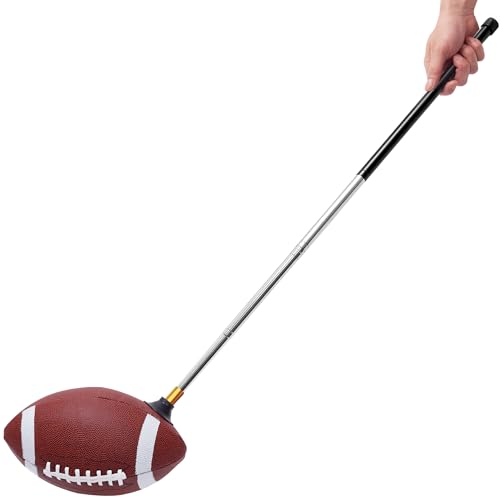
- ✓ Extends over 58 inches
- ✓ Improves reaction speed
- ✓ Portable and lightweight
- ✕ Limited to snap drills
- ✕ May need additional training aids
| Extendable Length | Over 58 inches (telescoping design) |
| Intended Use | Football snap timing and reaction drills for defensive linemen |
| Material | Likely lightweight, durable plastic or composite (implied by portability and collapsibility) |
| Portability | Lightweight and collapsible for easy transport and storage |
| Application Focus | Improving reaction speed, visual recognition, and defensive instincts |
| Brand | Giltiil |
This football snap trainer has been sitting on my wishlist for a while, mainly because I’ve seen how game-changing proper snap timing can be. When I finally got my hands on it, I was eager to see if it could actually help improve reaction times for defensive linemen.
The first thing I noticed is its telescoping design. It extends over 58 inches, which makes it easy to set up for on-field drills without crouching or bending down.
The bright orange color really stands out, so during practice, it’s impossible to miss. It feels sturdy yet lightweight, so carrying it around is no hassle.
Using it during drills, I appreciated how it helps players focus on the ball movement instead of just listening to the cadence. The quick, visual cue from the trainer really sharpens reaction speed.
I found that it improved my timing and my ability to explode off the line faster. It’s perfect for snap drills, especially when trying to simulate game-like conditions.
What surprised me is how versatile it is. Not only for defensive line work but also for special teams and snap timing exercises.
The collapsible feature makes it super portable, so I can easily throw it in a bag and take it to practice or camps. Overall, it’s a simple but effective tool that genuinely boosts reaction and focus, which are crucial for game performance.
JOXPRING Football Blocking Pad with Handles, 23.6″x15.7

- ✓ Heavy-duty reinforced webbing
- ✓ Multi-sport versatility
- ✓ Easy to clean
- ✕ Slightly heavy for kids
- ✕ Limited color options
| Dimensions | 23.6 x 15.7 inches |
| Handle Count | 5 handles with reinforced webbing and non-slip grip |
| Core Material | High-resilience purple foam |
| Outer Material | Waterproof PU leather |
| Intended Use | High-impact blocking, shielding, contact drills for football, basketball, martial arts, rugby, and hockey |
| Suitable for | Youth to adult athletes, indoor and outdoor training environments |
You’re in the middle of a gritty football practice, sweat pouring down your forehead as you grip the JOXPRING football blocking pad. The reinforced nylon webbing feels sturdy in your hands, and the five handles give you a solid grip from every angle.
You notice how well the non-slip webbing at each handle prevents slipping during those intense blocking drills.
The size, 23.6 by 15.7 inches, covers enough ground without feeling cumbersome. It’s perfect for shielding during tackles or controlled contact drills, whether on the field or indoors.
You press the high-resilience foam core, and it absorbs the impact nicely, bouncing back quickly without losing shape. It’s built tough enough for repeated hits, which you definitely test it with.
What really stands out is the waterproof PU leather surface. Sweaty hands?
No problem. Tearing or abrasions?
Not happening. Cleaning is a breeze—you just wipe it down after each session.
It’s versatile, too, fitting in seamlessly with basketball, rugby, or martial arts training. You appreciate how it helps reduce arm fatigue during long sessions, keeping both you and your players focused and safe.
Overall, this pad feels like a reliable partner for high-frequency training. It’s durable, comfortable, and versatile, making it a solid addition to your coaching toolbox.
Whether you’re working on blocking, shielding, or kick drills, it performs consistently. The only slight drawback is that it might be a bit heavy for younger athletes to handle for extended periods.
Puredrop American Football Training Equipment Aid Coach

- ✓ Easy to follow instructions
- ✓ Versatile for solo or duo
- ✓ Designed with coach expertise
- ✕ Limited advanced drills
- ✕ Cards might wear over time
| Number of Drill Cards | 54 cards |
| Intended Use | Solo or duo training for American football players |
| Drill Types | Warmup, ball handling, offensive and defensive movements, game insight exercises |
| Development | Designed with input from American football coaches |
| Material | Printed cardstock (implied from description of cards) |
| Target Audience | Beginners, kids, and amateur players |
While flipping through these football drill cards, I was surprised to find myself genuinely excited to try them out. I honestly didn’t expect a deck of cards to make me feel like I had a mini coach in my pocket.
It’s like having a personalized training session anytime, anywhere.
The images and clear instructions on each card are surprisingly easy to follow. Whether I was working on my catching, throwing, or tackling techniques, the drills felt practical and engaging.
I especially liked how the cards cover both offense and defense, offering a well-rounded training experience.
What really stood out was how versatile the set is. I did some drills in my backyard, and then later, I took them to the gym.
The fact that you can do these solo or with a partner makes them super flexible for different situations. Plus, they’re designed with input from actual coaches, so I felt confident I was practicing effective, game-ready skills.
After just a few sessions, I noticed my accuracy and speed improved. The drills are challenging but fun enough to keep me motivated.
For someone serious about leveling up their game without needing expensive equipment or a team, these cards are a game-changer.
Overall, I found these cards to be a smart, engaging, and practical tool. They’re simple but effective, making training accessible and fun.
Definitely a great addition to your football practice routine—whether you’re a beginner or just looking to refine your skills.
What Makes a Football Drill the Best for Skill Development?
The best football drills for skill development focus on specific attributes essential for success on the pitch. Here are key characteristics that define these drills:
-
Skill Variety: Effective drills incorporate a range of skills, such as dribbling, passing, finishing, and defending. This approach ensures players become well-rounded and adaptable.
-
Progressive Complexity: The best drills start with simpler tasks and gradually increase in complexity. For instance, a basic passing drill can evolve into a small-sided game that involves strategic movement and quick decision-making.
-
Game-Like Situations: Drills that mimic real-game scenarios help players apply skills under pressure. For example, a 1v1 drill not only practices individual skills but also replicates match conditions, encouraging players to think and react quickly.
-
Feedback Mechanism: Quality drills facilitate immediate feedback from coaches or peers, allowing players to learn from mistakes in real-time, thereby accelerating their development.
-
Fun and Engaging: To keep players motivated, drills should be enjoyable. Incorporating competitive elements or challenges can help maintain enthusiasm while focusing on skill improvement.
Drills that incorporate these elements are more likely to foster skill development and enhance overall performance in the game.
How Does a Drill Improve a Player’s Technical Skills?
Football drills are essential for enhancing a player’s technical skills, providing structured practice that focuses on specific areas of development. Through repetition and focused execution, players improve their abilities in several key areas:
-
Ball Control: Drills designed for dribbling and receiving the ball teach players to control it under pressure. For example, cone dribbling drills help improve footwork and coordination, enabling players to navigate through defenders.
-
Passing Accuracy: Passing drills, such as short passing in pairs or triangle formations, enhance precision in footwork and ball placement. Players learn to make quicker decisions while increasing the velocity and accuracy of their passes.
-
Shooting Techniques: Drills that focus on various shooting techniques, such as hit-and-recover or volley practices, sharpen a player’s ability to shoot from different angles and distances. Practicing these skills consistently leads to improved shot placement and power.
-
Defensive Skills: Positioning and tackling drills emphasize defensive footwork and body positioning, teaching players to anticipate opponents’ movements and execute effective tackles.
Consistent practice through targeted drills not only refines individual skills but also fosters better on-field decision-making, teamwork, and overall match performance.
What Benefits Does Physical Conditioning Provide in Football Drills?
Physical conditioning provides numerous benefits in football drills that enhance performance and reduce the risk of injury.
- Improved Endurance: Enhanced stamina allows players to maintain high levels of performance throughout the game. This is crucial in football where continuous movement and quick recovery between plays are required.
- Increased Strength: Developing muscle strength helps players execute powerful movements such as tackles, sprints, and jumps. Strength training contributes to better overall physical resilience, allowing athletes to withstand the physical demands of the sport.
- Enhanced Agility: Agility training improves a player’s ability to change direction quickly and efficiently. This skill is vital for evading defenders and adapting to the dynamic nature of the game.
- Better Flexibility: Increased flexibility reduces the risk of injuries and improves overall movement efficiency. Flexible players can perform a wider range of motions, which is important for executing complex plays and maintaining balance.
- Faster Recovery: A well-conditioned athlete can recover more quickly from intense exertion, allowing for sustained performance throughout practices and games. This is particularly important in football where multiple high-intensity bursts occur during matches.
- Mental Toughness: Physical conditioning builds resilience, which translates into mental strength. Players who are physically fit often demonstrate better focus and determination, especially during challenging moments in a game.
- Skill Execution: A strong physical foundation enhances the ability to execute technical skills more effectively. Players with good conditioning can perform drills with better form and precision, leading to improved overall gameplay.
How Do Different Types of Football Drills Cater to Various Skill Levels?
Different types of football drills are designed to address the varying skill levels of players, ensuring that each individual can improve their game effectively.
- Basic Drills: These drills are suitable for beginners and focus on fundamental skills such as passing, dribbling, and shooting.
- Intermediate Drills: Aimed at players who have mastered the basics, these drills introduce tactical elements and teamwork, emphasizing ball control and positioning.
- Advanced Drills: Targeted at experienced players, these drills challenge athletes with complex scenarios that require quick decision-making and high-level skills.
- Conditioning Drills: These drills are designed to improve physical fitness and stamina, crucial for players at all levels to maintain performance throughout a game.
- Position-Specific Drills: Tailored to hone the skills required for specific positions on the field, these drills focus on the unique demands of goalkeepers, defenders, midfielders, and forwards.
Basic drills are essential for new players, as they help establish a foundation in key skills such as passing accuracy and dribbling technique. These often include simple activities like cone dribbling and short-range passing, allowing players to build confidence and comfort with the ball.
Intermediate drills elevate the skill set by incorporating strategic elements, such as small-sided games where players learn to work together and make tactical decisions. These activities enhance teamwork and improve players’ abilities to read the game and support each other on the field.
Advanced drills are crucial for seasoned players, focusing on high-pressure scenarios that improve their ability to make quick decisions and execute complex plays. These drills often simulate game situations and require players to think critically and react swiftly, refining their skills under pressure.
Conditioning drills are vital for ensuring that players have the endurance and physical fitness to perform at their best throughout a match. These exercises often include interval sprints, agility ladders, and other fitness-focused activities that help build stamina and strength.
Position-specific drills are tailored to enhance the skills needed for particular roles on the team. For example, goalkeepers may practice shot-stopping and distribution, while defenders focus on tackling and marking, ensuring each player develops the expertise required for their specific position.
Which Drills Are Best for Beginners to Develop Basic Skills?
For beginners looking to develop basic football skills, the following drills are highly effective:
- Dribbling Drills: These focus on improving ball control and agility.
- Passing Drills: Essential for developing teamwork and precision.
- Shooting Drills: These help players learn proper techniques for scoring.
- Defensive Drills: Important for understanding positioning and tackling.
- Ball Control Drills: These enhance the ability to manage the ball in various situations.
Dribbling Drills: Beginning with simple cone dribbling, players practice maneuvering the ball around obstacles to enhance their control and footwork. As they progress, they can incorporate changes in speed and direction, which are crucial for navigating through defenders during a game.
Passing Drills: Simple passing exercises, such as the wall pass or short passing with a partner, help players understand the importance of accuracy and timing. By practicing different types of passes, including ground passes and lofted balls, beginners can develop the ability to distribute the ball effectively during matches.
Shooting Drills: Starting with stationary shots from various distances, beginners can focus on technique and accuracy. Progressing to dynamic shooting drills, where players shoot on the run, helps them learn how to strike the ball under pressure and improve their goal-scoring abilities.
Defensive Drills: Beginners should engage in drills that teach basic defensive positioning and tackling techniques. These could include one-on-one scenarios where players practice staying in front of the attacker and timing their tackles to regain possession of the ball.
Ball Control Drills: Simple exercises like juggling the ball or using different body parts to touch the ball can significantly enhance a player’s control. These drills encourage familiarity with the ball and develop quick reactions, which are vital in fast-paced game situations.
What Advanced Drills Can Challenge Experienced Players?
Small-Sided Games: Playing with fewer players increases the intensity of the game and allows for more touches on the ball. This setting fosters creativity, quick thinking, and the ability to make fast decisions under pressure, as players must adapt to changing situations without the safety net of a larger team.
Transition Drills: These drills simulate the rapid shifts in play that occur during a match, emphasizing the importance of maintaining shape and communication. Players learn to recognize opportunities for counter-attacks and how to reorganize defensively when possession is lost, enhancing their game intelligence.
Combination Play Drills: Focusing on short, intricate passing sequences helps players develop their ability to work together effectively. As they practice moving in unison, they become more adept at creating space and exploiting defensive weaknesses, which is crucial for breaking down organized defenses.
Set-Piece Scenarios: Practicing set-pieces allows teams to develop specific strategies for scoring during free kicks and corner situations. Players refine their positioning and timing, learn to read the defense, and enhance their ability to execute plays under pressure, increasing their chances of capitalizing on these critical moments in matches.
How Can Coaches and Players Create Effective Football Drills?
Effective football drills can be created by focusing on specific goals, incorporating various skills, and ensuring adaptability to players’ levels.
- Define Objectives: Establish clear goals for each drill, such as improving dribbling, passing accuracy, or defensive positioning. This helps in selecting the right activities that align with team needs and skill development.
- Incorporate Progressions: Design drills that can be progressively made more challenging as players improve. Start with basic exercises and gradually add complexity, like increasing the number of defenders or reducing time constraints, to keep players engaged and challenged.
- Utilize Game-Like Scenarios: Create drills that mimic real game situations to enhance decision-making skills. Incorporating elements like small-sided games or positional play can make drills more relevant and beneficial for players.
- Focus on Communication: Encourage players to talk during drills to improve on-field communication. Practicing verbal and non-verbal cues during training helps build chemistry and understanding among teammates.
- Maintain Variety: Keep training sessions fresh by introducing new drills regularly. Varying drills helps maintain player interest and addresses different aspects of the game, preventing monotony and promoting comprehensive skill development.
- Gather Feedback: After drills, solicit feedback from players about what they found helpful or challenging. This input can guide future drill designs and ensure that training remains relevant and effective for the team’s development.
What Key Elements Should Be Included in Designing a Football Drill?
Designing an effective football drill involves several key elements that ensure the drill is purposeful, engaging, and beneficial for players’ development.
-
Objective: Clearly define the drill’s purpose, whether it’s to enhance tactical understanding, improve technical skills, or build physical fitness.
-
Skill Level: Tailor the complexity of the drill to match the players’ skill levels. Beginners may need basic drills focusing on fundamental skills, while advanced players can handle more intricate strategies that challenge their decision-making.
-
Specificity: Ensure the drill mimics real-game scenarios. This helps players understand how to apply learned skills during actual matches.
-
Progression: Include a progression system where the drill can be made more difficult as players improve. This may involve increasing the number of players, reducing the time allowed, or adding constraints.
-
Feedback: Incorporate opportunities for immediate feedback. This could be through coach observations or peer reviews, which allows players to learn from their experiences.
-
Duration and Intensity: Set appropriate time limits and intensity levels to maintain player engagement and focus, preventing fatigue and loss of interest.
By addressing these elements, trainers can design drills that maximize player development and team performance.
How Can Unique Variations Enhance Traditional Drills?
Unique variations can significantly enhance traditional drills by increasing engagement, addressing specific skill gaps, and fostering creativity among players.
- Incorporating Game-Like Scenarios: By adding specific game situations to traditional drills, players can better understand how to apply their skills in real match contexts. This variation helps them make quicker decisions and improves their tactical awareness during games.
- Adjusting Difficulty Levels: Modifying the complexity of drills, such as increasing the number of players or reducing the time allowed, can challenge athletes at different skill levels. This approach ensures that both novice and advanced players remain engaged and are pushed to improve their capabilities.
- Using Unconventional Equipment: Integrating items like weighted balls, resistance bands, or agility ladders into traditional drills can enhance physical conditioning and coordination. This variation not only makes drills more interesting but also helps develop strength and agility in ways that standard equipment may not.
- Focusing on Specific Skills: Tailoring drills to concentrate on particular skills, such as footwork or passing accuracy, allows players to hone in on areas that need improvement. This targeted approach can lead to faster development and a more well-rounded skill set over time.
- Incorporating Competition: Adding competitive elements to drills, such as time trials or team challenges, can motivate players to push their limits and enhance their performance. This element of competition fosters a team-oriented environment while also encouraging individual accountability and effort.