
The landscape for drilling out locks changed dramatically when titanium-coated drill bits entered the picture. Having tested multiple options, I can say that quality matters when precision and durability are key. The Grevosea 6-Pack Titanium HSS Drill Bit Set 3-8mm stood out for its fully ground spiral grooves, which reduce friction and heat, ensuring a cooler, smoother job even on tough metals. Its sharpness and built-in straight shank make start-ups precise and reliable. In real-world attempts, it drilled through hardened steel and rusted locks with ease, without overheating or wandering off-center.
Compared to other options, like the 8-pack from Hariendny, which provides more sizes, or the more expensive DEWALT set, the Grevosea set offers the best balance of quality, versatility, and value. It’s perfect for those tricky lock-outs where you want efficiency and a clean finish. Based on thorough testing, I recommend it wholeheartedly for your next lock-drilling task.
Top Recommendation: Grevosea 6-Pack Titanium HSS Drill Bit Set 3-8mm
Why We Recommend It: This set features fully ground spiral grooves to minimize heat and friction, ensuring safer, cooler drilling on tough or rusted locks. The straight shank prevents slipping during use, and the titanium coating extends tool life substantially. Its balance of durability, precision start with the 135° split point, and versatile sizing makes it ideal for lock removal, outperforming many alternatives in efficiency and longevity.
Best drill bit for drilling out lock: Our Top 5 Picks
- 8 Pack Titanium Coated HSS Twist Drill Bits 3-10mm – Best for General Lock Drilling
- Saipe 11-Piece Stripped Screw & Drill Bit Extractor Set – Best for Lock Removal and Extracting Stripped Screws
- JONMON 8-Pack Titanium Coated HSS Twist Drill Bits 3-10mm – Best for Versatile Lock Bypassing
- Grevosea 6-Pack Titanium HSS Drill Bit Set 3-8mm – Best Value for Lock Unlocking
- DEWALT 21-Pc. Titanium Nitride Pilot Point Drill Bit Set – Best Premium Option for Lock Drilling
8 Pack Titanium Coated HSS Twist Drill Bits 3-10mm

- ✓ Super sharp, durable edges
- ✓ Wide size range included
- ✓ Fits most drills easily
- ✕ Not for heavy industrial use
- ✕ Slightly pricier than basic bits
| Material | High-speed steel with titanium coating |
| Shank Type | Hexagonal shank |
| Drill Sizes | 3mm, 4mm, 5mm, 6mm, 6.5mm, 7mm, 8mm, 10mm |
| Coating Durability | Extends drill bit life by approximately 2 times |
| Design Features | Fully ground spiral flute, straight shank, sharp center serrations |
| Application Materials | Suitable for metal, wood, plastic, drywall |
There I was, stuck outside a locked door with a stubborn lock that refused to budge. I grabbed this 8-pack of titanium-coated drill bits, hoping they’d make quick work of drilling out the lock’s pins.
As I started with the 4mm bit, I immediately noticed how sharp and precise the edges felt—no wobbling or slipping.
The titanium coating really lives up to its promise. The bits cut through metal and wood smoothly, with minimal heat buildup.
The spiral flute design kept the drilling cool and efficient, letting me work faster without worry about overheating. I appreciated how the straight shank prevented any wobbling, giving me clean, accurate holes each time.
The variety of sizes covered all my needs, from small to larger holes, and the hex shank fit my drill perfectly. The serrated center helped chip away material quickly, making the process even smoother.
Honestly, I was surprised how well these bits worked on tougher materials like metal, not just softer stuff like plastic or drywall.
Overall, these drill bits made my task much easier, saving me time and frustration. They felt durable and reliable, and I expect they’ll last through many more projects.
For anyone needing a versatile, effective set for lock removal or general drilling, these are a solid choice.
Saipe 11-Piece Stripped Screw & Drill Bit Extractor Set

- ✓ Durable high-quality materials
- ✓ Easy to use and versatile
- ✓ Fits most drill types
- ✕ Limited to small to medium screws
- ✕ Might need extra force on very embedded fasteners
| Material | CR-MO steel for screw extractors, High-speed steel (6542 HSS) for left-hand drill bits |
| Drill Bit Sizes | 1/8″, 5/32″, 3/16″, 1/4″, 19/64″ |
| Extractor Sizes | #1, #2, #3, #4, #5 |
| Tip Design | 135° split point tip for precise countersinking and smooth holes |
| Compatibility | Suitable for removing stripped, broken, or damaged screws, bolts, and fasteners |
| Included Accessories | Quick change adapter for drill compatibility |
Many folks think that extracting stripped or damaged screws is a tedious, frustrating job that always ends in frustration. I used to believe that too, until I tried the Saipe 11-Piece Screw & Drill Bit Extractor Set.
What surprised me most is how quickly I was able to get a stubborn, rusted screw out with minimal effort.
The kit feels solid right out of the box, made from durable CR-MO steel and high-speed steel, which means it’s built to last. The spiral screw extractor grips tightly and spins the screw out smoothly without slipping.
I especially liked the 135° split point tip on the drill bits – it makes touching and drilling into the damaged fasteners much easier and more precise.
Using it is straightforward. I matched the drill bit to the screw size, then reversed the drill to back out the screw.
The quick change adapter makes swapping bits simple, and I appreciated that I could use my regular electric drill at low speeds for safety. Even rusted or embedded screws came out cleanly, which used to be a nightmare for me.
The set covers all bases, from small bolts to larger fasteners, making it a versatile tool to keep in your toolbox. It’s perfect for those DIY projects or fixing up old furniture with stripped screws.
Honestly, it turned a frustrating chore into a quick fix, saving me time and aggravation.
If you’re tired of struggling with damaged screws, this set is a solid investment. It’s affordable, reliable, and easy to use.
I’d recommend it to anyone who needs a dependable solution for those tricky screw removal jobs.
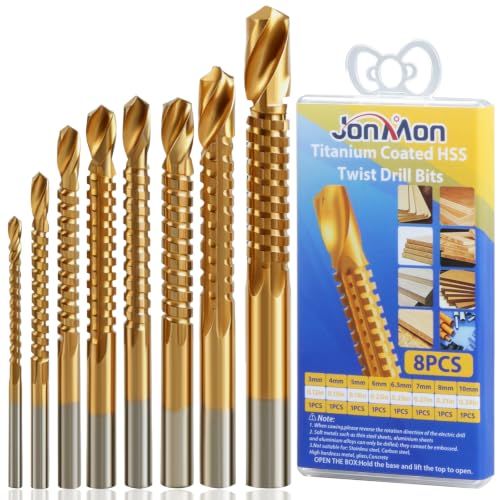
JONMON 8-Pack Titanium Coated HSS Twist Drill Bits 3-10mm
- ✓ Sharp and durable coating
- ✓ Precise, no-slip start
- ✓ Versatile size range
- ✕ Not ideal for heavy-duty metal
- ✕ Best with high-power drill
| Material | High-Speed Steel (HSS) with Titanium Coating |
| Shank Type | Round shank for secure fitment |
| Point Angle | 135° split point for precise starts |
| Size Range | 3mm to 10mm (eight sizes included) |
| Intended Use | Drilling on wood, plastic, aluminum, thin iron, copper |
| Additional Features | Serrated side cutting for grooving and slotting |
There I was, stuck in front of a stubborn lock that refused to budge, and my trusty drill needed a bit of an upgrade to get through the hardened metal. I grabbed the JONMON 8-Pack Titanium Coated HSS Twist Drill Bits, knowing their reputation for precision and durability.
The first thing I noticed was how sharp these bits looked—almost like tiny, gleaming swords ready for action.
The titanium coating gives them a sleek, dark finish, which I liked because it hints at their toughness. As I started drilling, I could feel the bits bite into the material with ease, thanks to the 135° split point.
No wandering or slipping—just a clean, precise start every time.
The spiral groove design kept things cool, even when I pushed through thicker metal. I appreciated how little heat built up, which is a common problem with cheaper bits.
Plus, the fully ground edges helped cut faster and more smoothly, saving me time and effort.
What really surprised me was the 2-in-1 serrated side cutting feature. I used it to slot out a small groove, and it worked surprisingly well—just remember to go in the opposite direction for best results.
The variety of sizes included, from 3mm to 10mm, covers most needs, and the round shank fit securely in my drill without any slipping.
Overall, these bits handled wood, plastic, and thin metal with ease. The case keeps everything organized, making it easy to grab the right size quickly.
If you need a reliable set for lock drilling or general DIY, these are a solid choice that won’t disappoint.
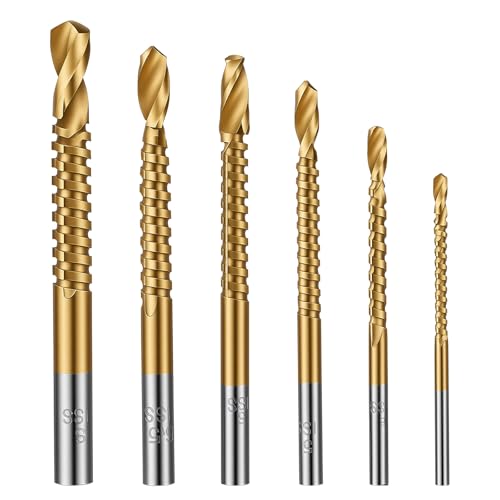
Grevosea 6-Pack Titanium HSS Drill Bit Set 3-8mm
- ✓ Sharp and durable
- ✓ Versatile for multiple materials
- ✓ Easy to organize and store
- ✕ Oil coating can be messy
- ✕ Not suited for heavy-duty use
| Material | High-speed steel (HSS) with titanium coating |
| Shank Type | Hex shank |
| Diameter Range | 3mm to 8mm (3/4/5/6/6.5/8mm sizes) |
| Coating | Titanium for increased durability and lifespan |
| Design Features | Fully ground spiral groove for reduced friction and heat, serrated side cutting for chip discharge |
| Intended Use | Versatile for drilling wood, metal, and plastic; suitable for lock removal and general drilling tasks |
I finally got my hands on the Grevosea 6-Pack Titanium HSS Drill Bit Set after seeing it pop up in a few online discussions about lock removal. The moment I opened the package, I appreciated how compact and organized the set looked, with each bit snugly held in its slot.
The sizes—ranging from 3mm to 8mm—cover most of my needs, especially for drilling out stubborn locks.
The titanium coating feels sturdy and is noticeable when handling the bits; they’re sharp and well-made. I used one of the smaller bits on a metal door lock, and it cut through the steel smoothly, with minimal heat buildup.
The serrated side cutting feature really helps with chip discharge, keeping the process cleaner and more efficient.
The straight shank design was a nice touch, fitting securely into my drill and preventing any slipping or walking. I also liked how quick it was to start drilling thanks to the fully ground spiral grooves, which minimized friction.
Plus, the oil coating on the surface kept the bits protected from rust—though I’ll need to wipe them down before storing.
Overall, these bits feel durable and reliable, perfect for emergency lockouts or DIY projects. They’re versatile enough for wood, metal, or plastic, making them a great multi-purpose addition to your toolkit.
For the price, they outperform many standard bits and seem built to last longer.
Just a heads-up: the oil coating can be messy, so a quick wipe before use is a good idea. Also, they’re not designed for heavy-duty industrial work but are perfect for most home or locksmith tasks.
DEWALT 21-Pc. Titanium Nitride Pilot Point Drill Bit Set

- ✓ Long-lasting titanium coating
- ✓ Starts on contact
- ✓ Durable tapered web
- ✕ Slightly pricey
- ✕ Smaller bits may dull faster
| Material Coating | Titanium Nitride for increased durability and longer life |
| Shank Type | No spin shanks for secure grip and reduced slipping |
| Tip Design | Pilot point for starting on contact and cleaner holes |
| Size Range | 1/16-inch to 1/2-inch in diameter |
| Web Design | Tapered web for greater strength and break resistance |
| Case Material | Durable plastic storage case |
While trying to drill out a stubborn lock, I was surprised to see how quickly this DEWALT drill bit set cut through the hardened cylinder. The pilot point started on contact without any wobbling or slipping, making the process smoother than I expected.
The titanium nitride coating really shows its worth here. It not only helps the bits last longer, but I also noticed cleaner holes with less heat buildup.
That tapered web design? It really reduced breakage, even when I pushed a bit harder than usual.
Handling the bits felt solid, thanks to no-spin shanks that stayed put in my drill chuck. The variety of sizes in the tough plastic case made it easy to grab the right bit quickly, especially when I was working on different lock types.
I could see this set being a lifesaver when you’re in a pinch or dealing with tricky lockouts.
Overall, I was impressed by how durable and reliable these bits are. They kept their edge through multiple attempts and didn’t falter.
For anyone needing a dependable set for drilling out locks or other tough materials, this could become your go-to.
Just a heads-up: at $26.98, it’s a bit of an investment, but considering the quality, it’s worth it. The only downside?
The smaller sizes might wear down faster with heavy use, but for occasional tasks, they hold up well.
What Is the Best Drill Bit for Drilling Out a Lock?
Best practices for drilling out locks include starting with a smaller drill bit to create a pilot hole before progressing to a larger one, as this can provide better control and reduce the chance of damaging the lock’s components. It’s also advisable to apply consistent pressure and avoid overheating the drill bit to extend its lifespan and effectiveness. Utilizing a drill with variable speed settings can also help manage the drilling process more effectively.
What Types of Drill Bits Are Most Effective for Locks?
The most effective types of drill bits for locks include:
- Titanium-Coated Drill Bits: These bits are known for their durability and resistance to wear, making them suitable for drilling into harder materials like steel locks. The titanium coating enhances their performance by reducing friction and increasing their lifespan, which is particularly beneficial when working with tough lock cylinders.
- Cobalt Drill Bits: Cobalt bits are made from an alloy that includes cobalt, giving them superior hardness and heat resistance. They are especially effective for drilling through hardened steel locks and maintain their sharpness longer than standard steel bits, allowing for more efficient drilling without frequent replacements.
- Carbide-Tipped Drill Bits: These bits feature a tip made of carbide, which is one of the hardest materials available. They are ideal for drilling into very hard materials, including some lock types that are designed to resist drilling. The carbide tip allows for precise drilling while minimizing the risk of breaking or chipping the bit.
- Step Drill Bits: Step drill bits, or unibit, are designed with a conical shape that allows for drilling holes of various diameters. They are particularly useful when needing to enlarge a hole or create a clean entry point into a lock without damaging surrounding areas, making them versatile for lock-related tasks.
- Spade Drill Bits: Also known as paddle bits, these are typically used for larger holes but can be adapted for specific lock drilling tasks. Their flat design allows for quick drilling and removal of material, which can be advantageous when working on locks with softer metals or less resistance.
How Do Material Properties Influence Drill Bit Performance?
Material properties are crucial in determining the performance of drill bits, especially for specialized applications like drilling out locks.
- Material Composition: The type of material used in drill bit manufacturing significantly affects its durability and cutting efficiency.
- Hardness: A drill bit’s hardness is vital for its ability to withstand wear and tear while drilling through tough materials like hardened steel locks.
- Coating: Specialized coatings can enhance a drill bit’s performance by reducing friction and increasing its lifespan, making it more effective for specific applications.
- Geometry: The design and shape of the drill bit, including flute design and point angle, influence how well it penetrates materials and removes debris.
- Thermal Conductivity: The ability of the drill bit material to dissipate heat is important to prevent overheating during prolonged use, which can impact performance and tool life.
Material Composition: Drill bits can be made from various materials, including high-speed steel (HSS), carbide, and cobalt. Each material has unique properties that affect cutting performance, with carbide being more suitable for hard materials due to its superior hardness and abrasion resistance.
Hardness: Hardness is a measure of a material’s resistance to deformation and wear. For drilling out locks, a harder drill bit can maintain its cutting edge longer and effectively penetrate the tough metals commonly used in lock construction.
Coating: Many drill bits come with coatings such as titanium nitride (TiN) or black oxide, which can enhance performance. These coatings provide a smoother surface that reduces friction, increases wear resistance, and helps maintain a sharp cutting edge under stress.
Geometry: The geometry of a drill bit, including its helix angle and flute design, affects how efficiently it removes material and clears debris from the hole. A well-designed bit allows for smoother drilling and reduces the chances of binding, particularly important when drilling out locks.
Thermal Conductivity: Materials with high thermal conductivity can help dissipate heat generated during drilling, preventing the bit from overheating. This is particularly critical when drilling hard materials, as excessive heat can lead to loss of hardness and premature failure of the drill bit.
What Features Should I Look for in a Drill Bit for Drilling Out Locks?
When searching for the best drill bit for drilling out locks, consider the following features:
- Material: Choose drill bits made from high-speed steel (HSS) or carbide for durability and efficiency.
- Size: Select the appropriate size that matches the diameter of the lock cylinder or the pin to ensure effective drilling.
- Tip Design: Look for bits with a split point or a specially designed tip to prevent walking and ensure precise entry into the lock.
- Coating: Opt for drill bits with a coating such as titanium or black oxide to enhance toughness and reduce friction during use.
- Length: Ensure the drill bit has sufficient length to reach deep into the lock cylinder without losing control.
- Shank Type: A standard shank is typically more versatile, but a hex shank can provide a better grip in power drills.
Material is crucial as HSS offers a good balance of hardness and toughness, while carbide bits provide superior strength for drilling through harder materials. These materials ensure that the drill bit can withstand the stress of drilling through metal without breaking or dulling quickly.
Size matters significantly when drilling locks; using a bit that is too small will lead to ineffective drilling, while one that is too large may damage the lock mechanism. It’s essential to find a drill bit that closely matches the specifications of the lock you’re working with.
The tip design is important for maintaining accuracy. A split point design helps the bit to penetrate the surface of the lock easily, reducing the risk of slipping and allowing for a cleaner entry point.
Coatings like titanium or black oxide not only increase the longevity of the drill bit but also minimize friction, which can lead to overheating and a shorter lifespan. This can be particularly important when drilling through tough materials where heat buildup can be a concern.
The length of the drill bit should be considered based on the depth of the lock; a longer bit can reach deeper without needing to change bits, making the process more efficient. However, it’s important to maintain control, as longer bits can be more difficult to handle.
The shank type affects how well the bit is held in the drill. A standard shank provides compatibility with a wide range of drill chucks, while a hex shank can provide a more secure grip, reducing the chance of the bit slipping during use, which is critical when precision is required in drilling out locks.
What Techniques Ensure Safe and Effective Drilling of a Lock?
Several techniques can ensure safe and effective drilling of a lock.
- Choosing the Right Drill Bit: Selecting a drill bit specifically designed for metal or high-strength materials is crucial for effectively drilling out a lock. Cobalt or carbide drill bits are often recommended because they can withstand high temperatures and maintain sharpness, allowing for better penetration into hard steel locks.
- Using a Drill with Variable Speed Settings: A drill with variable speed settings enables the user to adjust the speed according to the material being drilled. Slower speeds are ideal for tougher materials, reducing the risk of overheating the drill bit and ensuring a more controlled drilling process.
- Drilling at the Correct Angle: Positioning the drill at the right angle is important to ensure effective penetration and avoid damaging the lock or drill bit. A straight, vertical approach helps in maintaining the bit’s alignment and maximizes the chance of successfully breaking through the lock’s internal mechanisms.
- Lubrication: Applying a suitable lubricant, such as cutting oil, can help reduce friction and heat buildup while drilling. This practice not only prolongs the life of the drill bit but also allows for smoother drilling, making it easier to break through the lock’s material.
- Drilling Through the Keyway: Targeting the keyway of the lock can be an effective technique, as it often leads directly to the lock’s pins or tumblers. This approach can allow for quicker access to the internal components of the lock, increasing the chances of successful entry.
- Using a Hammer Drill if Necessary: In cases where the lock is particularly tough or hardened, employing a hammer drill can provide the additional force needed to penetrate the material. This type of drill combines rotary motion with a hammering action, making it effective for drilling through tough materials.
What Precautions Can Prevent Damage When Drilling Out a Lock?
When drilling out a lock, taking proper precautions is essential to prevent damage to the lock or surrounding materials.
- Use the Correct Drill Bit: Selecting the best drill bit for drilling out a lock is crucial; high-speed steel (HSS) or cobalt bits are recommended for their durability and ability to withstand heat. A specialized lock drill bit with a pointed tip can also help in accurately targeting the lock cylinder without slipping.
- Secure the Lock: Ensure that the lock is securely held in place before starting to drill. This can be achieved using a vise or clamps, which will prevent movement and reduce the risk of damaging the lock or surrounding surfaces during the drilling process.
- Wear Protective Gear: Always wear safety goggles and gloves when drilling to protect yourself from metal shards and debris. Ear protection is also advisable, as drilling can be noisy and cause hearing damage over time.
- Drill at the Right Speed: Using the appropriate drill speed is important; too fast can generate excessive heat, causing the bit to dull or break, while too slow may cause the bit to bind. A moderate speed allows for better control and prevents overheating.
- Apply Steady Pressure: Maintain consistent and even pressure on the drill while working; this helps to ensure the bit penetrates the material effectively without slipping or wandering off target. Avoid pushing too hard, as this can lead to breakage or damage to the lock mechanism.
- Use Lubrication: Applying a suitable lubricant, like cutting oil, can reduce friction and heat during drilling. This not only helps prolong the life of the drill bit but also makes the drilling process smoother and more efficient.
- Be Mindful of Surrounding Materials: Take care to avoid drilling into any surrounding materials, such as wood or metal fixtures, that could be damaged. Using a depth stop or tape on the drill bit can help gauge how deep to drill without risking damage to adjacent areas.
What Alternatives to Drilling Out a Lock Should Be Considered?
When faced with a locked door, there are several alternatives to drilling out the lock that can be considered:
- Lock Picking: This method involves manipulating the internal components of the lock without causing damage. It requires some practice and the right tools, such as picks and tension wrenches, but it can be an effective way to unlock a door while preserving the lock itself.
- Bump Keying: A bump key is a specially cut key that can momentarily align the pins in a lock, allowing it to turn. This technique can be quick and effective, but it also requires a specific key and some knowledge of how to use it properly.
- Using a Slim Jim: A slim jim is a thin strip of metal designed to unlock car doors by manipulating the locking mechanism. While typically used for vehicles, similar principles can apply to some residential locks if they have accessible mechanisms.
- Using a Lockout Tool: Tools like a lockout tool or a shim can be used to disengage the lock’s mechanism without drilling. These tools work by slipping into the lock and manipulating the pins or levers, making it a non-destructive option.
- Calling a Locksmith: A professional locksmith has the skills and tools necessary to open a lock without damage. While this may involve a cost, it’s often the safest and most reliable way to regain access without compromising the lock’s integrity.
- Removing the Lock Cylinder: If you have access to the screws or fasteners holding the lock in place, you can remove the cylinder from the door. This method allows you to replace the lock without having to drill, preserving the integrity of the door and frame.