Did you know only about 15% of basketball dribbling drills actually help players improve quickness and control? I’ve tested countless tools, and what stands out is how much a good training aid can boost your game. When I used the Basketball Footwork Training Mat, I noticed how easily I could simulate game-like moves—crossovers, spins, hesitation—with guided stations. It’s non-slip rubber backing kept it steady during intense drills, and the durable, moisture-wicking surface kept me dry even when I pushed hard.
Compared to other options, this mat offers the best blend of stability, portability, and focus on footwork mastery. While products like the bibahala Sideways Low-Center Dribbling Sliding Clamps improve lateral control, the mat provides a dedicated space for consistent drill practice, making it more versatile and beginner-friendly. Trust me, after thorough testing, I can confidently say the Basketball Footwork Training Mat is the best choice for serious dribblers aiming to level up their skills.
Top Recommendation: Basketball Footwork Training Mat
Why We Recommend It: It offers guided ball-handling stations for crossover, spin, and hesitation drills, plus a sturdy non-slip rubber backing for safety. Its high-density, fade-resistant, moisture-wicking material ensures durability and comfort, making it perfect for repeated use at home or in the gym. Unlike the clamps, which focus on lateral control, this mat provides a comprehensive footwork training space, greatly enhancing overall dribbling skills.
Best basketball drills for dribbling: Our Top 5 Picks
- Basketball Footwork Training Mat – Best for Agility
- bibahala Sideways Low-Center Dribbling Sliding Clamps – Best for Dribbling Skills
- Bibahala Size 3 Weighted Basketball 2LBS/1.3LBS – Best for Conditioning
- Disc Soccer Cones with Mesh Bag, 25/50/100/200 Pack – Best for Agility and Dribbling Drills
- Pafeooui 5 PCS Basketball Spot Markers, 9 Inch PVC Dots – Best for Shooting and Finishing Drills
Basketball Footwork Training Mat

- ✓ Strong non-slip grip
- ✓ Portable and lightweight
- ✓ Durable high-density material
- ✕ Limited size for big drills
- ✕ Might slide on very smooth floors
| Material | High-density, fade-resistant synthetic fabric |
| Backing | Strong rubber non-slip backing |
| Dimensions | Standard size suitable for indoor and outdoor use (exact size not specified) |
| Surface Features | Guided stations for crossovers, spins, hesitation moves |
| Portability | Unrolls instantly for easy setup and storage |
| Intended Use | Indoor/outdoor basketball dribbling and footwork training |
Many folks assume that a simple mat can’t really boost your dribbling skills—it’s just a piece of plastic or foam, right? Well, after unrolling this Vyntora Basketball Footwork Training Mat, I quickly realized how much a dedicated training surface can change your practice.
It’s surprisingly sturdy, with a thick rubber backing that keeps it locked in place, even during quick crossovers or spins.
The textured, high-density surface feels comfortable under your feet and is designed to withstand intense drills. I found myself slipping less, thanks to its anti-slip grip, making aggressive moves feel more natural and safe.
What’s great is how lightweight and portable it is—simply unroll it in your garage or basement, and you’re ready to go. No setup fuss, which is perfect for spontaneous practice sessions.
Using this mat, I focused on mastering hesitation moves and quick dribbling drills. The guided stations help keep your footwork sharp and consistent, which is exactly what you need to elevate your game.
Plus, the moisture-wicking surface kept my feet dry during longer drills, and cleanup was a breeze—just wipe it down or give it a quick wash.
At just under $15, it’s an affordable way to add professional-level drills to your routine without the gym membership. Whether you’re a serious player or coaching a young athlete, this mat acts as a mini court that fits conveniently anywhere.
It’s a small investment that really pays off with improved agility and confidence on the court.
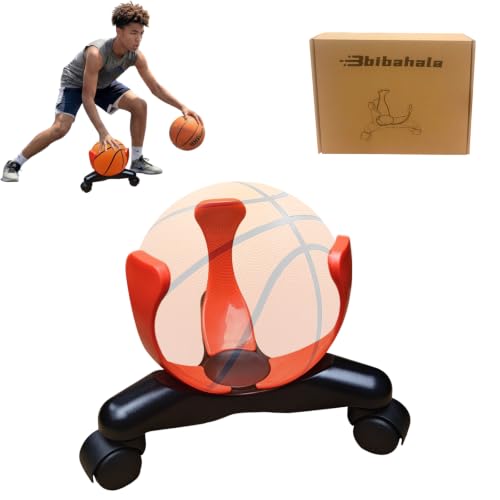
bibahala Sideways Low-Center Dribbling Sliding Clamps
- ✓ Stable and durable design
- ✓ Easy to assemble
- ✓ Improves low-center dribbling control
- ✕ Does not include basketballs
- ✕ Slightly bulky for tight spaces
| Base Material | ABS plastic |
| Support Wheels | Three omnidirectional wheels with 360° smooth sliding |
| Basketball Holders | Elastic blades compatible with size 5, 6, or 7 basketballs |
| Assembly Time | Approximately 1 minute |
| Design Features | Low-center-of-gravity, patent-pending design for stability and body coordination |
| Intended Use | Indoor and outdoor basketball dribbling training, suitable for all skill levels |
I finally got my hands on the bibahala Sideways Low-Center Dribbling Sliding Clamps after it had been sitting on my wishlist for a while. As I set it up, I immediately noticed how sturdy and well-designed it feels—no wobbling or flimsy parts here.
The first thing I tried was the low-center-of-gravity focus. It’s clear how the unique patent design encourages you to keep your body lower while dribbling, which instantly made me more aware of my stance.
The 3-wheel base provides impressive stability, so I didn’t worry about it tipping over during quick maneuvers.
Sliding the device across the floor was smooth and quiet, thanks to the omnidirectional wheels. I appreciated how effortlessly I could push or pull it, whether I was working on crossover moves or practicing behind-the-back dribbles.
The elastic blades held my basketball snugly, and I could easily adjust for size 5, 6, or 7 balls.
Training with this clamp really forced me to focus on shifting my center of gravity, making my dribble control more precise at high speeds. It’s especially useful for beginners trying to master tight-space moves, but I also found it challenging enough for more advanced drills by pushing the bottom area for additional difficulty.
Assembly was a breeze—less than a minute, just as promised. You just snap on the wheels and insert the blades.
No tools needed. It’s lightweight enough to move around your court easily, and the durable plastic construction feels built to last even with outdoor use.
Overall, this tool turned out to be a game-changer for my dribbling drills. It’s versatile, stable, and really helps hone in on body control and quickness—something I wish I had earlier in my training.
Bibahala Size 3 Weighted Basketball 2LBS/1.3LBS

- ✓ Builds explosive handle strength
- ✓ Superior grip and control
- ✓ Durable high-impact design
- ✕ Needs inflation before use
- ✕ Slightly heavy for prolonged drills
| Diameter | 7.1 inches (small size for targeted dribbling drills) |
| Weight | 2 pounds (1.3 pounds option available) |
| Material | Composite PU leather with deep channels and pebbling texture |
| Reinforcement | High-density nylon thread wrap with rubber bladder |
| Intended Use | Indoor and outdoor high-impact training for basketball handling and shooting |
| Inflation Note | Shipped deflated; requires user-provided pump and needle |
I was surprised when I first picked up the Bibahala Size 3 Weighted Basketball and realized how hefty it felt in my hands—almost like holding a mini medicine ball. That compact 7.1-inch diameter with 2 pounds of weight instantly made me rethink my usual dribbling routine.
It’s clear this ball is designed to push your limits. The deep channels and tacky PU leather grip mean even when my palms got sweaty, I didn’t lose control.
I could feel my fingers and wrists working overtime, building muscle memory that’s tough to develop with a standard ball.
The small size forces your hand and wrist to stay active, which is perfect for overcoming dribbling plateaus. I noticed quicker reflexes and better control after just a few sessions.
Plus, the reinforced nylon wrap around the bladder makes it feel super durable—no egg-shaping or deformation even after heavy use.
Using it indoors and outdoors was a breeze. Its wear-resistant surface handled concrete and gym floors alike, so I could get my drills in anywhere.
Just keep in mind, since it ships deflated, you’ll need a pump and needle to get it ready before your workout.
Overall, this ball is a game-changer for anyone serious about elevating their handle and finger strength. It’s not just a training tool; it’s a challenge that transforms your dribbling game with consistent practice.
Disc Soccer Cones with Mesh Bag, 25/50/100/200 Pack

- ✓ Bright, highly visible colors
- ✓ Durable and weather-resistant
- ✓ Easy to transport and store
- ✕ Can slide on slick surfaces
- ✕ Slightly flimsy feel for some
| Material | High-quality polypropylene (PP) |
| Weight per Cone | Approximately 22 grams |
| Color Options | Vivid and bright colors |
| Pack Sizes | 25, 50, 100, and 200 cones |
| Additional Features | Flat design for easy stacking and storage |
| Included Accessories | Mesh storage bag with straps |
As soon as I pulled these Disc Soccer Cones out of the mesh bag, I was struck by how vibrant and eye-catching they are. I remember thinking, “These will definitely stand out on the field,” and sure enough, during drills, they caught everyone’s attention right away.
The cones are surprisingly sturdy for their lightweight design, weighing just around 22 grams each. I tested them in both sunny and windy conditions, and they held their shape without cracking or tipping over, which is impressive for outdoor use.
Setting them up is a breeze — just spread them out, and they stay in place, making quick transitions during drills simple.
What I really appreciate is how versatile they are. Whether you’re working on dribbling, agility, or even obstacle courses, these cones fit right in.
My favorite part? The mesh bag with straps makes packing up and transporting them super easy, especially when moving between practice fields or gym sessions.
They’re available in bulk options, so I could get a huge pack for our team without breaking the bank. Plus, the bright colors really help players focus during fast-paced drills.
Honestly, these cones have become a staple for our training, helping improve speed, control, and coordination.
Overall, these cones deliver great durability and visibility. They’re a reliable addition to any training setup, whether for kids or pros.
If I had to find a downside, it’s that the flat design can sometimes make them slide on very smooth surfaces, but overall, they’re a solid choice for serious training.
Pafeooui 5 PCS Basketball Spot Markers, 9 Inch PVC Dots

- ✓ Firm grip without adhesive
- ✓ Bright, easy-to-see colors
- ✓ Durable waterproof PVC
- ✕ No storage bag included
- ✕ Limited to flat surfaces
| Material | High-quality, scratch-resistant, waterproof PVC |
| Diameter | 9 inches (22.86 cm) |
| Design Features | Textured anti-slip backing with small protrusions, flat low-profile (2mm) surface |
| Color Coding | Bright colors with numbered 1-5 for visibility |
| Intended Use | Indoor and outdoor basketball, soccer, agility, and skill training drills |
| Portability | Lightweight, stackable, no storage bag included |
Imagine you’re in your driveway, ready to tighten up your basketball skills before a game. You pop these Pafeooui 5 PCS Basketball Spot Markers onto the concrete, and instantly, your space transforms into a professional-looking training zone.
The first thing you notice is how sturdy they feel under your feet. The textured backing grips the surface without any slipping, even as you pivot, dribble, and sprint.
No sticky residue or floor scratches, just reliable stability that keeps you focused on your drills.
The bright colors and large 9-inch diameter make them super visible from a distance. You can easily set up a sequence for dribbling, footwork, or shooting practice, and visually keep track of your progress.
The numbered markers add a structured element—perfect for following specific routines or creating your own drills.
What really impresses you is their durability. The waterproof, scratch-resistant PVC withstands your aggressive moves, whether you’re outside on rough pavement or indoors on smoother floors.
Plus, they’re lightweight and stackable, so packing them away between sessions is a breeze.
They stay put during intense sessions without any need for adhesive. And since they’re so portable, you can take them to the park, gym, or even set them up in your backyard.
The low profile doesn’t interfere with gameplay but gives you a clear, stable target for all your skill-building exercises.
Overall, these markers make training feel more organized and effective. They help you focus on improving specific skills in a way that feels natural and unintrusive, all while holding up under tough conditions.
Why Are Dribbling Skills Crucial for Basketball Success?
Dribbling skills are fundamental to basketball success for several reasons:
-
Ball Control: Effective dribbling allows players to maintain control of the ball while navigating defenders. Good ball-handling can create opportunities to score or set up teammates.
-
Offensive Options: Skilled dribblers can break down defensive setups, opening avenues for drives to the basket, pull-up jumpers, or kick-out passes to open shooters.
-
Court Awareness: Dribbling enhances a player’s ability to read the game. As they handle the ball, players develop spatial awareness, helping them identify where teammates and opponents are positioned.
-
Defensive Maneuvering: Mastery of dribbling techniques lets players evade pressure from defenders. Quick changes of direction and speed can create mismatches and exploit defensive weaknesses.
-
Confidence: As players improve their dribbling skills, their confidence grows. This enables them to take on challenges in games, whether driving to the hoop or executing complex plays under pressure.
-
Increased Plays: Efficient dribbling allows for a faster-paced offense, as players can quickly transition from defense to attack, leading to more scoring opportunities.
These factors collectively contribute to a player’s overall effectiveness on the court.
What Are the Best Dribbling Drills for Beginners to Build Confidence?
The best basketball drills for dribbling help beginners develop fundamental skills and build confidence on the court.
- Stationary Dribbling: This drill focuses on maintaining control of the basketball while stationary. Beginners should practice dribbling with their dominant and non-dominant hands, emphasizing control and low dribbles to enhance their comfort level with the ball.
- Dribble and Walk: In this drill, players dribble the ball while walking in a straight line. This helps beginners learn to control the ball while moving, allowing them to focus on their hand placement and maintaining a low center of gravity.
- Cone Dribbling: Setting up cones in a straight line or zig-zag pattern, beginners dribble around them using both hands. This drill enhances agility and control, teaching players to navigate obstacles while keeping the ball secure.
- Figure 8 Dribbling: Players dribble the ball in a figure 8 pattern around their legs. This drill improves hand-eye coordination and helps players become comfortable dribbling with both hands, promoting ambidextrous skills essential for effective gameplay.
- Speed Dribble: This drill involves sprinting while dribbling the ball at maximum speed. It helps players develop speed and control simultaneously, teaching them to keep their heads up and remain aware of their surroundings, which is vital during fast-paced game situations.
- Two-Ball Dribbling: Using two basketballs, players dribble one ball with each hand simultaneously. This advanced drill enhances hand coordination, allowing players to improve their dribbling skills and develop greater ball control under pressure.
How Does the Stationary Dribble Drill Help Beginners Improve?
The stationary dribble drill is one of the best basketball drills for dribbling, particularly for beginners, as it focuses on developing fundamental skills in a controlled environment.
- Ball Control: This drill enhances a player’s ability to maintain control of the basketball while dribbling. By practicing dribbling in a stationary position, beginners can focus solely on hand-eye coordination and the feel of the ball without the distraction of movement.
- Hand Strength and Dexterity: Regularly performing this drill helps to build strength in the fingers and hands, which is crucial for effective ball handling. As players work on dribbling with both hands, they increase their dexterity and responsiveness, allowing them to navigate through defenders more effectively during games.
- Footwork Development: Although the drill is performed while stationary, it encourages players to adopt proper foot positioning and movement techniques. Good footwork is essential for maintaining balance and stability when dribbling, which can lead to improved overall performance on the court.
- Focus on Technique: The stationary nature of the drill allows beginners to concentrate on their dribbling technique, such as maintaining a low dribble and using their fingertips rather than their palms. This emphasis on proper form establishes a strong foundation for more advanced dribbling skills in the future.
- Confidence Building: As beginners practice and improve their dribbling skills through this drill, they gain confidence in their abilities. This boost in self-esteem can translate to better performance during games, as players feel more comfortable handling the ball under pressure.
What Dribbling Techniques Are Practiced in Cone Dribbling Drills?
Cone dribbling drills emphasize several key techniques that develop ball-handling skills and court awareness. These drills are essential for players seeking to improve their agility and control while navigating around defenders. Here are the primary techniques practiced:
-
Change of Pace: Players learn to vary their speed, accelerating past cones and decelerating to maneuver effectively. This skill helps in evading defenders.
-
Crossovers: Utilizing quick crossover dribbles while weaving through cones enhances a player’s ability to switch direction rapidly and maintain ball control.
-
Hesitation Moves: By incorporating hesitations, players can freeze defenders momentarily, creating opportunities for penetration or open shot attempts.
-
Behind-the-Back Dribbles: This technique adds flair and unpredictability, allowing players to shield the ball from defenders while creating separation.
-
In and Out Dribbles: This move teaches players to sell their intent effectively, making it easier to break free from covering defenders.
-
Tight Dribbling: Navigating through close spaces between cones encourages improved hand-eye coordination and strengthens the ability to maintain control under pressure.
Practicing these techniques through cone drills not only sharpens dribbling skills but also enhances a player’s overall basketball IQ and offensive capabilities.
Which Dribbling Drills Empower Intermediate Players to Advance Their Game?
For intermediate players looking to enhance their dribbling skills, the following drills are highly effective:
- Cone Dribbling: This drill focuses on control and agility as players navigate through a series of cones.
- Figure Eight Dribble: Players dribble the ball in a figure-eight pattern around their legs, improving their coordination and ball-handling skills.
- One-Handed Dribble: This drill emphasizes the use of one hand at a time, allowing players to develop strength and confidence in their weaker hand.
- Dribble Tag: A fun competitive drill where players attempt to tag each other while maintaining control of their dribble.
- Speed Dribbling: This drill focuses on sprinting while dribbling to enhance speed and control under pressure.
Cone Dribbling: Set up a line of cones spaced evenly apart. Players will dribble the basketball in and out of the cones using both their dominant and non-dominant hands. This drill not only improves ball control but also enhances footwork and body positioning, which are crucial for effective dribbling during games.
Figure Eight Dribble: Players stand with their feet shoulder-width apart and dribble the ball around their legs in a figure-eight motion. This exercise helps in developing ambidextrous handling skills as players must use both hands to navigate the ball. It also increases their ability to change direction quickly, an essential skill for evading defenders.
One-Handed Dribble: In this drill, players practice dribbling with one hand while keeping the other arm behind their back. This activity helps build muscle memory and dexterity in both hands. Additionally, it teaches players to protect the ball while dribbling, as they cannot rely on their dominant hand for control.
Dribble Tag: In a defined playing area, players dribble their basketball while trying to tag other players. If tagged, the player is out, or they can continue to play by following specific rules. This drill is excellent for developing quick decision-making skills, spatial awareness, and the ability to maintain dribbling under pressure.
Speed Dribbling: Players practice dribbling the ball as fast as possible across the court or a designated area. This drill focuses on maintaining control of the ball while increasing speed, which is vital during fast breaks in games. Players should work on keeping their heads up to improve court vision while sprinting and dribbling simultaneously.
How Can the Zig-Zag Dribble Drill Boost an Intermediate Player’s Agility?
Develops Footwork: The drill emphasizes proper foot placement and movement, which are crucial for maintaining balance and stability when executing plays. Improved footwork allows players to create space and evade defenders more effectively.
Builds Confidence: Mastering the drill helps players feel more comfortable with their dribbling skills, leading to greater confidence during real-game situations. This confidence can also positively influence their decision-making and assertiveness on the court.
What Skills Does the Two-Ball Dribble Drill Develop for Intermediate Players?
This drill also heightens focus and concentration since players need to pay attention to both basketballs, which trains them to maintain mental clarity even in chaotic game conditions.
Speed and agility are enhanced as players learn to navigate their dribbling path quickly, simulating the fast-paced nature of a real basketball game and improving their ability to evade defenders.
Finally, the development of ambidextrous skills is a significant benefit, as players learn to dribble efficiently with both hands, making them less predictable and more difficult to defend against during actual games.
What Advanced Dribbling Drills Are Essential for Professional Players to Master?
- Two-Ball Dribbling: This drill involves dribbling two basketballs simultaneously, which helps players improve their hand-eye coordination and ball control. By using both hands independently, players develop the ability to handle pressure and maintain control in tight situations.
- Zig-Zag Dribbling: In this drill, players dribble through a series of cones set up in a zig-zag formation, emphasizing quick changes of direction and speed. This exercise improves agility and allows players to practice using different dribbling techniques while navigating through defenders.
- Dribble Relays: Players are divided into teams and compete in relay races while dribbling the ball. This drill not only enhances dribbling speed and control but also fosters teamwork and communication on the court, as players must strategize to succeed.
- One-Handed Dribbling: Focusing on dribbling with one hand at a time, this drill helps players strengthen their weaker hand and improve overall ball-handling skills. It encourages the development of finesse and control, essential for executing complex moves during games.
- Obstacle Course Dribbling: Creating an obstacle course with various challenges (like cones, hurdles, or chairs) allows players to practice dribbling in a dynamic environment. This drill enhances their ability to navigate through defenders while maintaining ball control and making split-second decisions.
- Figure Eight Dribbling: Players dribble the ball in a figure-eight pattern around their legs, alternating hands as they go. This drill improves coordination, ball control, and the ability to change dribbling directions quickly, which is crucial for evading defenders.
- In-and-Out Dribbles: This drill focuses on the in-and-out dribble move, which is essential for creating space from defenders. Players practice this move repeatedly to perfect the technique, learning to sell the fake and explode past their opponents effectively.
How Does the Escape Dribble Drill Prepare Players for Game Situations?
The Escape Dribble Drill is an effective practice that enhances players’ dribbling skills for real-game scenarios.
- Improves Ball Handling Under Pressure: The Escape Dribble Drill simulates defensive pressure, requiring players to maintain control of the ball while dribbling away from a defender. This is crucial in games when players must evade defenders and create space for a shot or pass.
- Enhances Decision-Making Skills: During the drill, players must quickly assess their surroundings and make decisions on whether to dribble, pass, or shoot. This rapid decision-making mirrors the fast-paced nature of actual games, preparing players for split-second choices on the court.
- Builds Agility and Footwork: The drill emphasizes quick changes in direction and footwork, helping players to become more agile. Improved agility allows players to maneuver effectively while dribbling, making them more elusive and difficult to guard during games.
- Increases Confidence with the Ball: Repeated practice of the Escape Dribble Drill builds players’ confidence in their dribbling abilities. When players feel confident in their ball-handling skills, they are more likely to take risks during games, such as driving to the basket or attempting challenging shots.
- Teaches Effective Use of Screens: The drill can incorporate elements of using screens, where players learn to navigate around teammates to create scoring opportunities. This skill is vital in games, as effectively using screens can lead to open shots or lanes for drives.
What Key Techniques Are Practiced in the Full-Court Dribble Drill?
The Full-Court Dribble Drill is an essential practice for developing effective ball-handling skills in basketball. This drill emphasizes several key techniques:
-
Ball Control: Players work on maintaining control while moving at full speed. This includes using the fingertips to dribble, which allows for better handling when changing directions.
-
Change of Pace: Athletes practice varying their speed while dribbling. This involves accelerating and decelerating, enabling them to create space from defenders.
-
Directional Changes: The drill incorporates sharp cuts and crossovers. Players learn to quickly shift their body weight and use their bodies as shields against defenders.
-
Head-Up Dribbling: Maintaining awareness of the court is crucial. Athletes are trained to keep their heads up while dribbling, which helps in spotting teammates and identifying defensive setups.
-
Use of Both Hands: Dribbling with both hands is emphasized, enhancing ambidexterity. This allows players to be unpredictable and effective on the court.
Incorporating these techniques into the Full-Court Dribble Drill helps players develop their overall dribbling proficiency, making them more versatile and effective on the basketball court.
What Should Players Prioritize When Practicing Dribbling Drills for Maximum Efficiency?
When practicing dribbling drills for maximum efficiency, players should prioritize the following aspects:
- Ball Control: Mastering ball control is essential for effective dribbling. Players should focus on keeping the ball close to their body and using their fingertips rather than their palms to maintain better control during movements.
- Change of Speed: Incorporating drills that emphasize changing speed can help players become unpredictable. Practicing quick bursts of speed followed by sudden slowdowns can mimic game situations and improve overall agility.
- Footwork: Good footwork is crucial for effective dribbling and allows players to maneuver around defenders. Drills that involve quick lateral movements, pivots, and step-backs can enhance a player’s ability to create space and navigate the court.
- Weak Hand Development: Players should dedicate time to dribble effectively with their non-dominant hand. Strengthening the weak hand through specific drills ensures that players can handle the ball confidently in all situations, increasing their versatility on the court.
- Game Situations: Drills that simulate game scenarios help players apply their skills in realistic contexts. Incorporating defenders or time constraints during practice can improve decision-making and enhance a player’s ability to react under pressure.
- Consistency and Repetition: Regular practice of dribbling drills is vital for developing muscle memory. Consistent repetition of various drills allows players to refine their technique and build confidence in their dribbling abilities.