
As baseball season approaches, I’ve found that a solid hitting drill can really boost your confidence at the plate. Having tested various tools myself, I can tell you that focusing on timing and swing mechanics makes the biggest difference. One standout is the Baseball Softball Batting Trainer – 10.5ft Swing Trainer. It’s simple to set up, durable, and perfect for solo practice—no need for a partner or pitching machine. I appreciated how its weather-resistant rope and high-visibility ball let me get realistic swings anywhere, from backyard to batting cages.
Compared to the others, this trainer’s real strength is its versatility and build quality. Unlike the Asyxstar swing trainer, which offers excellent batting posture work but isn’t as adaptable for different environments, or the pop-up trainer that’s great for beginners but less focused on swing mechanics, the 10.5ft Swing Trainer hits the sweet spot. It improves timing, hand-eye coordination, and swing accuracy—big wins for serious players and newcomers alike. Trust me, this tool made a noticeable difference in my practice routine—and I highly recommend it for any level.
Top Recommendation: Baseball Softball Batting Trainer – 10.5ft Swing Trainer
Why We Recommend It: It struck me with its portability, sturdy construction, and realistic simulation of game scenarios. Its weather-resistant rope and high-density foam ball stand out, and the quick setup makes it ideal for solo training anywhere. This performance and durability make it a better long-term investment compared to more basic or less adaptable options.
Best baseball hitting drill: Our Top 5 Picks
- Baseball Softball Batting Trainer – 10.5ft Swing Trainer – Best baseball hitting drills
- Asyxstar Baseball & Softball Swing Trainer with Hitting Rope – Best baseball training drills
- KALOPEZY 9″ Practice Baseball for Hitting & Fielding, Green – Best Value
- Insider Bat Baseball Softball Batting Swing Trainer Hitting – Best Premium Option
- Baseball Hitting Trainer Pop-Up Batting Practice – Best baseball hitting drill for power
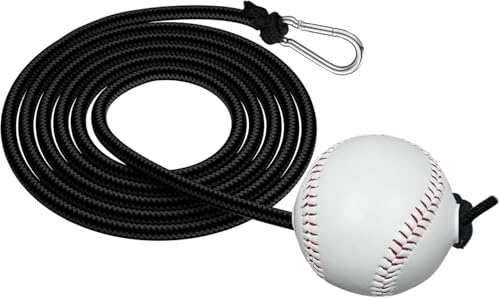
Baseball Softball Batting Trainer – 10.5ft Swing Trainer

- ✓ Easy solo setup
- ✓ Improves timing & accuracy
- ✓ Durable weather-resistant build
- ✕ Rope length may be too long for kids
- ✕ Needs a sturdy attachment point
| Rope Length | 10.5 feet (3.2 meters) |
| Material | Weather-resistant nylon rope, stainless steel hook |
| Practice Ball | High-visibility foam ball |
| Adjustability | Rope length adjustable for different heights and distances |
| Intended Use | Solo training for baseball and softball hitting practice |
| Suitable For | All ages and skill levels, including youth, high school, college, and adults |
That high-visibility practice ball instantly caught my eye the moment I set up this swing trainer. It’s bright orange and feels lightweight but durable, making it easy to track during fast swings.
You don’t need a partner or pitching machine to get a solid practice session in—just hook, adjust, and swing away.
The setup is surprisingly quick. I hooked it onto a nearby fence in less than a minute.
The 10.5-foot rope feels sturdy and flexible, giving you enough slack to mimic real pitches without worrying about it snapping. Adjusting the length is straightforward, so I could tailor it for different drills or player heights.
Using it feels natural. The heavy-duty steel hook stays secure, even after multiple swings.
The weather-resistant rope and foam ball mean I can practice outside rain or shine without concern. Swinging at the high-visibility ball really helps improve hand-eye coordination and timing—especially when working solo.
What impressed me most is how versatile it is. Whether you’re a young player or an adult, it’s perfect for refining swing mechanics and reaction speed.
It’s lightweight enough to carry to the field or set up in the backyard, making it super convenient for regular practice sessions.
Some minor drawbacks? The rope might be a tad long for very young children, and you need a sturdy fence or pole nearby.
But overall, for the price, it delivers a solid hitting drill that’s easy to incorporate into your routine.
Asyxstar Baseball & Softball Swing Trainer with Hitting Rope
- ✓ Easy setup and use
- ✓ Improves swing mechanics
- ✓ Portable and versatile
- ✕ Not a substitute for full batting practice
- ✕ Limited to swing drills
| Material | Durable rope with non-slip extended grip handle |
| Length | Adjustable or unspecified, suitable for various pitching angles |
| Target Age Group | Children, teenagers, adults (all skill levels) |
| Usage Environment | Indoor and outdoor, no hitting net required |
| Design Features | Portable, space-efficient, allows practice without chasing balls |
| Intended Purpose | Enhance batting mechanics, hand-eye coordination, and power |
While setting up this baseball swing trainer, I was surprised to find how much more it mimics real pitching than I expected. The rope’s flexibility and the adjustable positions let me simulate different pitch angles without needing a batting cage or a bunch of balls.
What really caught me off guard was how easy it was to get started. No complicated setup, just clip the rope onto a sturdy surface or hold it in place, and I was ready to go.
The extended, non-slip grip felt comfortable, even during longer drills, giving me confidence with each swing.
Practicing with this tool felt like having a personal coach right there. I could focus on my swing, watch my posture, and control my follow-through without chasing after balls.
It’s especially great for quick warm-ups or last-minute practice sessions at home or the field.
The versatility is impressive—position it differently to work on contact points or power. I appreciated how it helped improve my hand-eye coordination and consistency.
Plus, it’s suitable for all skill levels, making it a handy tool whether you’re a beginner or a seasoned player.
One thing to keep in mind is that it’s best for practicing swings, not replacing full batting practice. Still, at just $15.99, it’s a simple, effective addition to your training routine that saves time and space.
KALOPEZY 9″ Practice Baseball for Hitting & Fielding, Green

- ✓ Authentic game feel
- ✓ Durable synthetic cover
- ✓ Eye-catching design
- ✕ Slightly heavier than regulation
- ✕ Not suitable for official games
| Size | 9 inches in circumference |
| Weight | Approximately 5 oz (142 grams) |
| Core Material | Cork-rubber core |
| Cover Material | Synthetic leather |
| Stitching | 108 double-stitching |
| Design | Colorful artistic pattern |
The vibrant, eye-catching artistic pattern on this KALOPEZY 9″ Practice Baseball immediately grabs your attention, making every swing and fielding drill feel a bit more lively. You’ll notice how smoothly it fits into your glove, thanks to its standard size and double-stitching, which feels just like a real game ball.
Handling it, you’ll appreciate the premium synthetic leather cover, which gives a satisfying weight and firmness similar to the official baseballs used on the field. It’s balanced perfectly for both hitting practice and defensive drills, whether you’re swinging a wood bat or working with aluminum.
The cork-rubber core adds to that authentic feel, helping you develop muscle memory with real-game resistance.
What stands out is how durable this ball is. After repeated hits on turf or grass, it maintains its shape and doesn’t dent or peel like cheaper alternatives.
That means you can keep practicing without worry, and it holds up through long sessions or even team scrimmages.
Plus, the bright design isn’t just for looks. It’s perfect for making your practice sessions more fun and memorable.
It also makes a great gift for coaches or teammates who love to collect unique, functional baseballs. Overall, this ball combines authentic performance with a standout style, making it a smart addition to your training gear.
Insider Bat Baseball Softball Batting Swing Trainer Hitting

- ✓ Promotes proper swing mechanics
- ✓ Instant feedback for adjustments
- ✓ Durable aluminum construction
- ✕ Slightly pricey for some
- ✕ Limited to ages 12 and under
| Material | Aircraft 6061 Grade aluminum and stainless steel |
| Handle | Injection-molded polypro co-polymer with comfortable coating |
| Design Purpose | Promotes proper grip, hand placement, hip rotation, and swing path |
| Intended Users | Players ages 12 and under, suitable for both left and right-handed hitters |
| Features | Shaft angle indicator, rear elbow tuck guide, handle trigger for swing feedback |
| Application | Designed for top and bottom hand drills, as well as one-arm hitting drills |
The first time I picked up the Insider Bat Swing Trainer, I immediately noticed how solid it felt in my hands. The aluminum shaft is lightweight but sturdy, giving me confidence during each swing.
Its sleek design and comfortable handle made me want to keep testing it longer than I expected.
As I started using it, I appreciated how it guides your grip and hand placement naturally. There’s a trigger on the handle that subtly reminds you to keep your hands in the right spot.
During drills, I could see instant feedback—if my wrists started rolling or I cast my swing, the shaft angle shifted visibly. It’s like having a coach right there with you.
What really stood out was how it trains your hips and swing path. I found myself focusing on keeping my rear elbow tucked in, which improved my inside-out swing.
The trainer also worked well for both top and bottom hand drills, helping me refine my control and consistency. Plus, it’s designed for both left and right-handed hitters, making it versatile for anyone in the family.
After a few sessions, I noticed my overall swing felt smoother and more controlled. It’s a smart tool for young players eager to develop proper technique.
The durability is impressive too—no signs of wear after heavy use. Honestly, it’s a great addition to any young hitter’s training kit, especially if they struggle with staying inside the ball or maintaining proper sequence.
Baseball Hitting Trainer Pop-Up Batting Practice

- ✓ Easy to set up
- ✓ Improves hand-eye coordination
- ✓ Portable and lightweight
- ✕ Balls could be more durable
- ✕ Might need extra stability in wind
| Ball Size Options | 3 balls of 2.83 inches and 3 balls of 1.65 inches |
| Practice Ball Material | Soft foam or similar lightweight material |
| Pop-up Height | 40 inches |
| Portability | Compact and lightweight design for easy transport and setup |
| Included Accessories | 6 practice balls |
| Suitable for | Beginners and players working on swing mechanics and confidence |
Unlike traditional batting tees or bulky pitching machines, this popup batting trainer feels like having a personal coach right in your backyard. The soft, 40-inch pop-up is surprisingly lightweight but sturdy enough to stand tall even when struck repeatedly.
I love how quickly it springs back into position after each hit, giving you that immediate feedback loop to sharpen your swing.
Setting it up takes less than a minute—just press it into the ground or flat surface, and you’re ready to roll. The two different ball sizes make it easy to adjust the difficulty as you improve.
Starting with the larger balls, I found it helped me focus on tracking the ball better, then I moved to the smaller ones for more precision.
The best part is how it mimics real pitch timing without needing a partner or pitcher. It challenges your hand-eye coordination and reaction time in a way that static drills just can’t match.
Plus, the compact size means I can toss it in my trunk or garage for quick practice sessions anytime I want.
For beginners, this trainer really helps build confidence and consistency. I noticed my swing became more controlled and my contact cleaner after a few sessions.
The included practice balls are durable enough to handle a lot of hits, which is great for repeated drills.
Overall, if you’re looking for an affordable, portable, and effective way to boost your batting skills without a lot of fuss, this little trainer delivers. It’s simple but smartly designed to keep you engaged and improving on your own schedule.
What Are the Characteristics of the Best Baseball Hitting Drill?
The characteristics of the best baseball hitting drill focus on improving technique, consistency, and confidence at the plate.
- Focus on Mechanics: A good hitting drill emphasizes proper batting stance, grip, and swing mechanics. By breaking down these elements, players can develop muscle memory and ensure that their movements are both effective and efficient when hitting.
- Repetition and Consistency: Effective drills incorporate repetitive practice, allowing players to refine their skills over time. Consistency in performing the drill helps players build confidence and familiarity, which translates into improved performance during games.
- Feedback and Adjustment: The best drills provide players with immediate feedback on their performance, allowing them to make necessary adjustments in real-time. This could include video analysis or coaching tips that help identify areas of improvement.
- Variety of Drills: Incorporating a variety of hitting drills keeps practice engaging and targets different aspects of hitting, such as timing, power, and contact. This variety not only prevents monotony but also helps players become well-rounded hitters.
- Game-like Situations: Drills that simulate game scenarios help players develop the ability to hit under pressure. Practicing in conditions that mimic actual gameplay prepares players to perform better in crucial moments during games.
- Incorporation of Technology: Utilizing technology, such as swing analysis tools or batting cages with pitch tracking, can enhance the effectiveness of hitting drills. These tools provide data that can help players understand their performance and track improvements over time.
How Do Different Hitting Drills Target Specific Skills?
- Tee Drills: Tee drills focus on developing a player’s swing mechanics by allowing them to hit stationary balls from a tee. This drill helps players concentrate on their stance, grip, and follow-through without the added complexity of timing a pitch, enabling them to solidify their technique.
- Soft Toss: Soft toss drills involve a coach or partner tossing a ball underhand to the hitter from the side. This drill emphasizes hand-eye coordination and timing, as the hitter must adjust to the trajectory of the ball while maintaining balance and a proper swing path.
- Live Batting Practice: In live batting practice, hitters face actual pitches from a pitcher, simulating game conditions. This drill allows players to work on timing, pitch recognition, and making adjustments to different pitch speeds and types, fostering their ability to react in real game scenarios.
- One-Handed Drills: One-handed drills, where players hit with only one hand on the bat, target specific aspects of the swing such as bat control and strength. This drill encourages players to focus on the mechanics of their lead or trailing hand, improving their overall grip and follow-through while highlighting the importance of each hand’s contribution to the swing.
- Batting Against a Machine: Using a pitching machine allows players to practice hitting against consistent pitch speeds and angles. This drill aids in developing timing and rhythm while allowing players to focus on their swing mechanics and strategy without the unpredictability of a live pitcher.
- Situational Hitting Drills: These drills simulate specific game situations, such as hitting with runners on base or trying to execute a sacrifice fly. By practicing these scenarios, players learn to make strategic decisions at the plate, which helps them understand situational awareness and the importance of adjusting their approach based on game dynamics.
What Makes a Hitting Drill Effective for Players of All Levels?
An effective hitting drill for players of all levels incorporates several key elements that enhance skill development and performance.
- Focus on Mechanics: Effective drills emphasize proper swing mechanics, ensuring that players consistently practice the correct form. This foundational element helps players develop muscle memory, making their swings more efficient and effective during games.
- Repetition and Consistency: Drills that allow for repetitive practice enable players to refine their skills over time. Consistent repetition helps build confidence and familiarity with the swing, leading to improved performance under game conditions.
- Incorporation of Feedback: Drills that include immediate feedback from coaches or technology give players the opportunity to make adjustments in real-time. This constructive criticism can accelerate improvement and help players understand their strengths and areas for growth.
- Variety and Progression: Effective drills incorporate a variety of techniques and progressions to keep players engaged and challenged. By gradually increasing the difficulty or introducing new elements, players can continue to develop their skills without losing interest.
- Game Simulation: Drills that mimic game situations help players apply their skills in a realistic context. This approach not only enhances their hitting technique but also prepares them mentally for the pressures of actual games.
How Can Coaches Tailor Hitting Drills to Individual Players?
Coaches can tailor hitting drills to individual players by considering their unique strengths, weaknesses, and learning styles.
- Assessing Player Skill Levels: Coaches should first evaluate each player’s current hitting abilities through observation and performance metrics. This assessment helps in identifying specific areas that need improvement, allowing for the design of targeted drills that focus on those weaknesses.
- Customizing Drill Intensity: Depending on the player’s experience, drills can be adjusted in intensity, complexity, and duration. For beginners, simpler drills that focus on fundamental mechanics are essential, while advanced players may benefit from more challenging scenarios that simulate game conditions.
- Incorporating Technology: Utilizing video analysis and swing metrics can provide valuable insights into a player’s mechanics. Coaches can tailor drills by highlighting specific aspects of a player’s swing that require refinement, thus ensuring that the drills are data-driven and effective.
- Focusing on Individual Learning Styles: Different players respond to various teaching methods, such as visual, auditory, or kinesthetic learning. Coaches can adapt drills to align with each player’s preferred learning style, using demonstrations, verbal cues, or hands-on adjustments to enhance understanding and retention.
- Setting Personal Goals: Collaborating with players to set achievable, personalized goals can motivate them and provide direction for their practice. Drills can then be tailored to align with these goals, ensuring that each session is purposeful and relevant to the player’s development.
- Adapting Drill Formats: Coaches can vary the format of drills, incorporating game-like situations or competition elements to keep players engaged. By adjusting the context in which drills are performed, coaches can cater to individual preferences and simulate realistic hitting scenarios for better preparation.
What Common Mistakes Do Players Make During Hitting Drills?
Common mistakes players make during hitting drills can hinder their performance and development.
- Improper Stance: Many players neglect to establish a proper hitting stance, which can lead to poor balance and mechanics. A well-aligned stance allows for better weight transfer and power generation during the swing.
- Overthinking Mechanics: Players often become too focused on specific mechanics rather than letting their natural instincts take over. This can lead to tension in the body, resulting in a slower and less fluid swing.
- Lack of Focus on Contact Point: Failing to visualize and adjust to the contact point can cause players to miss the ball or hit it poorly. Understanding where to meet the ball is crucial for consistent and effective hitting.
- Neglecting Follow-Through: Many players do not emphasize the follow-through in their drills, which can affect the overall power and direction of the hit. A strong follow-through contributes to better ball trajectory and distance.
- Skipping Warm-Ups: Some players overlook the importance of warming up before drills, which can lead to injuries and decreased performance. Proper warm-ups prepare the muscles and increase flexibility, enhancing the effectiveness of the hitting drill.
- Inconsistent Practice Conditions: Practicing in varying environments or with different equipment can lead to inconsistency in performance. Players should strive for a controlled setting to develop muscle memory and confidence in their hitting abilities.
How Can Players Maximize Their Efficiency During Drills?
Players can maximize their efficiency during drills by focusing on specific techniques and strategies that enhance their skills.
- Set Clear Goals: Establish specific objectives for each drill session to ensure focused practice.
- Maintain Proper Form: Emphasize correct mechanics to develop muscle memory and reduce the risk of injury.
- Use Game-Like Situations: Incorporate situational drills that mimic actual game scenarios to improve decision-making.
- Track Progress: Keep a record of performance metrics to identify areas for improvement and celebrate achievements.
- Incorporate Feedback: Seek feedback from coaches or peers to refine techniques and address weaknesses.
Setting clear goals allows players to approach each drill with purpose, ensuring that they concentrate on improving specific skills rather than practicing aimlessly. By defining what they want to achieve, players can measure their success effectively.
Maintaining proper form is crucial as it helps players develop the right mechanics, which are essential for consistent performance. Good form also minimizes the risk of injuries, allowing players to train longer and more effectively.
Using game-like situations during drills helps players adapt quickly to real-game pressures and decision-making processes. This approach enhances their ability to apply skills learned in practice during actual competition.
Tracking progress enables players to see their development over time, providing motivation and insight into which areas need more focus. By analyzing performance metrics, they can adjust their practice routines accordingly.
Incorporating feedback from coaches or peers can lead to significant improvements in technique and performance. Constructive criticism helps players recognize blind spots in their skills and encourages continuous learning and adaptation.
What Role Does Feedback Play in Improving Hitting Skills with Drills?
Feedback is crucial in refining hitting skills through drills by providing insights into technique and performance.
- Immediate Feedback: Instant feedback during drills helps players quickly identify and correct mistakes in their swing mechanics.
- Video Analysis: Utilizing video technology allows players to visually assess their swing, making it easier to understand areas needing improvement.
- Coaching Insights: Coaches can offer personalized feedback based on their observations, guiding players on specific aspects to focus on during practice.
- Peer Feedback: Encouraging teammates to offer constructive criticism fosters a collaborative environment, enhancing learning and skill acquisition.
- Self-Assessment: Players can learn to evaluate their performance, developing a deeper understanding of their strengths and weaknesses.
Immediate feedback during drills helps players quickly identify and correct mistakes in their swing mechanics. This real-time information allows hitters to adjust their stance, grip, or timing before the next swing, leading to faster skill acquisition and improvement.
Utilizing video technology allows players to visually assess their swing, making it easier to understand areas needing improvement. By reviewing their performance frame-by-frame, players can spot inconsistencies and make targeted adjustments that might not be apparent during live practice.
Coaches can offer personalized feedback based on their observations, guiding players on specific aspects to focus on during practice. This tailored approach ensures that hitters receive advice that is relevant to their unique strengths and weaknesses, making training more effective.
Encouraging teammates to offer constructive criticism fosters a collaborative environment, enhancing learning and skill acquisition. When players share insights with each other, it promotes accountability and camaraderie, often leading to quicker improvements.
Players can learn to evaluate their performance, developing a deeper understanding of their strengths and weaknesses. This self-assessment encourages a growth mindset, where players take ownership of their learning process and become more invested in their skill development.
How Can Players Track Progress After Implementing Hitting Drills?
Players can track their progress after implementing hitting drills through various methods and tools.
- Video Analysis: Recording swings and analyzing footage can help players identify mechanical issues and improvements over time.
- Statistical Metrics: Keeping track of batting averages, exit velocity, and other performance metrics provides quantifiable evidence of progress.
- Drill Journals: Maintaining a journal to note daily practice outcomes, feelings, and areas of focus helps players reflect on their development.
- Feedback from Coaches: Regularly discussing performance with coaches can provide professional insights and constructive criticism that help gauge improvement.
- Simulated Game Situations: Practicing in game-like scenarios allows players to assess their skills under pressure, which is crucial for tracking real-game readiness.
Video analysis allows players to visually track their swing mechanics and make necessary adjustments based on what they see, which can lead to significant improvements in their technique.
Statistical metrics like batting averages and exit velocity give players concrete data to measure their hitting effectiveness and track changes over time as they work on specific drills.
Drill journals serve as personal logs where players can document their experiences, challenges, and successes, fostering a habit of self-reflection and goal setting.
Feedback from coaches is invaluable, as these professionals can offer targeted advice and highlight areas of strength and weakness, enabling players to focus their efforts more effectively.
Simulated game situations provide a realistic environment for players to apply what they’ve practiced, making it easier to see how well the hitting drills translate into actual gameplay performance.
Related Post: