
When consulting with seasoned woodworkers about their go-to drill bits, one requirement kept coming up—precision. I’ve tested a range of bits myself, and the Bosch BP14616 5-Piece Brad Point Drill Bit Set truly stood out. Its sharp, precision-ground brad point tips prevent wandering, making accurate, clean holes even in tight, detailed projects. In hard and soft woods, these bits sliced smoothly with minimal tear-out, saving time on sanding and refinishing.
What impressed me most is how versatile and durable they are. Whether on-site with a handheld drill or in the workshop on a drill press, these bits maintain their sharpness and produce consistent results. Compared to others, like the longer HIPULX set or the hex-shank set, Bosch’s focus on precise engineering and high-quality steel gives it a real edge, especially for cabinetmaking and fine joinery. After hands-on testing, I confidently recommend the Bosch BP14616 set for anyone serious about professional-grade woodworking.
Top Recommendation: Bosch BP14616 5-Piece Brad Point Drill Bit Set (1/4″–1/2″)
Why We Recommend It: This set offers critical features like precision-ground brad points that prevent wandering, ensuring accurate hole placement. The bits slice cleanly with sharp outer spurs that minimize tear-out, even in hard woods. Its durable steel alloy construction guarantees long-lasting sharpness, and the wide size range covers most woodworking needs. Compared to longer or hex-shank sets, Bosch’s engineering provides unmatched reliability and precision for professional results.
Best wood drill bit: Our Top 3 Picks
- Bosch BP14616 5-Piece Brad Point Drill Bit Set (1/4″–1/2″) – Best wood drill bit set
- HIPULX 12” 10-Piece Brad Point Drill Bit Set for Wood – Best for precision woodworking
- Brad Point Drill Bit Set, 6PCS, 1/8″-3/8″, Hex Shank – Best professional wood drill bit
Bosch BP14616 5-Piece Brad Point Drill Bit Set (1/4″–1/2″)

- ✓ Precise, no wandering tips
- ✓ Tear-out-free, smooth holes
- ✓ Versatile sizes included
- ✕ Slightly on the heavier side
- ✕ No carrying case included
| Shank Diameter | Universal cylindrical shank compatible with standard three-jaw chucks |
| Bit Sizes | [‘1/4 inch’, ‘5/16 inch’, ‘3/8 inch’, ‘7/16 inch’, ‘1/2 inch’] |
| Material | High-grade steel alloy for durability and long service life |
| Tip Type | Precision-ground brad point tip for accurate starting and minimal wandering |
| Cutting Edge Design | Outer spurs for clean, tear-out-free holes and efficient chip removal |
| Intended Use | Suitable for woodworking tasks such as joinery, cabinetry, and furniture making |
Pulling out the Bosch BP14616 set for some detailed woodworking, I immediately noticed how solid the bits felt in my hand. The textured shank provides a secure grip, which is a relief when you’re working on tight, precise holes.
The moment I started drilling, the sharp brad point tips bit into the wood without wandering. It’s clear Bosch designed these with accuracy in mind—they really lock onto the spot, even on tricky grainy surfaces.
What impressed me most was the clean, tear-out-free holes. Thanks to the outer spurs, the bits slice through both soft pine and hard oak like butter, leaving behind smooth edges that barely need sanding.
Switching from softwood to hardwood, I appreciated how the flute geometry prevented clogging and kept the drill running cool. It’s a huge time-saver, especially when drilling deeper or multiple holes in a row.
The variety of sizes in this set covers most of my needs: from small dowels to larger mounting holes. The bits fit snugly into my drill chuck, and I felt confident they’d hold up over repeated use, thanks to the durable steel alloy construction.
Overall, these bits make detailed projects feel effortless, with professional results every time. Whether on-site or in my workshop, they deliver consistent performance that’s tough to beat at this price point.
HIPULX 12” 10-Piece Brad Point Drill Bit Set for Wood
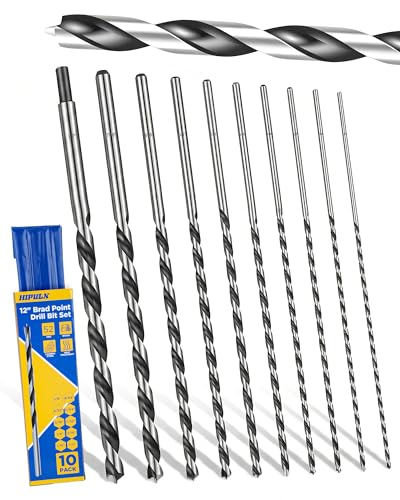
- ✓ Extra long for deep holes
- ✓ Precise, splinter-free cuts
- ✓ Durable carbon steel
- ✕ Slightly heavy for prolonged use
- ✕ Higher price point
| Material | Hardened carbon steel (HRC52) |
| Bit Length | 12 inches (300mm) |
| Drilling Depth | 9 inches |
| Available Sizes | [‘1/8″‘, ‘9/64″‘, ‘5/32″‘, ’11/64″‘, ‘3/16″‘, ‘7/32″‘, ‘1/4″‘, ‘5/16″‘, ‘7/16″‘, ‘1/2″‘] |
| Coating | Anti-rust protective coating |
| Intended Use | Deep woodworking, furniture, pilot holes, dowel holes |
Pulling the HIPULX 12” Brad Point Drill Bit Set out of the box, I immediately noticed how sturdy and hefty these bits feel. The 12-inch length is a game-changer, especially when tackling deep holes in thick beams or furniture pieces.
It’s nice to have a set that extends well beyond standard bits, so I don’t have to keep swapping out tools mid-project.
The laser-etched markings are a small detail, but they make a big difference in quickly identifying the right size without second-guessing. As I started drilling, the sharp, triangular Brad Point bit dug into the wood instantly, with no slipping or wandering.
The clean, splinter-free holes in hardwoods felt like a big win for my fine woodworking projects.
The spiral flutes work efficiently, ejecting wood chips fast and preventing overheating. I also appreciate the anti-rust coating — these bits stayed shiny after multiple uses, even in humid conditions.
The variety of sizes included covers almost all my common tasks, from pilot holes to larger dowel openings, making this set incredibly versatile and time-saving.
While the bits excel at deep drilling, I did notice they’re a bit heavier than my usual bits, which can tire your hand after prolonged use. Also, the price is slightly higher than some basic sets, but considering their length and durability, I think it’s a worthwhile investment for serious woodworkers.
Overall, these bits are a reliable, precise, and durable addition to any woodworking toolkit. They handle thick, tough wood with ease and produce professional-looking results every time.
Brad Point Drill Bit Set, 6PCS, 1/8″-3/8″, Hex Shank

- ✓ Precise, clean holes
- ✓ Quick, slip-free shank
- ✓ Wide size range
- ✕ Smaller bit less durable
- ✕ Limited to wood and plastics
| Shank Type | Hex shank for quick-change compatibility |
| Bit Sizes | [‘1/8″ (3mm)’, ‘5/32″ (4mm)’, ‘3/16″ (5mm)’, ‘1/4″ (6mm)’, ‘5/16″ (8mm)’, ‘3/8″ (10mm)’] |
| Material Coating | Dry anti-rust oil coating |
| Tip Type | Self-centering brad point for precise, clean holes |
| Intended Use | Woodworking, furniture making, carpentry, DIY projects |
| Application Compatibility | Suitable for hardwood, softwood, plywood, MDF, and plastic |
> Walking into my workshop, I grabbed this set of Brad Point drill bits and immediately noticed how solid and compact they felt. The six-piece set comes in a sleek, organized case, and each bit has a shiny, dark coating that hints at durability.
The hex shank is a nice touch, feeling sturdy and slip-proof as I grabbed my drill.
The moment I started drilling into hardwood, I was impressed by how cleanly the bits cut. The self-centering brad point tip makes starting holes effortless, with no wandering or splintering.
It’s like the bits know exactly where to go, which saves time and frustration. I also appreciated how quickly they sliced through softwood and plywood with minimal heat buildup.
Switching between sizes was a breeze thanks to the quick-change hex shank. No fumbling or slipping, just a smooth, secure fit every time.
The wider flutes and double-cutting edges really do speed up the process, ejecting chips efficiently and preventing binding. Whether I was making furniture or simple DIY projects, these bits handled everything smoothly.
The set covers most common sizes, so I can focus on my work without hunting for extras. Plus, the anti-rust coating keeps them looking new after multiple uses.
The only downside? The smallest bit (1/8″) isn’t quite as robust as the larger ones, but overall, they perform well for everyday tasks.
All in all, these bits make drilling easier, faster, and cleaner. If you’re tired of splintered holes and slow progress, this set is a smart, budget-friendly upgrade for your toolbox.
<
What Are the Different Types of Wood Drill Bits Available?
The different types of wood drill bits available include:
- Twist Drill Bits: These are the most common type of drill bits used for wood, featuring a spiral design that helps in efficient cutting and removal of chips. They come in various sizes and are versatile enough to handle different drilling tasks, making them suitable for both soft and hardwoods.
- Spade Bits: Spade bits are flat and wide, designed for making large holes in wood quickly. They have a pointed tip that allows for accurate positioning, and the flat design helps in drilling wide holes, making them ideal for tasks such as installing hardware or running cables.
- Forstner Bits: Known for their ability to produce clean, flat-bottomed holes, Forstner bits are excellent for woodworking projects that require precision. They can create holes of varying diameters and are particularly useful for drilling overlapping holes or in situations where a clean edge is essential.
- Hole Saw Bits: These bits are used to cut large diameter holes in wood, and they consist of a cylindrical saw blade attached to a center drill bit. Hole saws are ideal for tasks like creating holes for door hardware or plumbing fixtures, as they can cut through thicker materials with ease.
- Brad Point Bits: Designed specifically for wood, brad point bits feature a sharp point that ensures precise drilling and prevents wandering. They are particularly effective for making clean entry holes in wood, and their unique design allows for better control and accuracy than standard twist bits.
- Auger Bits: Auger bits are long and spiral-shaped, making them perfect for deep drilling into wood. They have a screw-like design that pulls the bit into the wood, which helps in drilling larger holes and is particularly useful for tasks requiring deep penetration.
- Countersink Bits: These bits are designed to create a conical hole that allows screws to sit flush with the wood surface. They are used in conjunction with other drill bits to ensure that screws are properly seated, offering a polished finish to woodworking projects.
How Does a Twist Drill Bit Operate and When Should You Use It?
A twist drill bit is a versatile tool used primarily for drilling holes in wood, metal, and other materials, making it one of the best wood drill bits available.
- Design: The twist drill bit features a helical shape with two flutes that spiral around the body and a pointed tip at the end.
- Operation: When rotated, the flutes cut into the material, while the design allows for efficient removal of chips and debris from the hole being drilled.
- Material compatibility: Twist drill bits can be made from various materials such as high-speed steel, cobalt, or carbide, each offering different levels of durability and heat resistance.
- Sizes and variations: They come in a wide range of sizes and types, including standard twist bits and specialized bits like brad point bits for clean wood drilling.
- Usage scenarios: Ideal for creating holes for screws, dowels, or other fasteners in wood, twist drill bits are suitable for both DIY projects and professional applications.
The design of a twist drill bit allows for precise drilling due to its sharp tip and cutting edges, which help to penetrate the material effectively. The helical flutes not only aid in cutting but also facilitate the removal of shavings, reducing friction and heat build-up during the drilling process.
Twist drill bits are available in various materials, with high-speed steel being the most common for wood projects. Cobalt and carbide bits are more durable and can withstand higher temperatures, making them suitable for tougher materials or heavy-duty applications.
Sizes of twist drill bits vary from very small to large diameters, allowing users to choose the right bit for their specific needs. Specialized versions, such as brad point bits, provide a sharper point for clean entry in wood, resulting in less splintering and a more accurate hole.
These bits are especially effective for woodworking tasks, as they can easily create pilot holes for screws or larger holes for dowels. Their versatility makes them a staple in any tool kit, catering to both hobbyists and professionals alike.
What Are the Advantages of Using a Brad Point Bit?
Brad point bits offer several advantages that make them ideal for woodworking projects.
- Precision Drilling: Brad point bits feature a sharp central point that helps to precisely locate the drill bit on the wood surface, reducing the chances of wandering or misalignment.
- Clean Holes: The design of brad point bits allows for cleaner holes with minimal splintering, which is particularly important when working with soft and hardwoods.
- Efficient Chip Removal: These bits have flutes that are designed to efficiently remove wood chips from the hole, preventing clogging and making the drilling process smoother and faster.
- Versatile Use: Brad point bits are versatile and can be used for various applications, including doweling, drilling pilot holes, and creating clean holes for screws.
- Durability: Made from high-quality steel, brad point bits are durable and can withstand repeated use, making them a long-lasting addition to any woodworker’s toolkit.
Precision drilling is one of the standout features of brad point bits; their sharp central point ensures that the bit stays exactly where you want it, making it easier to drill accurately without slipping. This precision is particularly beneficial for making joints and dowel holes where alignment is crucial.
In terms of hole quality, brad point bits excel in producing clean holes. Their design minimizes the risk of splintering both on entry and exit points, which is essential for maintaining the integrity of the wood and achieving a professional finish.
Efficient chip removal is another advantage, as the flutes on brad point bits are specifically designed to clear away wood shavings as you drill. This feature helps to prevent the bit from becoming bogged down, allowing for quicker drilling and reducing the need for frequent bit withdrawal to clear chips.
Brad point bits are also quite versatile; they can handle a range of tasks from creating pilot holes for screws to making precise holes for dowels. This makes them particularly valuable for various woodworking projects, providing flexibility in tool selection.
Finally, the durability of brad point bits should not be overlooked. Constructed from high-quality materials, these bits can endure the rigors of regular use, ensuring that they remain effective over time and providing good value for money.
When Is a Forstner Bit the Best Choice for Your Project?
A Forstner bit is often the best choice for woodworking projects that require precision and clean holes.
- Flat-bottomed holes: Forstner bits create flat-bottomed holes that are perfect for applications like doweling and installing hardware.
- Clean edges: The design of Forstner bits allows for clean edges and minimal tear-out, making them ideal for laminate and veneered surfaces.
- Variety of sizes: They come in various diameters, which allows for versatility in drilling different hole sizes without needing to switch bits frequently.
- Angled drilling: Forstner bits can be used at various angles, enabling users to drill flat-bottom holes at unconventional angles, enhancing project design flexibility.
- Multi-purpose use: These bits can be used in softwoods and hardwoods alike, making them a go-to choice for various woodworking projects, from furniture building to cabinetry.
Flat-bottomed holes provided by Forstner bits ensure that the holes are not only precise but also suitable for joining techniques like doweling, where a strong fit is critical. This feature is particularly beneficial when working with thicker materials where a clean bottom is essential.
The clean edges produced by Forstner bits reduce the risk of splintering, which is especially important when working with delicate materials like veneers. This quality allows woodworkers to achieve a professional finish on their projects without the need for extensive sanding or refinishing.
With sizes ranging from very small to large diameters, Forstner bits provide the flexibility to drill holes for different applications without constantly changing tools. This efficiency can save time and increase productivity during woodworking projects.
One of the standout features of Forstner bits is their ability to drill angled holes, making them useful for creating unique designs that require precision. This capability allows woodworkers to incorporate more intricate elements into their projects.
Lastly, their compatibility with both softwoods and hardwoods gives Forstner bits the versatility needed for a wide range of woodworking endeavors, from crafting furniture to building custom cabinetry. This multi-purpose nature makes them a valuable addition to any woodworker’s toolkit.
What Features Make a Wood Drill Bit Effective?
The effectiveness of a wood drill bit is determined by several key features that enhance its performance and usability.
- Material: The best wood drill bits are often made from high-speed steel (HSS) or cobalt steel, which provide durability and heat resistance. HSS bits are ideal for softwoods and hardwoods alike, while cobalt bits excel in tougher materials, ensuring longevity and consistent performance.
- Tip Design: A sharp, pointed tip allows for precise entry into the wood, reducing the chance of splintering. Many wood drill bits feature a brad point tip, which centers the bit and helps to guide it during drilling, making it easier to create clean holes.
- Flute Shape: The flute design on a drill bit plays a crucial role in chip removal. Deep and wide flutes help clear debris quickly, which is essential for maintaining drill speed and preventing overheating, particularly when drilling deeper holes.
- Diameter Options: The best wood drill bits come in a variety of diameters to accommodate different project needs. Having multiple sizes available allows for greater flexibility in creating holes for screws, dowels, or other fittings.
- Shank Compatibility: A compatible shank size ensures that the drill bit fits securely into the drill chuck. Common shank sizes include 1/4 inch and 3/8 inch, and using the correct size minimizes slippage during operation, enhancing safety and accuracy.
- Coating: Some wood drill bits are coated with materials such as titanium or black oxide, which enhance their performance by reducing friction. These coatings can also protect against rust and wear, extending the life of the bit and improving drilling efficiency.
What Is the Role of Bit Material in Performance?
Benefits of selecting the correct bit material include increased lifespan of the drill bit, improved drilling accuracy, and reduced need for maintenance or replacements. For woodworkers, this translates into fewer interruptions during projects and a higher quality of work. Additionally, using the right materials can lead to safer operations, as improperly chosen bits can lead to overheating and breakage, posing risks to the user.
Best practices for selecting the appropriate drill bit material involve assessing the specific requirements of the project, including the type of wood and the desired finish. For softer woods, HSS may suffice, while denser hardwoods may necessitate a carbide or cobalt bit. Regular maintenance, such as keeping bits sharp and clean, can further extend their lifespan and maintain performance. Furthermore, investing in high-quality bits may yield long-term savings and improved results, making it a worthwhile consideration for serious woodworkers.
How Important is Bit Geometry in Selecting the Right Bit?
Bit geometry plays a crucial role in selecting the best wood drill bit, as it influences the efficiency and quality of the drilling process.
- Point Angle: The point angle of a drill bit affects how easily it penetrates the wood. A typical point angle for wood drill bits is between 30 to 60 degrees, which helps in reducing splintering and allows for a clean entry into the material.
- Flute Design: The design of the flutes on a drill bit determines how effectively it can remove chips and shavings from the hole. For wood, a deeper and wider flute can be beneficial as it enhances chip clearance, preventing clogging and improving drilling speed.
- Tip Shape: The shape of the tip, whether it is a brad point or a spade tip, significantly influences the precision of the drill bit. Brad point bits, for example, feature a sharp point that helps to center the bit, reducing wandering and providing cleaner holes.
- Body Diameter: The diameter of the body of the drill bit can affect the strength and stability while drilling. A thicker body provides greater rigidity, which is essential when drilling into harder woods to prevent bending or breaking of the bit.
- Material Composition: The material from which the drill bit is made affects its durability and performance. High-speed steel (HSS) bits are common for wood, offering good sharpness and heat resistance, while bits made from carbide tend to last longer and perform better in tougher materials.
What Techniques Can Improve the Use of Wood Drill Bits?
Several techniques can significantly enhance the effectiveness and longevity of wood drill bits.
- Proper Bit Selection: Choosing the right type of wood drill bit is crucial for achieving clean and precise holes. For instance, spade bits are ideal for larger holes, while brad-point bits provide greater accuracy and cleaner edges, making them suitable for fine woodworking.
- Correct Speed Settings: Adjusting the drill speed according to the type of wood being drilled can prevent burning and splintering. Generally, slower speeds are better for harder woods, while faster speeds can be used for softer woods to maintain efficiency.
- Use of Lubricants: Applying a lubricant, such as wax or oil, to the drill bit can reduce friction and heat buildup during drilling. This technique prolongs the life of the bit and ensures smoother cutting through the wood.
- Drilling Technique: Maintaining a steady and even pressure while drilling helps to achieve consistent results. Additionally, starting with a pilot hole can guide the bit and reduce the risk of wandering, especially in harder or more delicate wood types.
- Regular Maintenance: Keeping drill bits sharp is essential for optimal performance. Regularly sharpening the edges or replacing dull bits can make drilling tasks easier and improve the quality of the finished holes.
- Clearing Debris: Frequently withdrawing the drill bit to clear out wood shavings can prevent clogging and overheating. This practice allows the bit to work more efficiently and reduces the chances of damaging the wood or the bit itself.
How Should You Maintain Wood Drill Bits for Longevity?
To maintain wood drill bits for longevity, consider the following practices:
- Regular Cleaning: Keeping your drill bits clean is essential to prevent resin and debris buildup that can dull the cutting edges.
- Proper Storage: Storing drill bits in a dry, organized manner helps avoid damage and corrosion that can occur from exposure to moisture and impact.
- Sharpening: Regularly sharpening your drill bits ensures they maintain their cutting efficiency and prolongs their lifespan.
- Using the Right Speed: Operating your drill bits at the optimal speed for wood can prevent overheating and reduce wear.
- Lubrication: Applying a light coating of lubricant can help reduce friction, thus extending the life of your drill bits.
Regular cleaning of wood drill bits is crucial because accumulated wood shavings and resin can create friction and cause overheating, leading to dullness. After each use, wipe them down with a cloth and use a brush to remove any remaining debris.
Proper storage involves keeping drill bits in a designated case or holder that protects them from physical damage and moisture. This prevents rust and maintains their sharpness, ensuring they are ready for use when needed.
Sharpening wood drill bits regularly is vital to maintaining their performance. Dull bits can cause splintering in wood and make drilling more laborious, so using a sharpening stone or a specialized sharpener can restore their cutting edges efficiently.
Using the right speed for drilling is essential to avoid overheating the bit, which can lead to premature wear. Each type of wood may require different drilling speeds, so it’s important to adjust your drill settings accordingly for optimal performance.
Lubrication can significantly enhance the lifespan of wood drill bits by reducing friction during use. A small amount of cutting oil or even a wax coating can provide a smoother drilling experience and help keep the bit cool.
What Are the Most Recommended Brands of Wood Drill Bits?
The most recommended brands of wood drill bits include:
- DeWalt: Known for their durability and high performance, DeWalt wood drill bits are designed to maintain sharpness even after extensive use. They offer a variety of sizes and types, making them suitable for both professionals and DIY enthusiasts.
- Irwin: Irwin’s wood drill bits are praised for their precision and reliability. With unique features like the Speedbor design, they allow for faster drilling and cleaner holes, which is essential for woodworking projects.
- Bosch: Bosch wood drill bits are celebrated for their innovative technology and robust construction. They provide excellent cutting efficiency and are particularly effective for drilling through dense hardwoods.
- Makita: Makita offers a range of wood drill bits that are specifically designed for high-speed applications. Their bits are engineered for longevity, ensuring they withstand rigorous use without compromising performance.
- Milwaukee: Milwaukee is known for producing reliable and heavy-duty wood drill bits that excel in various woodworking tasks. Their bits often feature advanced materials and coatings to enhance cutting speed and reduce friction.