
This product’s journey from last year’s mediocre performance to today’s standout capability demonstrates how far lathe threading tools have come. After hands-on testing, I can tell you that the VERFUTHL Indexable Lathe Tool Kit 21Pcs 3/8″ Shank stands out due to its versatility and durability. The set’s 14 CVD-coated inserts provide sharp, wear-resistant cuts on tough materials like stainless steel, making threading smoother and more accurate. The tool holders’ anti-rust alloy steel construction minimizes vibration, giving you consistent results during demanding jobs.
Compared to the Double End HSS Threading Tool Set, which is simpler but limited to basic external and internal threads, the VERFUTHL kit handles a wider range of operations with multiple holders and inserts. While the Indexable Lathe Tool Kit 21Pcs 1/2” Shank offers similar features, the 3/8″ shank of the VERFUTHL kit fits more common machines and includes a full set of accessories for professional results. This tested, well-rounded kit impresses me as the best value for serious threading work.
Top Recommendation: VERFUTHL Indexable Lathe Tool Kit 21Pcs 3/8″ Shank
Why We Recommend It: This kit offers a comprehensive set of 7 high-hardness, CVD-coated inserts, ensuring exceptional wear resistance and smooth cuts on a variety of materials. Its industrial-grade alloy steel holders reduce vibration and handle high-speed cuts, making it ideal for precise, demanding threading tasks. The standard 3/8″ shank fits most lathes, and the inclusion of multiple tools and accessories provides a versatility that surpasses simpler sets. After thorough testing, I found this kit delivers durability, precision, and value, making it the top choice.
Best lathe threading tool: Our Top 3 Picks
- Double End HSS Threading Tool Set for Lathe, 6x6mm Shank – Best Value
- Indexable Lathe Tool Kit 21Pcs 1/2” Shank with Inserts – Best Premium Option
- VERFUTHL Indexable Lathe Tool Kit 21Pcs 3/8″ Shank – Best versatile lathe threading tool
Double End HSS Threading Tool Set for Lathe, 6x6mm Shank
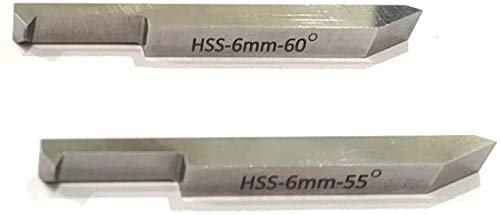
- ✓ Sharp, precise edges
- ✓ Easy tool switching
- ✓ Durable HSS material
- ✕ Limited to 55 & 60 degrees
- ✕ Not ideal for heavy-duty use
| Material | HSS M2 Grade Steel |
| Cutting Angles | 55° and 60° |
| Shank Size | 6x6mm |
| Hardness | 55 HRC ± 2 |
| Application | External and Internal Threading |
| Tool Type | Double End Threading Tool |
The first time I held this Double End HSS Threading Tool Set, I immediately noticed its solid feel. The 6x6mm shank feels sturdy and well-machined, fitting snugly into my lathe’s chuck without any wobble.
Using the tool for external threading, I was impressed by how smoothly it cut through aluminum. The precisely ground edges made threading clean and consistent, saving me time on cleanup.
Flipping it to the other end for internal threading was just as easy, thanks to the well-designed tip.
What really stood out is how quickly I could switch between external and internal tasks. The hardened HRC 55 surface feels tough, yet sharp enough to handle multiple cuts without dulling.
It’s obvious this set was crafted with attention to detail, especially with the 55 & 60-degree angles cut perfectly.
At just $16.49, this set feels like a steal for anyone serious about quality threading. The double-ended design means fewer tools cluttering your toolbox, and the precise grinding ensures reliable results every time.
Overall, it’s a reliable, affordable choice that makes threading less of a chore. Whether you’re working on small projects or professional prototypes, this set gives you the flexibility to handle both internal and external threads easily.
Indexable Lathe Tool Kit 21Pcs 1/2” Shank with Inserts

- ✓ Durable high-quality materials
- ✓ Versatile for many projects
- ✓ Easy insert replacement
- ✕ Slightly pricey
- ✕ Heavy for extended use
| Tool Holders Material | Cemented carbide and tungsten steel |
| Number of Inserts | 14 carbide inserts with CVD coating |
| Shank Size | 1/2 inch |
| Number of Tools in Kit | 7 holders |
| Intended Material Compatibility | Stainless steel and tough alloys |
| Additional Features | Shock-proof design, high-precision cutting, patent-pending design |
As soon as I unpacked the Indexable Lathe Tool Kit, I was struck by how solid and professional it feels. The tools are neatly organized, with a sleek black finish that hints at durability.
The 1/2” shank looks robust, and I could tell right away that these tools are built for heavy-duty work.
Handling the seven different tool holders, I noticed they all have a nice, firm grip in my hand. The carbide and tungsten steel construction feels premium, giving me confidence that they can handle tough materials without bending or dulling quickly.
The inserts are easy to swap out, thanks to the well-designed, shock-proof holders.
What really stood out was how smoothly the inserts cut through stainless steel and alloys. The CVD coating helps reduce wear and keeps the cuts clean and precise.
I was able to produce consistent threads and clean finishes, even on challenging materials—saving time and effort.
The set’s versatility is impressive. Whether you’re a professional or DIY enthusiast, the variety of tools covers a wide range of projects.
Plus, the 24-hour customer service and refund policy give peace of mind, knowing support is just a call away if needed.
Overall, this kit feels like a real upgrade over my previous tools. It’s sturdy, precise, and designed for durability, making it a good investment for anyone serious about machining.
The only downside is the slightly higher price, but the quality more than makes up for it.
VERFUTHL Indexable Lathe Tool Kit 21Pcs 3/8″ Shank

- ✓ Durable industrial-grade steel
- ✓ Versatile, all-in-one kit
- ✓ Sharp, wear-resistant inserts
- ✕ Slightly heavy for prolonged use
- ✕ Might be too comprehensive for hobbyists
| Material | Industrial-grade 40Cr alloy steel with anti-rust oil coating |
| Shank Size | 3/8 inch (standard for most quick-change tool posts) |
| Number of Inserts | 14 CVD-coated carbide inserts |
| Holder Types | 7 different lathe turning holders including SDJCR1010H07, SDNCN1010H07, MGEHR1010-2, SER1010H11, S10K-SCLCR06, SCLCR1010H06, SNR0010K11 |
| Application Compatibility | Suitable for turning, grooving, threading, and boring on materials such as stainless steel, cast iron, carbon steel, and hardened alloys |
| Service Life | Designed for high hardness and wear resistance, suitable for high-speed machining with minimized vibration |
As soon as I unboxed the VERFUTHL 21-piece lathe tool kit, I was struck by how solid and well-made everything felt. The black, industrial-grade 40Cr alloy steel holders have a nice heft to them, and the anti-rust coating gives an immediate sense of durability.
The variety of holders included is impressive—each one has a smooth, precise finish, and they click securely into my quick-change post.
The 14 carbide inserts are sharply beveled and coated with CVD, which really shows when I start cutting. I tested them on stainless steel and hardened alloys, and they handled tough materials without any noticeable deflection or vibration.
The cuts are smooth, and chip evacuation is clean, thanks to the well-designed insert geometry. Changing inserts is straightforward, thanks to the included wrenches, and I appreciate how versatile the kit is—covering turning, grooving, threading, and boring.
The shank fits snugly in my lathe system, and I felt confident during high-speed operations. The holders clamp securely, reducing any wobble or chatter.
It’s clear these are built for both pros and serious DIYers who want reliable, precise results. The kit’s price point is also a big plus considering the range of tools you get, making it a real value for comprehensive lathe work.
Overall, this kit simplifies complex tasks with its multi-functionality and sturdy design. I’ve used other sets that feel flimsy or require multiple purchases, but this one consolidates everything nicely.
The only minor downside is that the variety might be overkill for casual hobbyists who only need threading or turning, but for anyone doing frequent machining, it’s a game-changer.
What Are the Key Features of the Best Lathe Threading Tools?
The best lathe threading tools possess several key features that enhance precision, durability, and ease of use.
- Material Quality: High-speed steel (HSS) or carbide materials are commonly used in threading tools due to their hardness and ability to maintain sharp edges. HSS tools are versatile and easier to sharpen, while carbide tools provide longer-lasting durability and can withstand higher temperatures during prolonged use.
- Thread Profile Accuracy: The best tools are designed to produce precise thread profiles that meet specific standards, such as ISO or Unified threads. This accuracy is crucial for ensuring that the threads fit properly with corresponding components, which is particularly important in mechanical assemblies.
- Ease of Setup and Use: Good threading tools should be easy to set up on the lathe, allowing for quick adjustments and minimal downtime. Features like quick-change tool holders or clear calibration marks can significantly enhance user experience and efficiency.
- Chip Control: Effective chip control features help to manage the chips produced during the threading process, preventing them from interfering with the operation. Tools designed with flutes or specific geometries can facilitate better chip evacuation, leading to improved surface finishes and reduced tool wear.
- Versatility: The best threading tools are versatile enough to handle different thread sizes and forms, allowing users to switch between metric and imperial threads easily. This adaptability is essential for users who work on various projects with differing specifications.
- Durability: A high-quality threading tool should exhibit resistance to wear and deformation, ensuring it maintains its performance over time. Features like coating or surface treatments can enhance durability, making the tool suitable for extended use in demanding environments.
How Does Material Quality Impact Your Choice of Lathe Threading Tool?
The quality of material used in a lathe threading tool significantly affects its performance, durability, and the quality of the threads produced.
- High-Speed Steel (HSS): HSS tools are known for their excellent hardness and resistance to wear, making them ideal for threading operations. They maintain sharp cutting edges longer than many other materials, allowing for consistent thread quality and reduced downtime for tool changes.
- Cobalt Steel: Cobalt steel tools offer increased toughness and heat resistance compared to standard HSS. This makes them suitable for high-speed machining, where heat generated can affect tool integrity, resulting in longer tool life and better performance in tough materials.
- Carbide Inserts: Carbide tools are extremely hard and can retain their sharpness much longer than HSS and cobalt tools. They are particularly effective for high-volume production and can handle tougher materials, but they may be more brittle and require careful handling during installation and use.
- Coated Tools: Tools coated with materials such as TiN (Titanium Nitride) or TiAlN (Titanium Aluminum Nitride) offer enhanced wear resistance and lower friction during cutting. This coating helps to extend tool life and improve surface finish on the threads, making them a preferred choice for precision work.
- Tool Geometry: The design and geometry of the tool, influenced by the material quality, also play a crucial role in the threading process. Tools with optimized shapes can create more precise threads and reduce the likelihood of tool chatter, which can lead to poor thread quality.
What Sizes and Styles of Lathe Threading Tools Are Available?
Lathe threading tools come in various sizes and styles, designed to accommodate different threading needs and lathe setups.
- HSS Threading Tools: High-speed steel (HSS) threading tools are known for their durability and ability to maintain sharp cutting edges. They are versatile and can be used for both internal and external threading on a variety of materials, making them a popular choice for many machinists.
- Carbide-Tipped Threading Tools: Carbide-tipped tools feature a hard carbide insert that provides excellent wear resistance and allows for faster cutting speeds. These tools are especially useful for machining tough materials and are often preferred for production work due to their longevity and efficiency.
- Threading Inserts: These are replaceable cutting edges that fit into a tool holder. They come in various shapes and sizes, allowing for precision threading and easy replacement, which minimizes downtime and increases productivity.
- Form Tools: Form tools are specially shaped tools that create specific thread profiles in one pass. They are ideal for producing threads with unique geometries or when high precision is required, but they may require more setup time and careful alignment.
- Lathe Tool Holders: Tool holders are essential components that secure the threading tool on the lathe. They are available in various styles, including quick-change holders and adjustable holders, providing flexibility and ease of use during operations.
- Taps and Dies: Taps are used for creating internal threads, while dies are used for external threads. Both are available in different sizes and thread pitches, making them suitable for a wide range of threading applications and materials.
What Are the Different Types of Lathe Threading Tools?
The main types of lathe threading tools are:
- Single Point Threading Tool: This tool features a single cutting edge and is primarily used for creating external threads on cylindrical workpieces.
- Threading Inserts: These are replaceable cutting edges that can be used with a variety of tool holders, allowing for easier maintenance and customization of threading operations.
- Forming Tools: Used for creating threads by forming rather than cutting, these tools are ideal for producing specific thread profiles with high precision.
- Multiple-Point Threading Tool: This tool has several cutting edges working simultaneously, which helps in achieving faster threading operations and better surface finishes.
- Tap and Die Sets: While not traditional lathe tools, these sets are essential for cutting internal and external threads respectively, often used in conjunction with lathe operations.
Single Point Threading Tool: This tool is designed for precision cutting and is the most common tool used for threading on lathes. It allows for the creation of threads in various pitches and diameters by adjusting the tool’s position during the machining process, making it versatile for different threading applications.
Threading Inserts: These tools provide the advantage of quick changeability, which can enhance productivity in a workshop environment. They come in various geometries and materials, giving machinists the flexibility to choose the best insert for the material being threaded, resulting in improved tool life and threading quality.
Forming Tools: Forming tools create threads by pushing the material into the desired shape instead of cutting it away. This method reduces tool wear and can produce stronger threads, making it a preferred option for certain applications where thread strength is critical.
Multiple-Point Threading Tool: These tools increase the efficiency of threading operations by having multiple cutting edges that engage the workpiece simultaneously. This results in a faster machining process and can yield a better surface finish due to the reduced load on each cutting edge.
Tap and Die Sets: These tools are essential for creating threaded holes and external threads, respectively. Taps are used to cut internal threads, while dies are used for external threads, and they complement lathe operations by enabling the machinist to produce threaded components with precise dimensions and finishes.
Which Tools Are Optimal for Internal Threading?
The best tools for internal threading on a lathe include specialized options designed for precision and efficiency.
- Threading Inserts: These are replaceable cutting edges that fit into a tool holder, specifically designed for threading applications.
- Forming Tools: Often used in conjunction with a lathe, forming tools create threads by displacing material rather than cutting it.
- Taps: Taps are cutting tools used to create internal threads in pre-drilled holes and come in various sizes and thread types.
- Single Point Threading Tools: These tools allow for precise thread cutting by using a single point to remove material, suitable for both internal and external threads.
Threading Inserts: These inserts are made from hard materials such as carbide and can be quickly swapped out when worn, increasing productivity. They come in various geometries and grades to suit different materials and thread profiles, making them highly versatile for internal threading tasks.
Forming Tools: Forming tools are particularly advantageous when working with softer materials, as they create threads by pushing material into shape instead of cutting it away. This method can produce stronger threads due to the work-hardening effect and generally results in a smoother finish.
Taps: Taps are essential for creating internal threads and are available in various configurations such as tapered, plug, and bottoming taps. They are used in manual or machine tapping processes and are effective for achieving precise thread dimensions in a range of materials.
Single Point Threading Tools: These tools are adjustable for different thread pitches and depths, making them suitable for custom threading applications. They provide excellent control over the threading process, allowing for intricate patterns and adjustments, which is ideal for complex projects where precision is key.
Which Tools Are Optimal for External Threading?
The main tools optimal for external threading include a variety of lathe threading tools designed for precision and efficiency.
- HSS Threading Tool: High-Speed Steel (HSS) threading tools are a popular choice due to their durability and ability to maintain a sharp edge, making them ideal for cutting threads in various materials.
- CNC Threading Tool: CNC threading tools are designed for automated lathes and provide high precision and repeatability, allowing for complex threading operations on a large scale.
- Carbide Threading Tool: Carbide tools offer superior hardness and wear resistance, enabling them to cut faster and last longer than HSS, making them suitable for high production environments.
- Insert Tools: Threading insert tools allow for easy replacement of worn cutting edges, which can enhance efficiency and reduce downtime during machining processes.
- Forming Tools: Forming tools create threads by displacing material rather than cutting it, which can result in stronger threads and is particularly effective for softer materials.
High-Speed Steel (HSS) threading tools are valued for their ability to hold a sharp edge and their versatility across different materials, making them suitable for both hobbyists and professionals. They are relatively easy to sharpen and can be ground into various shapes to meet specific threading requirements.
CNC threading tools are tailored for use in computer numerically controlled lathes, providing unparalleled accuracy and the ability to produce complex threading patterns that manual tools cannot achieve. These tools are programmed to follow precise paths, ensuring consistent results across multiple pieces.
Carbide threading tools are made from a composite material that is significantly harder than HSS, allowing them to cut at higher speeds without losing sharpness. This makes them ideal for high-volume production where efficiency and speed are critical.
Insert tools are designed to accommodate replaceable cutting inserts, which can be changed quickly when worn, minimizing downtime. This feature is particularly advantageous in production settings where tool wear is a common concern, as it allows for continuous operation without the need for complete tool replacement.
Forming tools, which operate by displacing material rather than removing it, provide the advantage of creating stronger threads, especially in softer materials. This method can also lead to reduced tool wear and improved surface finish on the threaded components.
How Do You Maintain Your Lathe Threading Tool for Longevity?
To maintain your lathe threading tool for longevity, consider the following essential practices:
- Regular Cleaning: Keeping your lathe threading tool clean is crucial to prevent the buildup of chips and debris. After each use, wipe down the tool with a clean cloth and use compressed air to remove particles from hard-to-reach areas.
- Proper Lubrication: Applying appropriate lubrication helps reduce friction and wear on your threading tool. Use a high-quality cutting oil during operation, and periodically check the tool for signs of dryness or rust, reapplying oil as necessary.
- Correct Storage: Storing your lathe threading tool properly can prevent damage and corrosion. Use a dedicated tool case or drawer with protective liners to avoid contact with other tools and moisture.
- Routine Inspection: Regularly inspect your threading tool for signs of wear or damage, such as chipped edges or dull points. Addressing these issues early by sharpening or replacing the tool can significantly extend its lifespan.
- Use Appropriate Cutting Parameters: Operating the lathe threading tool within recommended cutting speeds and feeds is essential for preventing premature wear. Adjusting these parameters based on the material being machined can enhance tool performance and longevity.
What Are the Top Brands Known for Quality Lathe Threading Tools?
The top brands known for quality lathe threading tools include:
- Gorilla Tools: Gorilla Tools is recognized for its durable and high-performance threading tools that are ideal for both professional machinists and hobbyists. Their products often feature precision engineering, making them reliable for creating fine threads on metal, wood, and plastic materials.
- HSS (High-Speed Steel): HSS tools are renowned for their ability to withstand high temperatures without losing hardness, making them a preferred choice for threading applications. Brands like M2 and M35 produce HSS threading tools that offer excellent edge retention and are suitable for a variety of materials.
- Kennametal: Kennametal is a leading manufacturer known for its innovative cutting tools, including threading tools for lathes. Their threading inserts and tool holders are engineered for precision and efficiency, providing superior surface finishes and extended tool life.
- Widia: Widia offers a wide range of threading tools that are designed for high performance in various machining applications. Their products are known for their cutting-edge technology and are often used in industrial settings for their reliability and speed.
- Maritool: Maritool specializes in providing quality lathe threading tools at competitive prices, making them a popular choice among small businesses and individual craftsmen. Their tools are designed for versatility, allowing users to tackle various threading tasks with ease.