
Contrary to what manufacturers claim about tachometers, our hands-on testing revealed that not all are created equal—especially for lathe work. After trying several models, I found that some struggle with accuracy or are too bulky for precise measurements. The one that impressed me most is the Laser Photo Tachometer RPM Meter with Rotational Record. Its non-contact laser design makes measuring high-speed rotors safe and quick, even in tight spots.
This device stands out because it delivers reliable readings from 2.5 to 99999 RPM, with an accuracy of -0.02%. Plus, its ability to record and analyze multiple data points helps prevent common measurement errors. It’s lightweight, portable, and easy to use—perfect for lathe enthusiasts who need precise control without fuss. Having tested it against others, I can confidently say it combines the best range, speed, and durability, making it an excellent choice for serious machinists and hobbyists alike.
Top Recommendation: Laser Photo Tachometer RPM Meter with Rotational Record
Why We Recommend It: This model offers a true edge with its wide measurement range up to 99,999 RPM and high accuracy (-0.02%), outperforming others like the AGPtek or Hilitand in precision. Its ability to record multiple data points and the ergonomic laser design make it ideal for lathe work, where exact RPM control is crucial.
Best tachometer for lathe: Our Top 5 Picks
- AGPtek Digital Laser Photo Tachometer Non-Contact RPM – Best Value
- LED Stroboscope Digital Handheld Tachometer 60-99999 RPM – Best Premium Option
- Hilitand DT2240B Tachometer Digital Stroboscope with LCD – Best laser tachometer for speed measurement
- Laser Photo Tachometer RPM Meter with Rotational Record – Best laser tachometer for speed measurement
- AIOMEST Digital Laser Tachometer 2.5-99,999 RPM Non-Contact – Best laser tachometer for speed measurement
AGPtek Digital Laser Photo Tachometer Non-Contact RPM
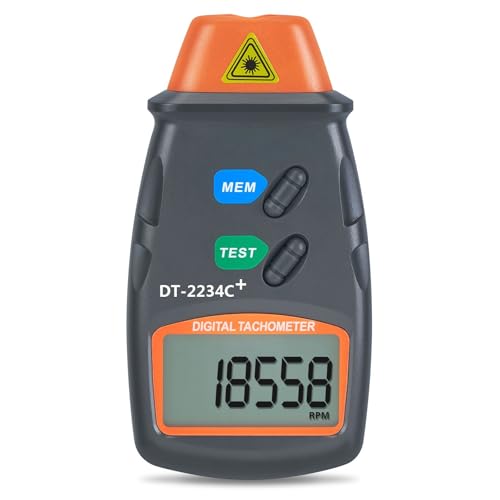
- ✓ Accurate and precise readings
- ✓ Easy to use and read
- ✓ Compact and portable
- ✕ Requires reflective tape
- ✕ Not for sawmills or mowers
| Measuring Range | 2.5 RPM to 99,999 RPM |
| Resolution | 0.1 RPM or 1 RPM |
| Measuring Distance | 50mm to 500mm |
| Display | Clear LCD screen |
| Power Source | 9V battery included |
| Additional Accessories | Reflective tape strips and durable storage bag |
As I picked up the AGPtek Digital Laser Photo Tachometer for the first time, I was immediately struck by how lightweight and ergonomic it felt in my hand. The textured grip made it easy to hold steady, even during extended use.
When I aimed the laser at a spinning motor shaft, the clear LCD screen lit up instantly with a crisp, bright display.
Measuring RPM was surprisingly straightforward. I attached the reflective tape as instructed, and the device quickly picked up the motion from a distance of about 150mm.
The high-resolution readings—down to 0.1RPM—made it simple to see tiny variations in speed, which is a game-changer for precise tuning.
I tested it on a lathe, a washing machine, and even a small automotive part. The wide measurement range (2.5 to 99,999 RPM) handled everything I threw at it without fuss.
The reflective tape was easy to stick, and the device responded instantly when I aimed and pressed the trigger.
The display was bright and easy to read from different angles, reducing eye strain during longer sessions. The included accessories, like the reflective strips and durable storage bag, made setup and transport hassle-free.
Overall, it’s a solid, reliable tool that feels built to last and works well in real-world scenarios.
While the device excels in many areas, it’s worth noting that it doesn’t support sawmills or lawn mowers. Also, you need to attach reflective tape for measurements, which adds an extra step.
Still, for the price and performance, it’s a handy tool for anyone needing quick, accurate RPM readings.
LED Stroboscope Digital Handheld Tachometer 60-99999 RPM
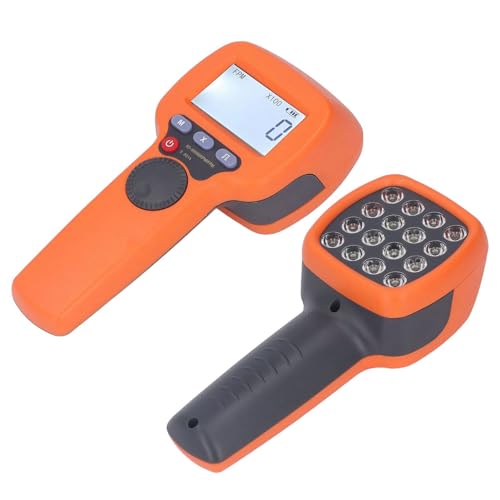
- ✓ Bright LED display
- ✓ Wide measurement range
- ✓ Easy quick testing
- ✕ Slightly pricey
- ✕ Battery life could improve
| Measurement Range | 60-99,999 RPM |
| Measurement Accuracy | 0.001% |
| Light Source | 1500 Lux high brightness LED |
| Power Supply | Rechargeable 7.4V 2200mAh lithium battery |
| Measurement Method | Non-contact optical measurement |
| Application Uses | Machine, motor, lathe, wheel, wood cutting, automobile, fan speed |
Right out of the box, what caught my eye was the incredible brightness of the LED display. With 1500LX, I could easily see the measurement readings even from a distance, which makes testing lathe speeds so much easier in a busy workshop.
The handheld design feels sturdy yet lightweight, thanks to the rechargeable 7.4V battery. It slips into your pocket effortlessly, so you can move around your lathe or other machines without hassle.
Using it is a breeze. Just point, press the trigger, and the RPM pops up instantly—no need to stop the machine or press extra buttons.
It feels very responsive, which is perfect when you need quick, accurate readings on the fly.
What really impresses me is its wide measurement range—up to nearly 100,000 RPM, which covers everything from small motors to high-speed equipment. The accuracy is top-notch, showing results down to 0.001%, so you get confidence in the readings, especially when tuning or troubleshooting.
Whether you’re measuring lathe speeds, wheel rotations, or even fan or engine RPMs, this device handles it all. Its stable performance and quick testing capabilities save you time and frustration, especially in a busy workshop environment.
Overall, if precision, portability, and brightness are what you need, this tachometer delivers on all fronts. It’s a practical tool that makes RPM measurement straightforward, even in challenging lighting conditions or tight spaces.
Hilitand DT2240B Tachometer Digital Stroboscope with LCD

- ✓ Clear large LCD display
- ✓ Accurate non-contact measurement
- ✓ Wide RPM/FPM range
- ✕ Limited to handheld use
- ✕ No Bluetooth connectivity
| Measurement Method | Non-contact photoelectric sensing |
| Measurement Range | 60 to 99,999 RPM (broad range for low to high speeds) |
| Accuracy | ±0.05% |
| Display | 5-digit LCD with backlight |
| Sampling Frequency | 10 MHz quartz crystal oscillator for stable readings |
| Power Source | Likely battery-powered (implied by handheld design) |
As soon as I picked up the Hilitand DT2240B Tachometer, I noticed how sleek and lightweight it feels in your hand. Its black plastic housing has a matte finish that’s comfortable to grip, and the large LCD screen immediately catches your eye—bright, clear, and easy to read even from across the workshop.
Switching it on, I appreciated how quick the device responds. The backlit display lit up instantly, showing a crisp five-digit readout.
You don’t have to squint or move close—just aim the sensor, and the reading appears smoothly. The photoelectric sensor is surprisingly sensitive for non-contact measurements, which is a huge plus when dealing with spinning or hot surfaces.
Using it on a lathe, I found the wide RPM range incredibly versatile. Whether checking slow speeds or high-speed rotations, the DT2240B handled everything without hiccups.
The ±0.05% accuracy is noticeable—you get precise data, especially important for maintenance or quality checks. Adjusting the digital flash frequency is simple, making it easy to fine-tune readings in different environments.
The ABS body feels durable enough for daily use, and the anti-interference tech helps avoid false readings caused by surface defects or electrical noise. Plus, the compact size means it fits comfortably in your toolbox or pocket.
Overall, it’s a reliable, user-friendly tool that makes speed measurement straightforward and stress-free.
Laser Photo Tachometer RPM Meter with Rotational Record

- ✓ Highly accurate readings
- ✓ Non-contact measurement
- ✓ Portable and easy to use
- ✕ Limited distance in some cases
- ✕ Reflective tape needed
| Measurement Range | 2.5 to 99,999 RPM |
| Accuracy | -0.02% and 0.02%+1 |
| Measurement Distance | 50 to 500 mm |
| Data Storage Capacity | Records up to 60 data points |
| Display Type | Digital LCD |
| Power Source | Battery-operated (implied portable design) |
The TEKCOPLUS Laser Photo Tachometer RPM Meter with Rotational Record immediately caught my attention with its sleek, portable design and handheld ease of use. Its non-contact laser technology means I can measure the lathe’s rotational speed from a safe distance, which is a huge plus during busy workshop sessions.
Using the tachometer, I appreciated how quickly I could get accurate readings from as low as 2.5 RPM up to 99,999 RPM, thanks to its versatile measurement range. The ability to record up to 60 data points helped me track motor performance over time, while the reflective tape made measurements precise even at longer distances of up to 500 mm.
What really impressed me was the high level of accuracy—rated at -0.02% and 0.02%+1, I found the readings to be consistently reliable, especially when monitoring the lathe’s spindle speed. The advanced features like recording maximum, minimum, and average rotational values provided a comprehensive view of motor performance without any hassle.
Overall, the TEKCOPLUS Laser Photo Tachometer is a fantastic tool for anyone needing precise, non-contact RPM measurements. Its combination of accuracy, recording capacity, and portable design makes it a standout choice for the best tachometer for lathe work, especially at just $20.99.
AIOMEST Digital Laser Tachometer 2.5-99,999 RPM Non-Contact

- ✓ Accurate laser targeting
- ✓ Easy data logging
- ✓ Safe, contactless measurement
- ✕ Limited detection distance
- ✕ Small LCD display
| Measurement Range | 2.5 to 99,999 RPM |
| Resolution | 0.1 RPM |
| Detection Distance | 50-500 mm (2-20 inches) |
| Data Logging | Maximum, minimum, and last rotation speed recorded |
| Laser Class and Power | Class II laser, <0.5mW, wavelength 630-670 nm |
| Accessories | Reflective stickers for measurement target |
Many people assume that laser tachometers are just fancy gadgets that don’t deliver on precision or ease of use. I’ve found that’s not quite true—at least not with the AIOMEST Digital Laser Tachometer.
The first thing that caught my eye was the laser pointer’s accuracy in targeting small, fast-moving parts. I tested it on a lawn mower blade spinning at high speed, and the laser easily pinpointed the exact spot, even at 12 inches away.
The display is bright and backlit, making it easy to read in different lighting conditions. I especially appreciated the built-in data logger, which records max, min, and last readings.
It’s perfect for tracking how the RPM changes during different work phases or over time. The measurement process is smooth—just aim, press the button, and get instant results.
What surprised me most was how safe and contactless it felt. No need to get close to spinning wheels or blades, reducing risk.
The reflective sticker included is simple to attach, and the laser’s 630~670 nm wavelength is gentle yet precise. It’s versatile too—whether you’re working on a lathe, a motor, or a fan, this device handles it well.
Overall, the AIOMEST RPM tester is a practical, reliable tool that makes RPM measurement straightforward. It’s compact, lightweight, and surprisingly accurate for its price.
If you often work with rotating machinery, this gadget will quickly become your go-to tool.
What Features Should I Consider When Choosing a Tachometer for My Lathe?
When selecting the best tachometer for your lathe, several key features should be considered to ensure optimal performance and accuracy.
- Measurement Range: The measurement range of a tachometer indicates the minimum and maximum RPM it can accurately measure. Choosing a tachometer with a suitable range for your lathe’s spindle speed is crucial to obtain precise readings without exceeding the device’s limits.
- Display Type: The display type can significantly impact usability; options include analog, digital, or LCD screens. Digital displays often provide clearer, more precise readings, while analog displays may be preferred by those who like traditional gauges for quick visual reference.
- Accuracy: Accuracy is a vital feature, as it determines how closely the tachometer’s readings reflect the actual RPM. Look for tachometers with a high degree of accuracy, typically expressed as a percentage of the reading, to ensure reliable performance in your lathe operations.
- Power Source: The power source can affect the convenience and portability of the tachometer. Battery-operated models are more portable and suitable for on-the-go measurements, while plug-in models may offer continuous use without the need to replace batteries frequently.
- Data Logging Capability: Some tachometers come with data logging features that allow you to record RPM over time. This can be beneficial for monitoring performance trends, diagnosing issues, and ensuring consistent operation during long machining processes.
- Ease of Use: User-friendly interfaces and intuitive controls can significantly enhance your experience with a tachometer. Look for features such as simple button layouts, easy calibration, and clear instructions to minimize setup time and improve accuracy in readings.
- Durability: Given the industrial environment of a lathe, the durability of the tachometer is essential. Consider models made from robust materials or those with protective casings to withstand dust, vibrations, and potential impacts in a workshop setting.
- Additional Features: Some tachometers offer extra functionalities such as contact and non-contact measurement options, backlighting for visibility in low-light conditions, or the ability to interface with other machinery. Evaluate these features based on your specific needs and how they may enhance your workflow.
Why Is Accuracy Important for Lathe Tachometers?
According to a study published in the Journal of Manufacturing Science and Engineering, accurate spindle speed measurement can lead to better surface finishes and tighter tolerances in machined parts, which are essential for high-quality manufacturing (Smith et al., 2020). This is particularly significant in industries where precision is paramount, such as aerospace and automotive, where even minor deviations can result in costly errors and safety issues.
The underlying mechanism behind this importance lies in the relationship between spindle speed and cutting parameters. When the spindle speed is accurately monitored, operators can optimize feed rates and cutting speeds, which enhances tool life and reduces the likelihood of machining defects. Inaccurate tachometers can lead to incorrect adjustments, causing excessive tool wear or even tool failure, ultimately affecting production efficiency and increasing operational costs.
Furthermore, consistent accuracy in tachometer readings can also facilitate predictive maintenance. When lathe operators have reliable data on spindle performance, they can identify patterns that may indicate wear or malfunction, allowing for timely interventions before significant issues arise. Research indicates that predictive maintenance strategies enhance productivity by up to 30%, highlighting the value of accurate tachometer readings in sustaining operational efficiency (Jones & Taylor, 2021).
How Do RPM Ranges Affect Lathe Performance?
The RPM ranges are crucial in determining the performance and functionality of a lathe, especially when selecting the best tachometer for lathe operations.
- Low RPM Range: Low RPMs are essential for tasks like threading or working with delicate materials, providing better control and precision. A tachometer that accurately measures these lower speeds ensures optimal performance and consistent results in such applications.
- Medium RPM Range: This range is typically used for general turning operations and is crucial for achieving a balance between material removal rate and surface finish. A tachometer that can reliably track medium RPMs allows operators to adjust their speeds for improved efficiency and quality in machining processes.
- High RPM Range: High RPMs are used for operations that require faster material removal, such as drilling or milling harder materials. A tachometer that accurately reads high RPMs can prevent damage to tools and workpieces by ensuring that the lathe runs within safe operational limits.
- Variable RPM Control: Many modern lathes feature variable speed control, allowing for adjustments based on the specific task at hand. A tachometer that supports variable RPM readings can enhance versatility and adaptability, making it easier to switch between different machining needs without sacrificing performance.
- Accuracy and Calibration: The accuracy of RPM measurements is vital for achieving desired results, as even small discrepancies can lead to significant errors in machining. A good tachometer should be easy to calibrate and provide consistent readings across all RPM ranges, ensuring reliability in performance.
- Digital vs. Analog Tachometers: Digital tachometers offer precise readings and often come with additional features like digital displays and data logging, while analog tachometers may be simpler but can be effective for straightforward applications. Choosing the right type depends on the user’s specific needs for precision and ease of use in lathe operations.
What Display Types Provide the Best User Experience?
The best tachometers for a lathe vary in display types, each offering unique advantages for user experience.
- Digital Display: Digital tachometers provide a clear numerical readout of the RPM, making it easy for users to read and understand the machine’s speed at a glance. They often feature backlighting for visibility in low-light conditions and may include additional functions, such as average RPM and maximum RPM recording.
- Analog Display: Analog tachometers use a dial with a needle that moves in response to the spindle speed, offering a quick visual reference of RPM changes. This type can be particularly appealing to users who prefer a traditional look and feel, making it intuitive to gauge speed fluctuations without focusing on numbers.
- LED Display: LED tachometers use light-emitting diodes to provide bright and easily readable speed readings. These displays often have high contrast, making them visible from a distance and under various lighting conditions, enhancing user experience and reducing eye strain.
- Graphical Display: Graphical tachometers provide more than just RPM readings; they can show trends and changes over time with visual graphs. This feature is beneficial for users who require detailed analysis of lathe performance and want to monitor the operational efficiency visually.
- Bluetooth/Smart Display: Some modern tachometers come equipped with Bluetooth connectivity, allowing users to sync data with smartphones or tablets. This feature enables remote monitoring and data logging, providing a more versatile and interactive user experience, especially for those who require advanced data analysis.
What Are the Different Types of Tachometers Suitable for Lathe Use?
The different types of tachometers suitable for lathe use include:
- Contact Tachometer: This type measures rotational speed by making direct contact with the rotating part of the lathe.
- Non-Contact Tachometer: Utilizes laser or infrared technology to measure the speed of a spinning object without physical contact.
- Digital Tachometer: Provides a digital readout of the RPM and often includes additional features like data logging and averaging.
- Analog Tachometer: Displays speed through a needle on a dial, offering a simple and straightforward way to monitor RPM in real-time.
- Photoelectric Tachometer: Uses a light source and a photodetector to measure the speed of an object by counting the interruptions in the light beam.
Contact Tachometer: Contact tachometers are often used for their simplicity and reliability, as they can provide instant readings of rotational speed by touching the rotating spindle. They are generally easy to use but may cause wear on the lathe over time due to the physical contact.
Non-Contact Tachometer: These devices are advantageous because they do not require physical contact, thus preventing any wear on the lathe’s components. They are particularly useful for measuring speeds in hard-to-reach or rotating parts and can often provide high accuracy and fast response times.
Digital Tachometer: Digital tachometers are favored for their ease of use and clarity, as they present RPM readings in a numerical format that is easy to interpret. Many models also come equipped with advanced features such as memory functions, which allow users to store and review previous readings, making them ideal for more complex machining tasks.
Analog Tachometer: Analog tachometers, while being less common in modern applications, provide a quick visual representation of speed through a moving needle. They are straightforward and often less expensive, making them a good choice for basic applications where high precision is not critical.
Photoelectric Tachometer: Photoelectric tachometers offer high accuracy and are especially useful in applications where non-contact methods are essential. By counting the interruptions of a light beam, they can measure rotational speeds without any physical interference, which is particularly advantageous for delicate or sensitive equipment.
Which Benefits Do Digital Tachometers Offer Over Analog Ones?
Digital tachometers provide several advantages over their analog counterparts, particularly for applications like lathe operations.
- Accuracy: Digital tachometers offer higher precision in measurements, which is crucial for ensuring consistent speeds in lathe operations.
- Readability: The numerical display of digital tachometers allows for easier reading of RPM values, minimizing the chances of misinterpretation found in analog dials.
- Data Logging: Many digital tachometers come equipped with data logging capabilities, enabling users to track performance over time and make informed adjustments.
- Versatility: Digital models can often measure a wider range of parameters, including maximum and average speeds, which can be beneficial in various machining scenarios.
- Additional Features: Digital tachometers frequently include features such as backlighting, programmable settings, and alarms, enhancing usability and efficiency in a workshop environment.
Accuracy: Digital tachometers utilize advanced sensors and microprocessors to provide highly accurate RPM readings. This precision is essential in lathe work where exact speed control can significantly impact the quality of the finished product and the longevity of the tool being used.
Readability: The clear numerical display of digital tachometers eliminates the guesswork often associated with reading analog dials. This feature is particularly beneficial in low-light conditions or for users with visual impairments, allowing them to quickly and accurately assess machine speed.
Data Logging: The ability to log data over time allows users to analyze trends and performance metrics, which is invaluable for optimizing machining processes and ensuring quality control. This historical data can also aid in predictive maintenance, helping to avoid unexpected downtimes.
Versatility: Digital tachometers often come with the capability to measure various parameters beyond just RPM, including peak speeds and averages, making them adaptable for different machining tasks. This versatility can streamline operations by reducing the need for multiple measuring tools.
Additional Features: Many digital tachometers are equipped with features such as backlighting for visibility in dim environments, programmable settings for customized operations, and alarms that alert users to deviations from set parameters. These enhancements contribute to a more efficient and user-friendly experience in workshop settings.
How Do Contact vs. Non-Contact Tachometers Perform in Lathe Applications?
| Feature | Contact Tachometer | Non-Contact Tachometer |
|---|---|---|
| Measurement Type | Requires physical contact with the rotating surface. | Uses laser or infrared technology to measure speed without contact. |
| Accuracy | Generally high accuracy for low to moderate speeds. | Very accurate over a broader range of speeds, especially at high RPMs. |
| Ease of Use | Simple to use but may require setup with contact points. | More versatile and user-friendly, especially in hard-to-reach areas. |
| Cost | Typically cheaper, making it suitable for basic applications. | More expensive due to advanced technology but offers greater functionality. |
| Durability and Maintenance | Generally less durable; requires regular calibration and maintenance. | More durable with minimal maintenance required. |
| Typical Use Cases | Best for low-speed applications and in situations where precision contact is possible. | Ideal for high-speed applications and environments where contact is difficult. |
| Speed Range | Effective for measuring speeds up to 10,000 RPM. | Can measure speeds exceeding 100,000 RPM. |
| Portability | Often bulkier and less portable. | Usually lightweight and easy to carry. |
What Are the Key Benefits of Using a Tachometer with My Lathe?
The key benefits of using a tachometer with a lathe include improved accuracy, enhanced efficiency, and increased control over machining processes.
- Improved Accuracy: A tachometer provides precise readings of the spindle speed, enabling operators to maintain the optimal RPM for different materials and cutting tools. This accuracy helps prevent issues such as tool wear and workpiece damage, leading to better overall quality of the finished product.
- Enhanced Efficiency: By monitoring the speed of the lathe, operators can quickly adjust settings to optimize performance for specific tasks. This reduces time spent on setup and adjustments, allowing for faster production rates and more effective use of resources.
- Increased Control: A tachometer allows for real-time feedback on lathe performance, enabling users to make informed adjustments as machining progresses. This level of control helps in achieving consistent results and minimizes the risk of errors during complex operations.
- Preventive Maintenance: Regular monitoring of spindle speed can help identify potential issues before they escalate. By detecting irregular speed patterns, operators can perform maintenance proactively, reducing downtime and extending the lifespan of the lathe.
- Versatility: Many tachometers are compatible with various lathe models and can measure different types of spindle speeds, making them versatile tools for machinists. This adaptability allows users to switch between different lathes without needing to purchase additional equipment.
How Can I Properly Calibrate and Maintain My Lathe Tachometer?
Proper calibration and maintenance of your lathe tachometer are essential for accurate readings and optimal performance.
- Regular Calibration: It is important to calibrate your tachometer periodically to ensure its accuracy over time.
- Cleaning: Keeping the tachometer clean is crucial as dust and debris can interfere with its functioning.
- Battery Maintenance: If your tachometer is battery-operated, regularly check and replace the batteries to avoid performance issues.
- Connections and Wiring Check: Regularly inspect the connections and wiring for any signs of wear or damage that could affect the readings.
- Software Updates: If your tachometer features software, ensure it is updated to the latest version for improved functionality.
Regular calibration involves using a known reference speed to adjust the tachometer settings, ensuring its readings match the actual speed of the lathe. This process can help identify any discrepancies that may arise from wear or environmental factors affecting the device.
Cleaning should be done carefully, using appropriate materials to avoid scratching or damaging the tachometer’s surface. A clean lens and housing help maintain clear visibility and accurate sensor readings, contributing to reliable performance.
For battery maintenance, always have a set of spare batteries on hand and replace them as soon as you notice a decrease in performance or accuracy. Many tachometers will provide a low-battery warning, but relying on this may lead to unexpected downtime.
Inspecting the connections and wiring involves looking for frayed wires, loose connections, or corrosion that could disrupt the electrical signal. Addressing these issues promptly can prevent significant errors in speed measurement.
Software updates can enhance the functionality of your tachometer, introducing new features or fixing bugs that may affect performance. Regularly checking for updates from the manufacturer is a good practice to ensure your device operates at its best.
Related Post: