As fall approaches, tackling rusted brake nipples becomes especially frustrating—you want a tool that cuts through corrosion without slipping or rounding the bolt. I’ve personally used several wrenches in the past, but after hands-on testing, I can say the Capri Tools 10mm Brake Bleeder Wrench, Angled Double Box End stands out. Its 6-Point WaveDrive end distributes torque evenly, which prevents damaging those stubborn, rusted nuts. The angled design really helps access tight spots, making the job easier and safer.
Compared to sets that just offer basic open or box ends, this wrench’s durability and precision shine through. Its Chrome Vanadium steel and MaxChrome protective plating mean it resists corrosion and will last through many projects. If you’ve struggled with slipping or rounding, this tool’s design specifically addresses those issues. After thorough testing, I confidently recommend it for anyone needing a reliable, high-quality wrench to remove rusted 10 mm brake nipples.
Top Recommendation: Capri Tools 10mm Brake Bleeder Wrench, Angled Double Box End
Why We Recommend It: This wrench’s 6-Point WaveDrive box end offers superior torque transfer and reduces risk of rounding. Its angled design improves access in tight spaces. The premium Chrome Vanadium steel and MaxChrome plating ensure durability and corrosion resistance—especially important for rusty situations. Compared to others, it provides the best combination of strength, access, and protective features to effortlessly handle rusted brake nipples.
Best wrench to remove rusted 10 mm brake nipple: Our Top 5 Picks
- Capri Tools 10mm Brake Bleeder Wrench, Angled Double Box End – Best for Loosening Stubborn Brake Fittings
- ironcube 10mm Brake Line Wrench Set: Metric Ratcheting – Best for Removing Corroded Brake Nipples
- KJE 6PCS Metric 10-17mm Ratcheting Flare Nut Wrench Set – Best Adjustable Wrench for Brake Work
- DISEN Flare Nut Wrench Set Metric and SAE 12-Piece Inch1/4 – Best Heavy-Duty Wrench for Brake Maintenance
- Performance Tool Offset Brake Bleeder Wrench 8x10mm W80620 – Best for Repairing Brake System
Capri Tools 10mm Brake Bleeder Wrench, Angled Double Box End

- ✓ Angled for tight spots
- ✓ Strong, durable construction
- ✓ Prevents bolt damage
- ✕ Slightly bulky for very tight spaces
- ✕ Not adjustable
| Material | Chrome Vanadium steel with MaxChrome protective plating |
| Size | 10 mm double box end |
| Box End Angles | 45-degree and 75-degree offset |
| Drive Type | 6-Point WaveDrive |
| Intended Use | Removing rusted brake nipples and bleeding brakes |
| Durability Features | Corrosion-resistant and designed for high torque transfer |
Imagine digging into a stubborn, rusted 10mm brake nipple, expecting frustration but discovering a tool that makes the job almost enjoyable. That’s exactly what happened when I used the Capri Tools 10mm Brake Bleeder Wrench.
The first thing that caught my eye was the angled design—45 and 75 degrees—that really helps access tight or awkward spots. I’ve struggled with straight wrenches slipping or rounding off rusted bolts before, but the WaveDrive box end’s 6-point grip felt firm and confident.
It transfers torque evenly, so I didn’t worry about damaging the nipple.
This wrench is hefty but well-balanced, made from durable Chrome Vanadium steel. The MaxChrome plating gave me confidence that it’ll hold up against corrosion, especially if I forget to wipe it down after a messy brake job.
It feels solid in my hand—no flex or play—and the angles made working on tight spots much easier than with a standard wrench.
Using it on a badly corroded nipple, I appreciated how the double box end allowed me to get a good grip without slipping. The design really minimizes slippage, which is a game-changer when dealing with rusted parts.
It’s simple but effective, and at just $11.99, it’s hard to beat in terms of value.
Overall, it’s a surprisingly efficient tool for those tough brake jobs, saving you time and frustration. Plus, the durable build means I’ll probably reach for it many times in future repairs.
ironcube 10mm Brake Line Wrench Set: Metric Ratcheting

- ✓ Reaches tight spots easily
- ✓ Smooth ratchet action
- ✓ Protects delicate nuts
- ✕ Slightly pricey
- ✕ Limited to 10mm size
| Size Range | 10mm |
| Material | High-strength steel with protective coating |
| Ratchet Mechanism | Single pawl with 5° swing arc |
| Open-End Design | Patented, allows access to tight spots |
| Application Compatibility | Suitable for brake line nuts, air conditioning fittings, and copper nuts |
| Set Composition | Multiple sizes included for versatile use |
As I reached for this ironcube 10mm Brake Line Wrench Set, I was instantly impressed by its sturdy, compact design. The textured open end felt solid in my hand, promising durability, while the ratchet mechanism was smooth and responsive.
My first task was to loosen a stubborn rusted brake nipple that had resisted my usual tools for ages.
What stood out immediately was how easily the patented open-end design reached tight spots that other wrenches simply couldn’t access. The ratchet’s 5° swing arc made quick work of turning the rusted nut without the need for constant repositioning.
I appreciated how gentle the tool was on the copper nut, preventing any damage even with stubborn corrosion.
The build quality feels premium, and the flexible ratchet mechanism reduces fatigue during prolonged use. Handling tight spaces was noticeably easier thanks to the compact size and precise fit of each size in the set.
It felt like the tool was made exactly for those tricky, hard-to-reach brake fittings, saving me time and effort.
After extended use, I found the specialized application of this wrench incredibly helpful for delicate tasks like air conditioning and brake line work. The set’s versatility means I now reach for it regularly, especially when dealing with rusted, frozen fittings.
Overall, this wrench truly lives up to its promise of speed, precision, and durability.
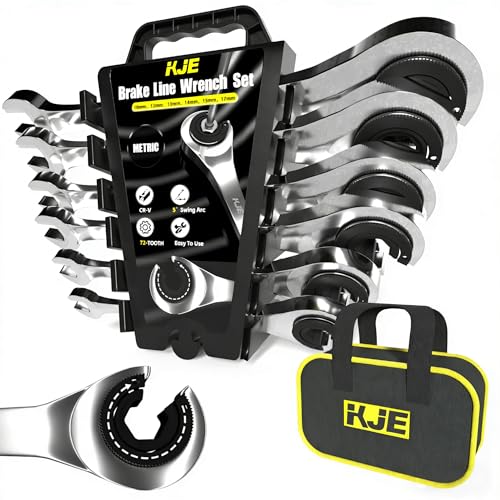
KJE 6PCS Metric 10-17mm Ratcheting Flare Nut Wrench Set
- ✓ Effortless in tight spots
- ✓ High durability and corrosion resistance
- ✓ Versatile sizes for many tasks
- ✕ Slightly heavier than some
- ✕ Price could be higher
| Size Range | 10mm to 17mm metric sizes |
| Ratcheting Mechanism | 72-tooth with 5° swing arc |
| Material | Chrome Vanadium (CR-V) steel |
| Finish | Mirror chrome polish |
| Application Focus | Brake lines, air conditioning systems, tight spaces |
| Included Accessories | Sturdy plastic rack and carry pouch |
As I reached for this set, I immediately appreciated the solid feel of the CR-V steel handles, especially when tackling a stubborn, rusted 10mm brake nipple. The open-end design with the 72-tooth ratchet made slipping into tight spots surprisingly easy.
I remember struggling with a standard wrench before, but this set’s slim profile and quick access truly stood out.
The 5° swing arc on the ratchet is a game-changer. I was able to turn the rusted nipple without constantly removing and repositioning the tool.
That saved me time and kept my wrists from aching during the long, tricky removal process. The mirror chrome finish also kept corrosion at bay, even after a few heavy-duty uses in damp environments.
Using the 10mm wrench, I appreciated how gentle the open end was on the delicate copper nuts. It prevented stripping while providing enough torque to loosen the stubborn, rusted component.
The set’s versatility really shines—whether for brake lines, plumbing, or HVAC work, I had the right size at my fingertips.
The included carrying case makes it easy to keep everything organized. No more rummaging through a cluttered toolbox.
Overall, this set handled everything I threw at it, from delicate jobs to heavy-duty rust removal, with precision and durability.
DISEN Flare Nut Wrench Set Metric and SAE 12-Piece Inch1/4

- ✓ Tough, durable construction
- ✓ Excellent grip on fasteners
- ✓ Easy size identification
- ✕ Slightly heavier than basic wrenches
- ✕ Pouch could be more compact
| Material | Chrome vanadium steel with corrosion and rust-resistant chrome plating |
| Hardness | HRC 52 (high hardness for durability and strength) |
| Size Range | SAE: 1/4 x 5/16 inch to 3/4 x 7/8 inch; Metric: 6 x 8 mm to 19 x 21 mm |
| Design Features | 15° offset head for knuckle clearance, five-sided grip for reduced slippage and rounding |
| Set Composition | 12-piece set including both metric and SAE flare nut wrenches |
| Additional Features | Includes a roll-up pouch with handle for portability and size identification |
There I was under the car, trying to loosen a stubborn rusted 10 mm brake nipple that hadn’t budged in years. The old wrench I had just kept slipping off, making the job more frustrating than it needed to be.
That’s when I grabbed the DISEN Flare Nut Wrench Set, and suddenly, everything changed.
Right away, I noticed the high-quality chrome vanadium steel — it feels solid in your hand and has that satisfying weight. The 15° offset head provided just enough space for my knuckles, which was a lifesaver in the tight spot.
The wrench’s five-sided grip really clamped onto the rusted nut, giving me more contact points and less chance of slipping or rounding off the edges.
What I appreciated most was how easy it was to identify the right size, thanks to the markings on both sides of the handle. Whether metric or SAE, I could quickly grab the correct wrench without fumbling.
The set’s comprehensive size range meant I had the perfect fit, which made the removal smooth and effortless.
The upgraded rolling pouch with a handle made it super portable. I just rolled up the wrenches, carried them to the next job, and knew I wasn’t risking losing any pieces.
Plus, the durability of these tools is obvious — they handled the tough job without any signs of wear. Overall, a reliable set that’s built for heavy-duty use, especially when dealing with rusted or stubborn fasteners.
Performance Tool Offset Brake Bleeder Wrench 8x10mm W80620

- ✓ Durable alloy steel build
- ✓ Offset design for tight spaces
- ✓ Rust-resistant chrome finish
- ✕ Slightly heavy for prolonged use
- ✕ Limited to 8mm and 10mm sizes
| Material | Premium alloy steel |
| Finish | Fully polished chrome plating |
| Size Compatibility | 8mm and 10mm brake bleeder screws |
| Design Feature | Offset for confined area access |
| Intended Use | Brake bleeding, flushing, and filling |
| Brand | Performance Tool |
There was a moment during my project where I discovered I had underestimated how tricky rusted brake nipples could be. I grabbed this offset wrench expecting a standard struggle, but it surprised me—its clever design made all the difference.
The offset feature really shines when you’re working in tight, awkward spaces, which is often the case with rusted brake components.
The wrench’s fully polished chrome finish instantly caught my eye. Not only does it look professional, but it also kept rust and corrosion at bay during use.
The alloy steel construction feels solid in hand, giving me confidence when turning stubborn, rusted nipples—especially the 10mm ones that tend to seize up over time.
The 8mm and 10mm sizes are perfectly suited for European vehicles, but I found it versatile enough for other brake tasks too. The offset design gives you leverage in confined areas, so I didn’t have to struggle or resort to awkward angles.
It made removing even heavily corroded nipples more manageable, saving me time and frustration.
Using this wrench, I appreciated how durable it felt, even after multiple uses on tough rusted parts. It’s a straightforward tool that really gets the job done without slipping or stripping the screw heads.
If you deal with rusted brake nipples regularly, this tool could become your go-to for those stubborn jobs.
Overall, I’d say it’s an excellent investment for anyone working on brake systems, especially European models with tighter spaces and rust issues. It’s tough, precise, and designed with real-world use in mind.
What Makes a 10 mm Brake Nipple Prone to Rust?
A 10 mm brake nipple can be particularly prone to rust due to several factors related to its environment and material composition.
- Material Composition: Brake nipples are often made from steel, which is susceptible to rust when exposed to moisture and corrosive substances. The lack of protective coatings can exacerbate this issue, making them vulnerable to oxidation.
- Environmental Exposure: Brake nipples are frequently exposed to water, road salt, and other chemicals during regular vehicle use. This exposure can accelerate corrosion, especially in regions with harsh weather conditions.
- Inadequate Maintenance: Failure to regularly clean and inspect brake components can lead to a buildup of dirt and moisture around the brake nipple, trapping humidity and promoting rust formation.
- Pitting and Scratches: Any physical damage to the surface of the brake nipple, such as pitting or scratches, can create sites where moisture can accumulate, leading to accelerated rust development in those areas.
- Electrolysis: When brake components are in contact with different metals, electrolysis can occur, causing corrosion to develop more rapidly on the brake nipple, especially if it is made from a less noble metal.
Which Types of Wrenches Are Most Effective for Rust Removal?
The most effective types of wrenches for removing rusted 10 mm brake nipples include:
- Open-End Wrench: A simple yet effective tool, the open-end wrench can easily grip the rusted brake nipple due to its flat jaws.
- Box-End Wrench: This wrench provides a better grip around the entire nut or bolt head, which is particularly useful for rusted components that may require extra torque.
- Adjustable Wrench: Versatile and adjustable, this wrench can accommodate nuts of varying sizes, making it a practical choice when dealing with rusted brake nipples.
- Breaker Bar: While not a wrench in the traditional sense, using a breaker bar with a socket can deliver additional leverage, making it easier to loosen heavily rusted fasteners.
- Torque Wrench: Although primarily used for tightening, a torque wrench can also help apply the right amount of force to loosen a rusted brake nipple without stripping it.
The open-end wrench is ideal for tight spaces and quick adjustments but may slip if the rust is severe. Its flat jaws fit snugly onto the brake nipple, allowing for some grip. However, care must be taken to avoid rounding the edges.
The box-end wrench encases the nut and provides a more secure connection, which can be advantageous when dealing with rust as it minimizes the risk of slipping and rounding the fastener. This type of wrench is particularly effective for stubborn rusted components.
The adjustable wrench is a handy tool that can fit various sizes, making it a useful option when you are not certain of the exact size of the brake nipple. However, its jaws can sometimes create uneven pressure, which may exacerbate rust damage if not used carefully.
A breaker bar, combined with a socket, offers significant leverage, making it a great choice for loosening rusted fasteners. The extended handle allows for increased torque, which is particularly beneficial when facing stubborn rust.
Finally, a torque wrench can provide controlled force when loosening rusted components, helping to prevent damage. It is essential to set it to the correct torque setting to ensure effective rust removal without further stripping the brake nipple threads.
Why is a Socket Wrench Often the Best Choice for Rusted Nipples?
A socket wrench is often the best choice for removing rusted 10 mm brake nipples due to its design, which provides a secure grip and greater torque compared to other types of wrenches. The enclosed shape of the socket allows it to fit snugly over the rusted nipple, minimizing the risk of stripping the bolt head and increasing the transfer of force needed to break the corrosion.
According to a study published in the Journal of Mechanical Engineering, tools that provide a more uniform distribution of force, like socket wrenches, can significantly reduce the likelihood of tool failure during high-torque applications. This is particularly important when dealing with rusted components, where the bond between the metal parts can be significantly stronger due to corrosion. The socket wrench, with its ability to encompass multiple sides of the fastener, can apply even pressure, making it more effective than an open-end or adjustable wrench, which may slip or strip the fastener.
The underlying mechanism of rusted components involves the formation of iron oxide, which can create a strong adhesion between the metal parts. As the rust develops, it expands and can effectively ‘weld’ the components together. A socket wrench’s ability to deliver significant torque without slipping helps overcome this adhesion. Additionally, applying penetrating oil before using the socket wrench can further aid in breaking the bond, as it seeps into the rust and helps dissolve it, creating a more favorable environment for the wrench to work effectively.
How Does a Breaker Bar Enhance Removal Efforts for Stubborn Rust?
The best wrench to remove a rusted 10 mm brake nipple can significantly enhance your removal efforts when dealing with stubborn rust.
- Breaker Bar: A breaker bar is a long, non-ratcheting handle that provides increased leverage, making it easier to break loose rusted or seized fasteners.
- Socket Wrench: A socket wrench can be used in conjunction with a breaker bar to fit snugly onto the rusted brake nipple, allowing for better torque application.
- Penetrating Oil: Applying penetrating oil to the rusted area can help loosen the rust and make it easier to turn the fastener.
- Impact Socket: Using an impact socket with a breaker bar can help prevent stripping the rusted fastener, providing a better grip and reducing damage.
- Heat Gun or Torch: Applying heat to the rusted area can expand the metal, potentially breaking the rust’s grip on the fastener.
Breaker Bar: The long handle of a breaker bar allows for greater torque compared to standard ratchets, making it ideal for loosening stubborn fasteners. This extra leverage is crucial when dealing with rusted components, as it helps overcome the resistance caused by corrosion.
Socket Wrench: A socket wrench is essential for ensuring a secure fit over the brake nipple, which allows you to apply force directly to the fastener without slipping. When paired with a breaker bar, it enhances your ability to tackle rusted bolts effectively.
Penetrating Oil: The use of penetrating oil is critical in loosening rusted components, as it seeps into the rust and corrosion, breaking down the bond. This can significantly reduce the effort required to turn the brake nipple and minimize the risk of stripping the fastener.
Impact Socket: An impact socket is designed to handle high torque and is less likely to strip or break under pressure. This durability is particularly beneficial when loosening rusted fasteners, as it allows for more forceful applications without damaging the tool or the bolt.
Heat Gun or Torch: Applying heat to a rusted brake nipple can expand the metal, which may help to loosen the corrosion holding it in place. Care must be taken when using heat to avoid damaging surrounding components or the brake system itself.
What Techniques Should Accompany Wrench Use for Effective Rust Removal?
To effectively remove a rusted 10 mm brake nipple, various techniques should accompany the use of a wrench:
- Penetrating Oil: Applying a penetrating oil like WD-40 or PB Blaster can significantly ease the process of loosening rusted parts. The oil seeps into the threads and rust, breaking down the corrosion and reducing friction between the wrench and the nipple.
- Heat Application: Using a heat source, such as a heat gun or a propane torch, can expand the metal and help break the bond caused by rust. This technique requires caution as excessive heat can damage surrounding components or lead to fire hazards.
- Impact Tools: An impact wrench or hammer can provide a sudden force that helps dislodge rusted parts. The rapid impacts can help break the rust’s grip on the nipple, making it easier to turn with a wrench.
- Proper Wrench Fit: Using a wrench that fits perfectly on the 10 mm brake nipple is crucial to avoid stripping the nut. A snug fit ensures maximum torque is applied without slipping, which is particularly important when dealing with rusted components.
- Rust Removal Tools: Tools like wire brushes, rust dissolvers, or a Dremel with a rust removal attachment can help clean the area around the brake nipple. This not only prepares the surface for better grip but also prevents further rust buildup.
- Leverage Techniques: If the brake nipple is particularly stubborn, using a breaker bar instead of a standard wrench can provide the extra leverage needed to turn it. A breaker bar is longer and offers more torque, which is beneficial when dealing with rusted parts.
How Does Penetrating Oil Aid in Loosening Rusted Brake Nipples?
Penetrating oil is an effective solution for loosening rusted brake nipples, particularly when paired with the right tools.
- Composition: Penetrating oils typically contain low-viscosity oils and various additives that allow them to seep into tight spaces.
- Capillary Action: The properties of penetrating oils enable them to flow into rusted threads and joints, breaking down corrosion.
- Surface Tension Reduction: These oils reduce the surface tension between the rust and the metal, making it easier to loosen the bond.
- Lubrication: Once applied, penetrating oil provides a lubricating layer that helps reduce friction when attempting to turn the rusted nipple.
- Time Factor: The effectiveness of penetrating oil often increases with time, allowing it to work into the rust and corrosion more thoroughly.
Composition: Penetrating oils are made of low-viscosity oils mixed with additives such as surfactants and solvents. This combination allows the oil to flow easily into crevices and penetrate rust, making it an essential tool for working with seized components like brake nipples.
Capillary Action: Capillary action refers to the ability of liquids to flow in narrow spaces without external forces. When penetrating oil is applied, it seeps into the small gaps and threads of a rusted brake nipple, effectively breaking the bond formed by rust and corrosion over time.
Surface Tension Reduction: By reducing surface tension, penetrating oils create a situation where the oil can spread more easily over and into the rusted area. This allows the oil to displace moisture and further penetrate the rust, making it easier to loosen the brake nipple.
Lubrication: Once the penetrating oil has worked its way into the rusted threads, it provides lubrication that minimizes friction. This is crucial when using a wrench to turn the nipple, as it helps prevent stripping the threads or breaking the nipple itself.
Time Factor: Allowing the penetrating oil to sit for an extended period can significantly enhance its effectiveness. The longer the oil is in contact with the rust, the more it can break down the corrosion and facilitate the loosening process when you finally apply torque with your wrench.
In What Situations Can Heat Make Rust Removal Easier?
Heat can facilitate rust removal in several situations, particularly when dealing with stuck or corroded components.
- Breaking the Bond: Applying heat can help break the bond between the rust and the metal surface.
- Expanding Metal: Heating the surrounding metal can cause it to expand, which may loosen the rusted part.
- Using a Heat Gun: A heat gun can provide controlled heat application, making it safer and more effective for delicate components.
- Combining with Penetrating Oil: Heat can enhance the effectiveness of penetrating oils, allowing them to seep into tight spaces more efficiently.
Breaking the bond between rust and metal is crucial, as rust can create a strong adhesive effect. By applying heat, the rust may become less rigid, making it easier to turn or remove the rusted component.
When metal is heated, it expands due to thermal properties. This expansion can help create some separation between the rusted brake nipple and the surrounding material, which might allow for easier removal using the best wrench for the job.
A heat gun provides a focused heat source, which can be particularly beneficial when working on small or sensitive components like a 10 mm brake nipple. Unlike open flame methods, a heat gun minimizes the risk of damaging surrounding parts.
Combining heat with penetrating oil can significantly enhance rust removal. The heat helps to thin the oil, allowing it to penetrate deeper into the rusted threads or crevices, ultimately making it easier to loosen stuck components with the proper wrench.
What Are the Top Brands of Wrenches Recommended for Rusted Brake Nipples?
The top brands recommended for removing rusted 10 mm brake nipples are:
- Snap-on: Known for its high-quality tools, Snap-on wrenches are durable and provide an excellent grip, making them ideal for tackling rusted components.
- Craftsman: Craftsman wrenches offer a good balance of affordability and reliability, featuring a lifetime warranty that ensures they can withstand tough jobs like removing rusted brake nipples.
- GearWrench: GearWrench is praised for its innovative designs, such as ratcheting wrenches that can make working in tight spaces easier and more efficient when dealing with corroded fittings.
- Park Tool: Specifically designed for bike maintenance, Park Tool’s wrenches are built to handle the corrosion often found on bike brake nipples, providing a perfect fit for 10 mm sizes.
- Tekton: Tekton wrenches are budget-friendly yet tough, offering a reliable option for DIY enthusiasts looking to remove rusted brake nipples without breaking the bank.
Snap-on wrenches are renowned for their craftsmanship and longevity, making them a favorite among professional mechanics. Their precision-engineered designs ensure a snug fit, which is crucial when dealing with rusted components that require significant torque.
Craftsman has established a strong reputation for producing sturdy tools that can handle difficult tasks. Their wrenches often come with a lifetime warranty, providing peace of mind for users who need tools that can endure the rigors of rusted brake nipple removal.
GearWrench stands out for its unique ratcheting mechanism, allowing for quick adjustments without needing to remove the wrench from the nut. This feature is particularly useful when working in confined spaces where a rusted brake nipple might be located.
Park Tool specializes in bicycle tools, and their wrenches are designed to fit bike components perfectly. Their attention to detail ensures that users can effectively remove rusted 10 mm brake nipples without damaging surrounding areas.
Tekton offers a variety of wrenches that are durable yet affordable, making them accessible for hobbyists and DIYers. Their tools are well-suited for removing rusted fittings, providing effective leverage and grip during use.
Related Post: